



BACK TO Business Resilience
ZINNOV PODCAST | Business Resilience


Every day, millions of people navigate cities through a maze of apps, systems, and decisions – yet urban mobility remains one of the most fragmented and complex challenges cities face today.
As cities grow denser and regulations, infrastructure, and mobility systems become increasingly disconnected, the pressure to keep cities moving efficiently continues to rise. Behind all of this lies an invisible intelligence layer that determines whether urban mobility works seamlessly or breaks down at scale.
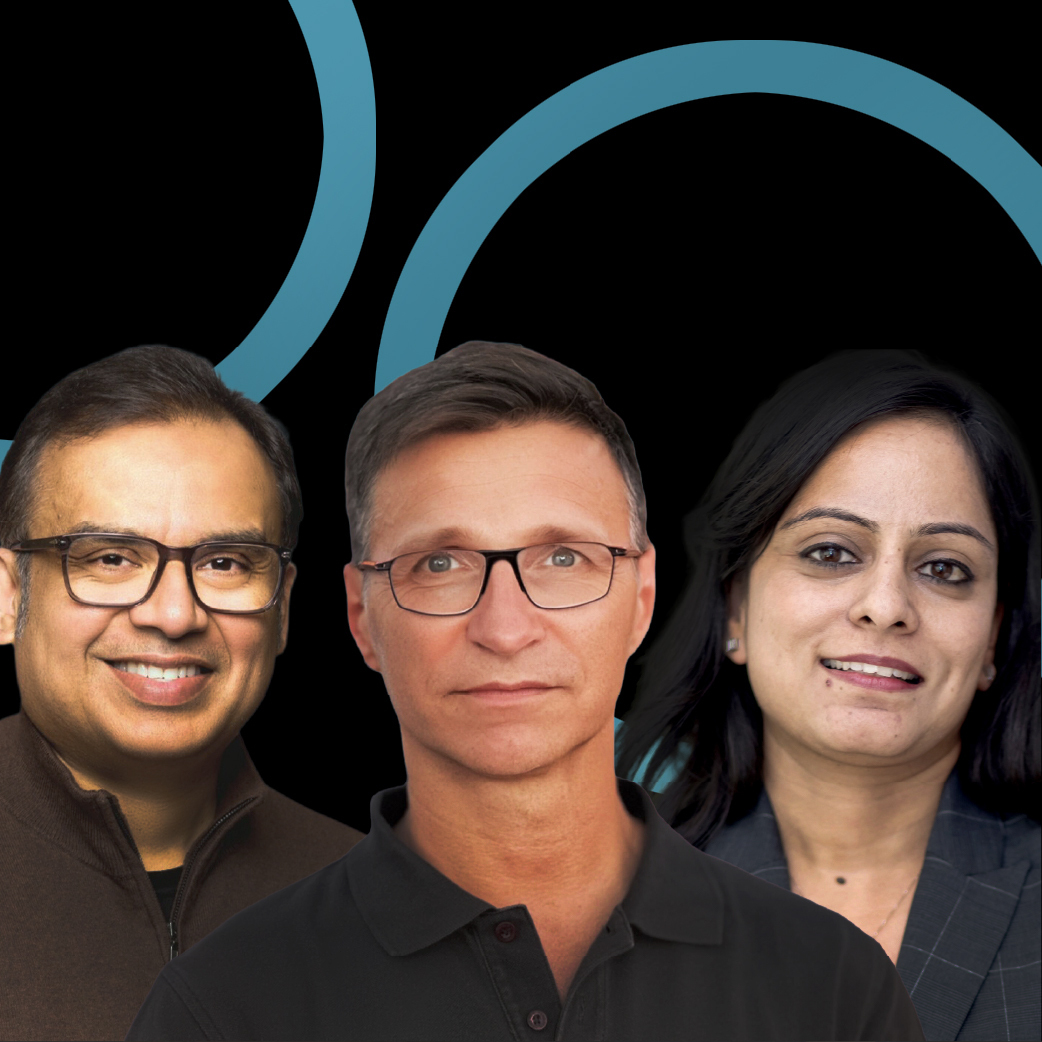
In this episode, Amita Goyal, Managing Partner at Zinnov, sits down with Arrive’s Chief Operating Officer, Jérôme Selva, and Chief Technology Officer, Sandesh Bhat, to unpack how global mobility systems are built and scaled across 90 countries and 20,000 cities.
From orchestrating movement at the Paris Olympics to building frictionless, AI-driven mobility experiences, the conversation explores what it takes to connect cities, systems, and users at scale. The discussion also dives into why India is emerging as a critical innovation hub and how talent will shape the future of urban mobility.
If you’re interested in systems thinking, global platforms, and building for real-world complexity, this episode offers a front-row view into the future of how cities move.
Tune in now.
PODCAST TRANSCRIPT
Amita Goyal: Hi, I’m Amita Goyal, Managing Partner at Zinnov. Welcome to the Zinnov Podcast. Joining me today is Jérôme Selva, the Chief Operating Officer at Arrive, and Sandesh Bhat, the Chief Technology Officer at Arrive.
If you have ever felt being stuck in traffic or switching between apps to figure your way out, or trying to find a single parking spot between your commute from home to work or elsewhere, you have experienced how fragmented and complex urban mobility is.
There is an underlying intelligence layer which makes all of this either work or fail at scale. In this complex urban mobility area is where Arrive operates. They bring their intelligence across 90 countries, 20,000 cities where they operate with their solutions, bringing together the data, the infrastructure, and enterprise decision-making.
Now Arrive is placing its bet in India.
Amita Goyal: Thank you so much. So the first question is for you, Jérôme. I’ve heard Arrive makes cities livable. Could you please tell our listeners, in a 30-second version, what Arrive is and what problem you’re solving?
Jérôme Selva: Think about London in its effortless public transport, or think about Amsterdam in its very smart parking flow, or think about New York in a very simple, effortless mobile payment activity through navigating the flow of the city.
Think of this in the 90 countries you’re talking about. Think of this as one integrated platform where you bring all those decades, whether it was from EasyPark, RingGo, Flowbird—all those brands that you might recognize—ParkMobile.
And now you bring this in the palm of the users or in the hands of the cities and operators to really ease that urban mobility. That is how you make cities more livable, and that is the purpose of this company.
Amita Goyal: That’s really lovely. Sandesh, every city seems to have its own way of doing things – different parking rules, different parking systems, even different user behaviors. What does Arrive do to make it all work seamlessly on one platform, as Jérôme mentioned, without having things break down?
Sandesh Bhat: Arrive is a global mobility platform, as we call it. By definition, it needs to scale globally, but at the same time adapt locally.
So you mentioned more than 20,000 cities that we have relationships with to make cities more livable. So think about, for example, London. It has about 32 boroughs, and if you add the city itself, it’s 33.
New York, as you mentioned, has 5 boroughs. Every borough has its own challenges, policies, enforcement laws, and pricing for transport versus parking, etc. So if you think about the complexities that urban mobility has, you need to build a platform that really adopts that complexity.
But most importantly, it must make it a seamless experience—a really, really frictionless experience for every driver, commuter, or rider. It has to be seamless.
So Arrive brings a platform that does exactly that by connecting city authorities and all the private operators of transport versus parking, like garages versus on-street parking.
So when you connect them together and have the data leveraged and provide insights through AI, you can make this seamless and frictionless. So that’s what Arrive does, and it’s a fascinating problem that we get to solve every day.
Amita Goyal: It’s absolutely fascinating, and I hope in India someday we can see Arrive because it seems like that’s one of our biggest problems.
Sandesh Bhat: That’s right. That’s right.
Amita Goyal: Jérôme, the next question is for you. For our listeners, where have they most likely experienced urban mobility solutions at scale already, or where have they seen it?
Jérôme Selva: Because our context here is that we are in Bengaluru, and thank you for hosting us, I will probably bring something that is outside of India but that everybody around the world has seen.
So let’s think about 2024. Plunge yourself into the Olympics in Paris. Think of the chaos. For the first time in history, the Olympics were going to be hosted within the heart of a city—an old city—and its immediate surroundings.
How do you make this chaos simple while maintaining strict security, vigilance, and easing the flow, whether people navigate by public transport or through whatever means they have—their cars, their bikes, whatever?
How do you orchestrate all of this at a point of utmost stress in a city, when you have millions and millions of visitors who just want to go from point A to point B in record time? How do you make this happen?
Well, that’s where the technology, that’s where the innovation this company brings in, can help ease that flow so that the user who wants to watch that game in the heart of the city, or go to the outskirts of the city to see an equestrian jump, can navigate flawlessly, everything in the palm of their hand—easy tap, easy go.
Sandesh Bhat: Just in the planning stages, several months and even a couple of years ago, we worked very closely with the city authorities in Paris because the threat level was also high when it came to cybersecurity, but also traffic optimization and planning from the urban mobility standpoint.
We provided them a lot of insights and data that helped across urban mobility use cases, all the way to managing threat levels. So it’s a fascinating kind of collaboration with events like that that cities face. That’s what makes our life so fascinating working at Arrive.
Jérôme Selva: And I think what is important about what we do is that it is not about being egocentric. You don’t want to come and carry the brand and say, ‘This is us. This is us.’
What you want to do is bring that value through the entire ecosystem, whether it starts from the individual user, whether it’s a 15-year-old whose parents want to make sure they can trace what the activity is, or a grandmother, or whoever it is in between from a user standpoint, but also for the cities, the municipalities, as well as the operators.
How do you bring that value in an egoless way? All that matters is just that value for impact. So that’s our focus.
Amita Goyal: The Paris Olympics was one of the most beautifully and uniquely orchestrated events spread across the city. And to learn that Arrive was behind the scenes making it happen is absolutely amazing.
And it’s the complexity, like we as users don’t realize it – but it’s cybersecurity, it’s ease, it’s commute, it’s time.
Jérôme Selva: It’s payments.
Amita Goyal: It’s absolutely payments, exactly. That’s really amazing. Thanks for sharing that, Jérôme.
Amita Goyal: You mentioned earlier that both of you have really high hopes for India, and you’re building an innovation hub out of India. Why does this feel like the right moment? What has changed in the space that makes this the right time to invest in talent in India?
Sandesh Bhat: India has become an innovation hub for the world. The talent pool is massive, with specialized skill sets, whether it is traditional big data or payments orchestration, all the way to AI.
Take payments orchestration itself, like UPI in India doing 23 billion transactions per month, with 500 million active users. That kind of scale is unheard of anywhere in the world. So learning from that scale, and how to scale, is a massive opportunity.
Number two, the focus on digitization in this country for such a long time, combined with urbanization challenges, makes it a perfect place for us not only to establish the innovation center with the help of local talent, but also to rapidly learn what the future challenges are.
Cities like Navi Mumbai, where mega projects are going on, or mega airports being built here—these are the places where Arrive has a niche and helps solve urban mobility challenges.
So it’s a massive opportunity. I’m super excited to be here with our colleagues building this center.
Jérôme Selva: And what I love about Sandesh is how humble he is.
If you look at his career trajectory, you can see that somebody from Bangalore, who is no foreigner to Bengaluru or Bangalore, has really brought that innovation and intelligence through his 20-plus years at IBM and now also at Arrive.
But then if you look at the cradle of talent that resides here—think about Microsoft, think about Alphabet, Google, think about IBM. Look who’s leading those companies. CEOs who are no foreigners to India—they’re coming from here.
So one of the things I’m really excited about is that I really hope we are going to attract the next generation of bright talent so that they help us shape the future that we deserve on this earth. That’s why we’re here as well.
Amita Goyal: Absolutely. I think India has created some great examples in complex environments, like UPI. The talent is fabulous. We have seen this time and again in global capability centers and innovation hubs being built out of India. So I do believe it’s a great move for Arrive.
For someone listening to this who’s thinking about their next move, why is now the right time to be in the urban mobility space and tech? Why should talent think about being in this space?
Sandesh Bhat: I’ll let you talk about the market dynamics and the opportunity that is created.
But for me, going back to the purpose, Arrive has to make cities more livable. Think about what’s happening in India. Think about some of the statistics that the UN talks about around the world, which is urbanization.
So by 2050, two humans out of three are going to live in cities. Think about it.
Now, take that to India—40,000 humans are moving into cities every day. Think about it. Every day, 40,000 Indians are moving into cities permanently.
Now, we all know that, looking at India’s development, households have more than one car. Think about the inflow of the population with so many cars. Now think about the complexities of mobility.
So this is where Arrive can really help, with data as a major differentiator along with AI, whether it is predictive models or generative models, which are very commonly used nowadays.
We can help arm city planners, administrators, and private operators of transport and parking to ease these complexities.
So that’s the massive opportunity.
If there is a startup or any company trying to solve problems within urban mobility, this is the place.
Also, other countries, whether in Africa or the rest of the world, are facing similar urban mobility challenges. So learn fast from local ecosystems and then bring those insights and best practices elsewhere.
That’s where we come in because we are in 90 countries, working with more than 20,000 cities. We get to capture those best practices and apply them elsewhere.
So that’s what we do—whether it’s parking, charging, transportation, or arming cities with intelligence for traffic optimization. You name it.
This is an exciting time for us as well as all our partners and colleagues.
Jérôme Selva: From my standpoint, and to build on what Sandesh is sharing, I think that we are at an inflection point in humanity where we’ve passed eight billion inhabitants on the world, right? And people want to be fulfilled.
They want to make their life matter. They want to add an impact that will make this world a better place. There are four industries today that really make a huge difference. Technology is playing a huge difference. Health is essential. Beyond those two, you can then also add mobility. And today, when you look at technology, you look at health, you look at mobility, Arrive plays in those elements as well.
Because we are based on technology, we bring this innovation. But if you make cities more livable, if you remove the stress for the different users, you help also on their health as well.
And mobility—if you look at this market, the market we play in here at Arrive is about a USD 3 trillion market. Think about it in the context of India.
It’s about almost as big as the India market itself. We are the leading agent in that very space.
So if people are looking to make a contribution that is fulfilling for their lives and for the world, this is a place to start. This is a place to be a part of the design, the architecture, and the build of the future.
So to me, it is the right time to be in India, and it is the right time to attract the right talent who are curious, who want to be focused, and who want to really be at Arrive together to win, to make that place a better place to be, to make cities more livable. So I think that’s why.
Amita Goyal: That’s amazing. So what I’m hearing is you bring the intelligence of making a huge change in 20,000 cities across the world, and you have your amazing talent in India. And when you combine that, the kind of future urban mobility solutions that you can build for a USD 3 trillion industry—the sky’s the limit.
That’s really inspiring. I’m so inspired just listening to that and the purpose.
Jérôme Selva: Do you want to join us?
Amita Goyal: Let me think about it. They might want to edit that.
Sandesh Bhat:. Sorry, Pari.
Amita Goyal: I think this is really definitely inspiring, and it is a problem that every Indian relates with day in, day out—the commute from their home to office and back.
Amita Goyal: So thanks for sharing that with us. You mentioned that, Arrive is operating in 90 countries, so literally most of the world, and 20,000 cities. But these cities, as you touched upon earlier, have different regulations, different languages, different behaviors. When you’re building a team which is now catering to this global market, solving complex problems, what kind of mindset do you look for when you’re hiring?
Sandesh Bhat: So first, we want colleagues to join us who are really passionate about making a difference in this world, especially the urbanization problem, which is a massive, massive problem for any country in the world right now. So that is a starting point, right? Number two, the fundamentals of how we are going to solve these problems, which is innovation mindset—value creation mindset is obvious.
But then the skillsets that you need to bring to the table—whether it is data-first, AI everywhere nowadays is very, very important. Secure by design, because cyber threat is one of the topmost threats for any business or any organization nowadays. Or, in our case, we need to scale globally, but also need to make sure that those transactions are frictionless, always on.
So in other words, architecture that not only scales, but also keeps the service always on. These are the fundamentals, but not to mention, we talked about ensuring global scale, but at the same time adapting to local needs, whether it’s Bangalore here in the future or Mumbai—two different challenges.
So essentially all the skills in this new world, fascinating world of advanced technology going on—AI or otherwise—need to be there. But finally, something Jérôme mentioned, my colleague, we believe in really being curious, learning every day, listening more, right? Number two, focus, focus, focus.
So any problem is an important problem that we solve, so focus becomes extremely important. And then number three we always care about is solving challenges together. Teaming, collaboration becomes fundamental of how you do it. So be curious, be focused, and always win together, right? So those things come to my mind as ingredients that you need for Arrive to continue to be successful.
Jérôme Selva: And what I love about what you’re saying—if you land at Arrive together, think about the fact that today we are distributed around the world. Not only are we distributed around the world—our CEO, Cameron, sits in Atlanta. Atlanta is in the US, for those who might not know. And if you look at our CFO, Bill, he sits in London.
Then you look at our Chief People Officer, Kylie, she sits in Stockholm. Here we are—Sandesh and I—right now in Bengaluru, but we are in Boston, and we have teams around the different countries where we are implemented. At the leadership level, we are distributed, and we can work because we trust each other, regardless of where we are coming from.
So the diversity that we bring is that uniqueness, that strength that we can build upon as a massive mosaic of different colors of tiles. Sandesh is from Bangalore. I’m definitely French by origin, but I lived and grew up all around the world. Cameron is from New Zealand. Bill is from London.
You have this patchwork that makes this company so brilliantly rich in diversity, and the talent is limitless. And so that’s why now coming into India will just expand that richness.
Amita Goyal: Absolutely. I think you are catering to diverse, complex urban mobility problems around the world. You need a diverse talent mindset as well, which is very curious, focused, and knows how to collaborate.
Jérôme Selva: Well said.
Amita Goyal: Absolutely makes sense. So let’s talk about the future a little bit. If you get India right, what does it unlock for the company, Arrive, over the next three to five years? Jérôme, that’s a question for you.
Jérôme Selva: One that I need to think about. So India—I think when I look at India, first of all, it’s a market. It’s probably the fastest and largest growing market in the mobility space.
If you look at Bengaluru and how the navigation system had its own uniqueness, somebody was telling me a little earlier that when she was here, she used to be biking, but now it’s no longer a reality because it’s so congested.
If we could solve that situation by bringing our technology, by cooperating with the government and the different operators, that would be fabulous. But today, I think, as I’m thinking of India, it’s more about how do we leverage this talent?
If you look at some of our partners—Google, Uber, or others—if you look at them today, they are coming into India as the Silicon Valley of the East. We believe in it as well, and therefore we want to be a part of it.
We want to make sure we tap into this ecosystem because we believe not only India stretches across thousands of years, but today it is extremely relevant and at the cutting edge of innovation. We want to be part of it.
Amita Goyal: Absolutely. Absolutely. We are the Silicon Valley of the East, and thanks for stating that. Sandesh, if you look ahead a few years, what becomes a real turning point for mobility? What shifts everything from where we are today?
Sandesh Bhat: You know, I would say especially in urban mobility space, you will see more predictive and autonomous.
What do I mean by that? Today, if you are riding or driving and parking, a lot of times you have to deal with apps, your phone often—whether it is to find a parking spot or buy a ticket.
What you will see more and more in the future is frictionless, seamless experience.
Example could be you are driving into a city, you may be parking at the perimeter of the city, then you switch to either a rental bike if you are sustainable, or you will be riding a nearest metro or simply a robotaxi, which is going to be very common very soon. You don’t have to touch your phone—that will be the reality.
So Arrive already has technology that really transfers the session between these different modes of transport. You will see that happening automatically. So that is one thing that comes to my mind as an obvious shift.
Auto-start, auto-stop of payments in the background—you don’t need to worry. Or if you prefer subscriptions, you will get a bill already, your payments applied in the background.
These are the ways we want to remove friction and need to make things really, really seamless. It’s a fascinating world what we’re talking about in the future.
Autonomous vehicles are a reality today in a lot of cities, and we work with them and are already helping them with the lifecycle of the entire fleet.
Because remember, just because it doesn’t have a driver, it is not free to do anything. It needs to park somewhere when it is to be sustainable. It needs to get a car wash. It needs to pay tolls. It needs to do a lot of things. That’s where we come in.
So we have code in the majority of the cars already today—for payment, for navigating to the right parking spot, or paying tolls, etc. So working with OEMs or car manufacturers, working with cities, working with private operators and partners—all coming together to make this a really seamless world in the future is what we do.
Amita Goyal: Wow. It sounds like science fiction to me.
Sandesh Bhat: I know. It’s reality today.
Amita Goyal: And also maybe fewer accidents because people don’t look at their cell phones while driving to do things. Great point. So I think also safer.
Sandesh Bhat: Yeah.
Amita Goyal: And I think, like you said, so many parties coming together and bringing them on a platform like Arrive, making it seamless, frictionless, safer, cybersecurity-proof—I think that sounds really, really interesting.
I have a few rapid-fire questions for you and would appreciate short one-word, two-word answers.
Jérôme Selva: Ooh la la. Challenge.
Amita Goyal: So for both of you, one city that gets urban mobility right.
Jérôme Selva: Edinburgh in Scotland.
Sandesh Bhat: Or maybe Perth, in Australia too. They do right—from transport to parking, charging—all seamless already, and a great customer of ours.
Jérôme Selva: Yeah, Edinburgh.
Sandesh Bhat: Same.
Jérôme Selva: Tap and go. You can navigate from bike to transport.
Amita Goyal: That’s amazing. So Edinburgh and Perth are great urban mobility examples.
Jérôme Selva: And what a stretch geographically – from Scotland all the way to Australia.
Sandesh Bhat: Like we were talking earlier, the no-tap journeys.
Amita Goyal: Yes.
Jérôme Selva: That’s becoming reality in these cities.
Amita Goyal: Yes, we’ve got to learn from them.
Sandesh Bhat: They are very visionary.
Amita Goyal: That’s amazing. AI in mobility – overhyped or underhyped?
Sandesh Bhat: Great question. Maybe short term, overhyped. Long term, likely underhyped.
Amita Goyal: Sounds good. What do you think, Jérôme?
Jérôme Selva: I think from a different angle, I think it is at the right time, and I am using AI to help solve customer problems and deflect some of their challenges.
So we embed AI in how we run our company, on customer care for instance. So AI in mobility through how users and cities and operators experience it, and internally through how we serve our customers.
Amita Goyal: Okay. That’s very interesting.
One thing you wish city governments understood.
Jérôme Selva: Data, data, data.
Sandesh Bhat: I agree. The data and insights to be used for both short-term decisions and long-term investment decisions for infrastructure—there I think cities can do way more.
It’s the 21st century. Data rules insights through AI is already a big-time reality.
Amita Goyal: And probably they have an advantage—they have access to a lot of data.
Sandesh Bhat: You got it.
Amita Goyal: To be able to play on it, play with it.
Sandesh Bhat: A ton of data that we sit on top of.
Amita Goyal: Makes sense. What’s your favorite part of working at Arrive, Sandesh?
Sandesh Bhat: Making an impact to the world that really matters, by helping cities become more livable, doing it together.
Amita Goyal: What do you think, Jérôme?
Jérôme Selva: First, this man. I mean, I could not partner with somebody more outstanding than this guy.
But I think, to bring a little bit of gravity here—when you’ve been in situations where you had four near-death experiences, time matters.
And therefore, you’re not going to apply your time on Earth for something you don’t believe in. I believe in the purpose of this company—to make cities more livable.
It is something that, to me, is essential. I’m not going to waste my time. And therefore, to be part of that remit, and to be able to be part of a team that will design, architect, build, and deliver that big promise is why I’m here.
Amita Goyal: Jérôme and Sandesh, you’re building something that most people interact with every day without knowing it’s you, or without knowing how complex it is behind the scenes.
That’s either the best-kept secret in mobility or the next chapter of the story that just started, and we’d like to think it’s the latter.
So what really stayed with me is the complex environment and a real problem that Arrive is solving—bringing data, different parties, whether it’s municipal, government, parking lots, operators, toll systems, bringing them together across 90 countries across the world at scale, and making it still feel so seamless like you did at the Paris Olympics.
That is a massive problem—making people’s lives easier and cities more livable. And it is truly, truly inspiring.
And at the center of all of it is talent. Talent in countries like India, which are now the Silicon Valley of the East, taking in the knowledge which Arrive has over time built and using their amazing skill sets to create the future of the cities. I think that’s extremely, extremely powerful.
And we’re truly, truly thankful for Arrive to think of India and trust the talent in India and its potential, and coming to India soon and potentially also disrupting the urban mobility market of India in the future.
So thank you so much for joining us and sharing all these learnings with us. We really, really can’t wait to see what you bring to India in the future.
Jérôme Selva: Thank you.
Sandesh Bhat: Thank you.
Theom’s Navindra Yadav and Ravi Sankuratri discuss enterprise AI security, data governance, building an AI-native company, and their GCC journey in Hyderabad.
Explore AI and enterprise transformation with Erica Volini, from work redesign and human adoption to data and leadership. Tune in now.
Don’t miss any of our future episodes!
Also subscribe to the Zinnov Podcast on these platforms






Theom’s Navindra Yadav and Ravi Sankuratri discuss enterprise AI security, data governance, building an AI-native company, and their GCC journey in Hyderabad.
Explore AI and enterprise transformation with Erica Volini, from work redesign and human adoption to data and leadership. Tune in now.
 THANK YOU
FOR YOUR RESPONSE
THANK YOU
FOR YOUR RESPONSE