



BACK TO Business Resilience
ZINNOV PODCAST | Business Resilience


Enterprises today are managing increasingly complex cybersecurity environments across cloud, applications, endpoints, AI systems, and enterprise networks. As AI adoption accelerates, that complexity is becoming even harder to manage. Security teams are now expected to secure cloud environments, AI agents, applications, endpoints, browsers, and data ecosystems, all while responding to threats that themselves are AI-driven.
The result is rising operational complexity, fragmented visibility, higher costs, and growing pressure on ecosystem partners to deliver measurable business outcomes instead of isolated products.
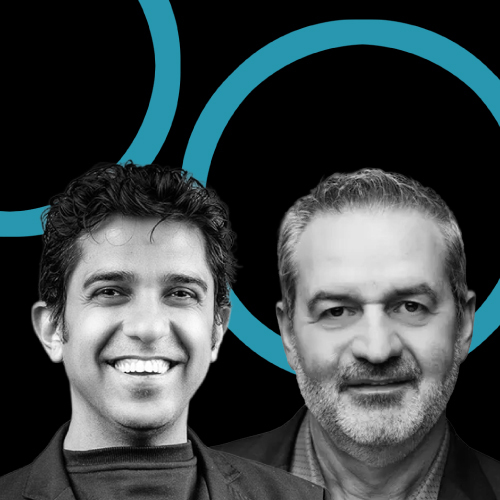
In this episode of the Zinnov Podcast, Rajat Kohli, Partner, Zinnov speaks with Michael Khoury, Vice President, Global Ecosystem Partners, Palo Alto Networks, about why the industry is moving from point products to platform-led cybersecurity strategies, and what that means for enterprises, partners, MSSPs, hyperscalers, and global system integrators.
Drawing from more than three decades of experience across Cisco, ServiceNow, and Palo Alto Networks, Michael Khoury shares how AI is accelerating the need for integrated security platforms, why “platformization” is reshaping ecosystem models, and how customers are increasingly prioritizing outcomes over complexity.
Whether you’re a technology leader, ecosystem strategist, cybersecurity professional, cloud partner, or enterprise decision-maker, this episode offers practical insights into how AI and platformization are redefining the future of cybersecurity ecosystems.
Tune in now.
PODCAST TRANSCRIPT
Michael Khoury: Everything starts with what is your company vision and strategy. Then you take it from there to a policy, and then you define it for your ecosystem.
You cannot fight AI with people. You need to fight AI with AI, and you need to ensure when you’re deploying AI, you’ve thought about AI security.
I always like to take the approach: look at it from the customer and back, because at the end of the day, the ecosystem will adjust if the customer is ready.
So again, I think the customer is starting to realize, “I need to evolve.” That means you need to define those outcomes early on, and it’s a lot easier if you have a platform approach.
Rajat Kohli: But when we look at cybersecurity, the complexity, the integration, and the solution itself, how do you see the marketplace going to play a role, and at that time, how will the ecosystem support that journey?
Michael Khoury: One of our fastest routes to market is the cloud service providers. And I look at MSSPs as right there as well.
So both of these routes to market are growing at an amazing rate because, let’s face it, this is how customers want to purchase. If a customer wants to consume it through the marketplace, we’re here. We’re ready. We have it. And if they want to consume it through the traditional way, we have it as well.
Rajat Kohli: Hi everyone. This is the Zinnov Business Resilience Podcast Series, and I’m Rajat Kohli, working in the capacity of Partner with Zinnov Consulting.
Today, I’m going to focus on a very interesting topic, which is from point products to platform solutions, and looking at it from the lens of partnerships and the ecosystem.
For this, today we have Michael Khoury, Vice President, Global Ecosystem Partners. Welcome, Michael, to this interesting podcast.
Michael Khoury: Thank you for having me. Great to be here. Appreciate it.
Rajat Kohli: I’m super excited about this discussion today. I’m sure we’ll uncover some interesting aspects of how we are looking at the platform story going forward. Before we get into that, it would be good to get your introduction. How has your journey been in this ecosystem?
Michael Khoury: Okay. Well, obviously, I’m with Palo Alto Networks. I joined the company a little over a year ago. Prior to that, I was at ServiceNow, and prior to that, at Cisco for a long time.
I’ve been in this industry for over three decades. I’ll admit to three decades. During that time, I spent a good part of my career in sales. So I’ve worked with partners on the front end around opportunities and deals and things like that.
The last, I would say, 18 to 20 years have been around programs, partner strategy, policies, and enabling our partners to scale and grow with us. So that’s a little bit about myself and my career.
Rajat Kohli: That’s interesting. And looking at your exciting journey, like you mentioned Cisco, which was known for networking and hardware, then ServiceNow, which is more on IT service management and creating that customer 360-degree view, and now into the cybersecurity world.
How has that story evolved? Looking at three decades of experience, I’m sure that in the first decade, it was more about selling those products, the point solutions, but the story has transformed. It has evolved.
Michael Khoury: Yeah, it’s interesting because even when I look at my sales career, I’ve worked with commercial customers, I’ve worked with enterprise customers, and at some point in my career, I was selling into telco service providers, which is a very different sales cycle from when you’re dealing in the commercial segment or even SMB.
So even throughout my sales career, I’ve had a different level of customer interactions. Then moving to the ecosystem, it became more around execution of our strategy through our ecosystem.
You hear a lot sometimes vendors say to the partner ecosystem, “You’re an extension of our sales team.” Or you hear a lot about, “We’re a partner-first company.” And that is true.
That is true because in order for any vendor to be able to execute through the partners and the ecosystem, you have to ensure whatever you give to your field sales team, your ecosystem has access to the same playbook, the same information, and the same capability.
A lot of times, vendors forget that in order for that ecosystem to execute, you need to think of them, first of all, as separate businesses. They have separate processes and separate vehicles to enable these processes.
So it’s important for a vendor, when they’re working with an ecosystem, to think: how do you enable them, and how do you make it easier for them to do business with us?
Because let’s face it, if I start thinking of our partners in general, if I start with the traditional VARs, they work with many vendors. Yes, we are in the top 10 of the vendors, but they still have nine other vendors they work with. And in some cases, even in that top 10, they may be working with a hundred vendors.
So it’s important for a vendor, from my perspective, to ensure we remove these barriers and make it a little bit easier, just the ability to work with us. And I think sometimes that’s forgotten.
Sometimes people just go directly into, “Hey, my product, here’s what we can do, and here’s the sales play.” And all that’s important. But at the same time, the ability to transact, the ability to manage opportunities, to track, to report on things — all that’s important.
So I think that’s what I would say to any company who’s looking at an ecosystem: don’t forget that piece in the middle. Yes, the sales is important. The product is important. For us, having a great product that our ecosystem believes in and is willing to take to market is awesome. But at the same time, we need to continue to break those barriers and make it easier for them to work with us.
Rajat Kohli: Interesting. Is it easy to solve those barriers?
Michael Khoury: I think they require more commitment and more investment from the beginning, and it’s a journey.
Frankly, I look at it as: you cannot decide overnight that you’re going to go through an ecosystem, and overnight you’re going to be able to build the right processes, the right systems, the right tools, and the policy.
So it’s like you have so many steps you have to define before you make it easy.
Everything starts with what is your company vision and strategy. Then you take it from there to a policy. So you clearly define it for your own team, for your own sales organization, your own field organization, and then you define it for your ecosystem.
Then from a policy, you define the process, and then you build the systems and the tools.
A lot of times, people jump into the tools and the system: “Oh, the tool is difficult. It doesn’t do that.” Well, if you talk to any IT organization, they’ll be like, “I’ll build whatever you want. You just need to tell me what your policy is and what process you want me to enable.”
So a lot of times, folks forget about the policy, the process, and then the systems. That’s how I like to look at it.
And overall, if you think about making progress, an evolutionary step: don’t surprise your ecosystem. The one piece of advice I give to anyone is don’t surprise your ecosystem.
Don’t make a change that you’re going to expect them to pivot and react on overnight because, frankly, they have, as I said, many other companies they work with, and they have their own processes. Some of them are big companies, so they need time to adjust, pivot, and react.
So don’t assume just because you brought a new widget to the market, or you brought a new program, or you brought something new, that they’re going to turn overnight and be able to execute on it.
You need to ensure you have the right time and you have the right capability for them. You need to allow them to be enabled to really be able to execute.
So that’s the one piece of advice I would give to anyone who wants to work through an ecosystem.
Rajat Kohli: That’s a great point, Michael. In this world, the ecosystem is not only about the change in the partner program. It’s dependent on how we are coming up with a new product or the need of the customers.
As we’re looking at products to platforms, when we’re introducing a new product, everything is around that. The ecosystem works around that. Are we introducing a new playbook? Are we introducing a new partner program? Are we adding more partners to that? What is our marketing messaging around that? All that needs to be changed.
Now, looking at the last 24 or 36 months, there’s a lot of transformation taking place in the ecosystem from the technology, from a workload perspective. That’s why we are saying it’s moving from the point solution to the platform story.
Is the ecosystem ready to cater to that transformation or the change that is happening from the point solution to the platform? And how much time do they need to understand, be aware of what the changes are, and how they can take it to the end customer?
Michael Khoury: Yeah. So I’m going to say let’s start with the platform.
I would say a little over two years ago, our CEO Nikesh said a word called “platformization.” And I think after Nikesh brought up the word platformization, six months later, everyone was talking about a platform.
And I think when you look at it, the reason why we started talking about platformization and overall a platform play is because you can’t anymore just say, “Oh, I’m going to bring the best of breed of this product and that product and this other product and stitch it together,” which was the traditional model.
And look, our GSIs, God bless them, made a lot of money stitching all these complex things together. But if you talk to a customer, at the end of the day, they want outcome. They don’t care about having all these disparate products.
Sometimes they may have products, especially when it comes to cybersecurity or security in general, from 20 or 30 different companies. And it’s almost impossible to get the best out of all of these, stitch them together seamlessly, and then be able to operate and deliver an outcome out of so many different products.
So really, the whole idea of a platform is: how can you leverage across your entire network, whether you’re doing network security, endpoint security, cloud security, and even now, as you’re leveraging more AI, how do you design something for AI security to ensure these AI agents are actually doing the right thing, and to ensure the attacks you’re getting are actually coming from AI as well?
So the whole world has moved from point product because if you think about the concept of AI, you’re looking at data. In order for AI to really be effective, it’s all about data. And if you think of data, you’re looking at data across your entire network.
So everything you’re deploying has to have some data element. And how are you securing that across your network security, your endpoint, your SOC?
In the old days, when you had a security operations center, that’s what we call a SOC. In the old days, you had a lot of people, a lot of analysts, to manage a SOC. Now, once you’re attacked, they can extract your data and they can act on it in minutes because of AI.
So in a way, you cannot fight AI with people. You need to fight AI with AI, and you need to ensure when you’re deploying AI, you’ve thought about AI security.
So that’s why it became so complex to continue to have multiple disjointed products. That’s why we evolved into a platform story. And that’s why customers ultimately are going to get that value realization from their security needs by having a platform approach versus many different point products from different vendors.
Rajat Kohli: It’s an interesting thought, Michael. There are two questions that come to my mind. One is: are AI data models the right trigger to introduce a platform story?
Michael Khoury: Well, in order for AI to do better, think about it. If you go to whether ChatGPT or Gemini and you create a Gem, let’s say, if you just ask a general question out of that Gem, it’s just going to give you general information, what’s available out there in the public.
Now, I tested that. I’ll tell you how I tested it.
If you feed it information, and then you ask it, and you go with your prompt and you are more specific, all of a sudden that AI gets better. So basically, the more data you give it, the better it gets.
And I tested that in our own world, in my own role as a leader of partner programs. We had the team do all the analysis, do all the data, the analytics, and what we needed to do with our programs. After we did all of that and they came back with their recommendation, I wanted to know: was our recommendation sound?
Then I took it to Gemini. I uploaded some of the information and I basically asked Gemini to tell me, “Is that the right strategy?” And it’s interesting. That was only about a month and a half ago, two months ago, and it came back with about 80% to 85% accuracy.
There were some things I’m not going to do because Gemini didn’t think about these other elements of what I said earlier: don’t surprise your ecosystem. Don’t ask them to move very quickly. Make sure they have enough time to react.
All these things Gemini didn’t consider, but I did consider from experience. But a lot of the points that we did from our teams and all the analysis they did, it had about 80% accuracy. I would say that’s pretty good.
But I had to feed it the information. So to answer your question, data is important. Without data, AI cannot help.
And that’s why the platform story resonates. Think about all these agents. Let’s go back to the customer who has products from 20 or 30 vendors. Let’s assume for a minute each one of them has an AI story, but they have an AI story within their own platform or within their own product.
In order to really leverage AI fully, all these different systems and these different solutions from different companies need to be end to end. And that’s where AI becomes efficient.
Rajat Kohli: So definitely, the way forward is a platform story. I would not say that it’s an end to the point solutions. If you look at the customer personas, what kind of customer persona is still looking at the point solutions, and which are the personas that are super excited about the platform and ready to invest in that? Do you see that differentiation?
Michael Khoury: Yeah, I think a little bit from a different lens because it depends on the customer and depends on the segment.
So let’s talk a little bit about the commercial segment versus the strategic, the bigger accounts, the enterprise accounts.
Commercial customers don’t have the resources, the team members, to really deal with 30 different companies from 30 different sources and manage all the updates and everything that’s needed.
So those companies are also starting to look at a managed service because, frankly, the complexity is so much that they can’t wrap their heads around all the different thinking that they need to do.
Because now when you’re thinking about AI, you’re thinking about cloud, you’re thinking about applications. Even when you’re accessing your applications on Google Cloud, AWS, or Microsoft Azure, all these applications need security. You also need to have runtime security when you’re dealing from a cloud perspective.
Same thing with AI. Now you need to think about securing AI on top of it.
And then you have your network security, your cloud security, your SOC transformation, your endpoint security. You even have browser from Palo Alto. Today, you can get a Prisma browser, which allows you to browse without worrying, “Did I click on that wrong link?” because that browser is going to take care of that security for you.
So really, the whole idea of security is about leveraging the end to end, and that’s where the platform excels.
But those customers in the commercial segment are overwhelmed. They can’t deal with all of that, and that’s why we’re seeing a huge growth in managed security or MSSPs — managed security service providers — from that lens.
Then when you look at the bigger companies, the major strategic, big enterprises, they look at it and say, “I’m more about outcome. I’m more about realizing value. I don’t care if it’s from 20 or 30 different companies.”
Then they turn around and look at the SIs, the global SIs, where before these global SIs used to stitch that together and tell these global companies, “I’ll manage it for you.” But that’s expensive. That’s even becoming expensive for these global SIs because the customer is not going to pay for that complexity.
The customer wants outcome and wants outcome at a better price. So even the bigger SIs who work with these accounts on transformation-type innovation are also embracing a platform story.
So when you look at it from both ends, whether you’re a global SI or whether you’re a smaller commercial customer who’s willing to go for managed security, and those tend to be sometimes better serviced through the telcos and service providers, because remember, if you go back to the days, they all need connectivity.
The telco comes in with their connectivity story, but then who’s going to manage your security as a customer?
So again, there are plays for our service providers. There are plays for our managed service providers or managed security service providers. And then there is room for our global SIs with the bigger transformation-type accounts.
Rajat Kohli: So to that, a very simple question: are the partners ready for that platform story?
Michael Khoury: I would say when I look at our ecosystem, we have our partners trained. We have them enabled. And I think now the customer is starting to do that migration because the customer today is looking at their own network and they’re looking at their own vendors, and they’re saying, “I cannot continue with point product solutions.”
So really, I always like to take the approach to look at it from the customer and back, because at the end of the day, the ecosystem will adjust if the customer is ready.
And the customer is starting to say, “I cannot manage all that complexity by myself. And if I go to a global SI to manage it for me, they’re charging me a lot of money as well to manage it.”
So again, I think the customer is starting to realize, “I need to evolve. I need to move to something where it’s all about outcome.”
And if you think about outcome and the customer realizing value, that means you need to define those outcomes early on. It’s very difficult to define outcomes with 30 different companies, but it’s a lot easier if you have a platform approach and say, “Ultimately, I’m not in the security business as a customer. I do what I do and do it well. I need you to take care of that, and these are the outcomes we’re going to agree on that I need to get out of this before I even make the purchase.”
So think of it more like a business value discussion before the customer is even willing to commit.
That’s why I feel like now customers are realizing, because they all have AI plans. And if you have AI plans, you cannot deploy AI, even to your customer, without thinking of security, because that same AI agent that you’re deploying needs to act on your behalf. It needs to act in a secure way. And also, you need to be prepared to protect yourself from being hacked by AI.
So you need it both ways. That’s why the AI story and the platform story resonate so much more today with customers, small and big, versus maybe four or five years ago.
So yes, it’s going to take a little bit of time for everyone to really move away from 30 vendors to maybe one. But they’re on their way, and we’re seeing it every quarter. We’re seeing customers embrace that platform story more, embrace more from Palo Alto.
And look, for the ones who are not ready, I would say if you allow us to show you the advantage of managing, let’s say, your SOC, because in our SOC solution, you don’t need to move everything to Palo Alto. You can stay with these other companies, but at least from a SOC perspective, now we can touch every threat that comes at you, and we can react to it as a beginning point.
So we can start whether you want to start with a SOC or you want to start just with the endpoint. That’s okay too.
So we’re not asking our customers to overhaul everything overnight. But at least we have the story for them. We have that platform to show them when they’re ready. If you’re ready today, we are ready for you today. And if you’re ready in six months or 12 months or 18 months, we will be here as well.
So we’re giving our customers a choice to platformize, if that’s a term. And I’m going to say it is because Nikesh said “platformization.” So I’m going to say what our CEO said: we are giving them a journey to platformize with Palo Alto and really migrate over time.
Now, obviously, we want it to start immediately, but we know some of them are going to be ready in six months, some in 12 months, and some have already done that shift and are already committed to that story.
Rajat Kohli: It’s a fantastic story, Michael. But if I look at it from an ecosystem or partner lens, what asks are they coming to you with to sell that platform story? I’m sure it’s not an easy journey. There are some friction points, some ups and downs. What are those asks that partners are coming to you with?
Michael Khoury: If I think of our ecosystem, primarily, they’re saying, “Allow me to be enabled. Allow me to do it with you.”
For example, when I talked about SOC transformation, part of our enablement story today is not just training and certification.
In order for that partner to be ready, we make sure they’re actually doing co-delivery with us. Meaning, you are doing a co-delivery on an opportunity at a customer, first SOC, and we’re showing you how to do it.
So basically, the ecosystem is asking us, and we’re expecting them also, to do it with us before we fully say this partner is authorized.
So it’s no longer like, “Get the certification. Do the test. Now you’re an engineer.” That’s not enough. We are finding that’s not enough because you need lab experience. You need hands-on keyboard experience. You need actual customer experience to actually be doing that along with us.
That’s where we’re finding, and that’s where we’re seeing, some of our ecosystem has already passed that step and has done it, and others are in the process of doing it.
Rajat Kohli: See, even to do that, the co-delivery — that’s an interesting point that you mentioned, that let’s execute a couple of projects together so that you’re ready, so that you can exactly do the delivery on your own.
Michael Khoury: Exactly.
Rajat Kohli: That’s one important aspect. Are we also looking at some similar asks that they’re bringing to you?
Michael Khoury: Make things easier for the ecosystem. There is always that: how do we make things easier? How do we make things less frictional? How do we ensure our field team and their field team are aligned? How do we put a joint business plan?
Just go back to the basics. How do we do a joint business plan on which accounts to ensure our field team and their field team are aligned?
So there is the friction in the field that you need to ensure you work through. And you work through it through these joint teaming agreements, through these joint business plans together.
But also, I would say beyond the field and the friction, we as a vendor need to make sure we’re easier for our partners to work with.
I’ll give you an example. Today, I was at an EBC with one of our key partners, and they asked me, “Michael, will I have visibility to this?” And the answer is absolutely yes.
Because today, as a vendor, I cannot launch a new partner program and expect my partners to commit to all these certification requirements, specialization requirements, and all of this without giving them full visibility into that dashboard.
So today, I don’t do any launches anymore without ensuring that full visibility and ease of transparency are there from day one because that’s what they want.
Rajat Kohli: I think visibility and ease of transparency are important, but the ease to deliver, the ease to execute, I think that’s very important in the ecosystem, especially when you’re working with hundreds and thousands of partners.
Michael Khoury: This is why I tell you today, you said, “Let’s do a couple of co-deliveries together.” Actually, at Palo Alto, we expect you to do two co-deliveries, and then we expect you to do what we call two delivery assurances.
Meaning, on the two co-deliveries, we are the ones guiding you and leading, and you’re working with us. On the other two, you’re leading, and we’re observing and supervising and kind of shadowing and giving you input.
So actually, we took it to the next level because in order for that customer to realize the value of what they purchased, they need to be not just deployed, they need to be successfully deployed. Which means they need to be able to leverage the full benefit of that cybersecurity solution.
Obviously, when they’re successfully deployed, that means they’ve adopted what they purchased. And then the consumption part, of course, is going to come in because from a cybersecurity perspective, immediately you’re going to start dealing with attacks, and you need to know what to do.
So that piece of it comes naturally.
Obviously, when you look at it from a hyperscaler, it’s a little bit different because deployment is one step, but then they’re going to look at the consumption and the usage as the next thing.
In cybersecurity, it starts once you’re deployed successfully because now you’re dealing with attacks, and you need to know what to do.
Rajat Kohli: Now, in between, you mentioned about 30 different solutions running at the customer end. When so many customer solutions are running at the customer end, there’s an industry play as well because it’s not only coming under the CIO or the CISO, it’s by the line of businesses also.
Now to solve for that and to deploy that platform story, are the partners or the ecosystem ready for that industry playbook?
Michael Khoury: Yeah. From our perspective, as long as we ensure they come on that journey with us, as long as we ensure they’re trained, they’re enabled, they have the right resources, they have our playbook, and they’re working with our engineers on these deliveries, yes, I would say the ecosystem is ready.
Some are more advanced than others. I’m not going to tell you that every one of my partners today is authorized on my SOC transformation with XSIAM. No.
But will I tell you I have hundreds of them going and I have thousands of people now getting training? Yes.
But not every partner is there yet. So of course, we look at our partners and say, “Okay, maybe on SASE, I have these partners that are ready, and on XSIAM, maybe I have those other ones that are more ready than these.” And sometimes, yes, I have more partners who are ready on XSIAM and SASE together.
But that’s part of how we ensure when we’re working with partners, which partners and which accounts, which customer segment is more appropriate to do that deployment.
So all of that comes into play, and it’s a journey. Of course, some are going to be more advanced than others. But that’s part of the exciting part about the ecosystem. You can work with all of them, and you can ensure: here’s the training, here’s access to our labs, here’s access to our demo, here’s access to all of this to ensure you are ready as an ecosystem.
But you have to make the commitment.
Rajat Kohli: The commitment is one thing. You touched upon two words: advanced partners. It’s very important. It should come from the partner side also, from a system.
What are the characteristics or the persona of these advanced partners that others can learn from?
Michael Khoury: Okay. I’m going to give you one little clue.
In our managed services program, we have specialization, but we also have advanced specialization. And in order to get to that higher tier, you need to have a minimum three of our products that you need to have advanced specialization in.
So basically, in our new program for our partners, we are very prescriptive, very specific.
We tell them this is the competency. This is what you need to invest. This is the capacity. This is how many minimum number of people need to be certified on this product. This is how many business consultants you need to have. This is how many architects you need to have. This is how many engineers you need to have to deploy. And this is how many minimum analysts you need to have for support.
So we are very specific, very prescriptive for each product. So our partnerships, I can tell you very easily on which product which one of my partners is advanced, and which ones are ready to tackle XSIAM, XDR, SASE, cloud security, and Prisma AIRS.
So product by product, I can go down the list and I can see which ones have three or more, which ones have four or five or more. That’s how I can tell which ones are more advanced versus which ones are not.
Even our own sales team knows this because they look at these partnerships. Not just that they work with them — of course, relationship and all of that — but they can look at each partnership and know how many deployments they’ve done, how many engineers they have, and how many certifications they have.
And frankly, that’s something I look at as well with every conversation that I have with a partner. I want to know, from an enablement perspective, how committed they are.
Because everybody jumps to the numbers, the ACV and the ARR, and all of that. That’s important, but I want to look at it before that. I want to look at a leading indicator metric, which is really your commitment as a partner to us, and in return, we’re going to be committed to you.
So we’re looking at it as a two-way street.
Rajat Kohli: That’s interesting. But if you look at the way forward, there’s a lot of discussion around the marketplace as the future buying platform for technology.
Michael Khoury: Yes.
Rajat Kohli: But when we look at cybersecurity, the complexity, the integration, and the solution itself, how do you see the marketplace going to play a role, and at that time, how will the ecosystem support that journey?
Michael Khoury: Yeah. I can tell you one of our fastest routes to market is the cloud service providers.
When I look at our growth through Google Cloud, AWS, and Microsoft Azure, it’s one of the fastest. And I look at MSSPs as right there as well.
So both of these routes to market are growing at an amazing rate because, let’s face it, this is how customers want to purchase. And for us, it doesn’t matter.
Now, obviously, if there is a hardware element, they need our hardware, but that’s only on our hardware firewall. The rest of our products are all SaaS products as well that are running in the cloud. They can leverage our solution through Google Cloud, and they can consume and buy also through GCP and through AWS.
So there is no issue for us because that is a fast-growing route to market. At the end of the day, it’s a customer decision.
If a customer wants to consume it through the marketplace, we’re here. We’re ready. We have it. And if they want to consume it through the traditional way, we have it as well.
Rajat Kohli: Sure. No, this is super exciting. I think it’s a fantastic journey, Michael, and how you covered that the ecosystem is not only the resellers or the SIs or the MSPs, but the entire ecosystem, including the different ISVs and the cloud hyperscalers, playing an important role in that.
Michael Khoury: Absolutely. We have hundreds of partners in our ISVs who are actually building integrations, building offerings with Palo Alto, on Palo Alto. So it’s really exciting, and it’s going to continue.
That’s why the ecosystem continues to be exciting, continues to evolve.
And frankly, even interestingly, when I think of distributors, traditionally people think of distributors as legacy. Today, I have distributors who do support. I have distributors who do delivery as part of their services.
So it has really evolved from the traditional, “Oh yeah, you’re a distributor. You’re shipping a hardware box.” No, that’s not the case.
Yes, that’s one of the services they do. Of course, if there is a hardware box, they will ship it. But they have many other services they’re doing, which honestly, 10 years ago, I would not have imagined.
I literally, and look, I’ve worked with those guys for a long time. I’ve been in this industry for a long time. I would not have said what I just said seven or eight years ago.
Rajat Kohli: The story has changed definitely. We are seeing a lot of transformation. I think this has been an interesting and fantastic discussion.
Thank you for putting a color on the product-to-platform story and what are the different skill sets needed from the ecosystem to make it happen.
I’m sure the audience will keep listening to the quarterly results and how you’re building that ecosystem story. So super excited about that. Thank you so much for your time today.
Michael Khoury: Absolutely. Thank you for your time. Appreciate it.
Rajat Kohli: Thank you. Thank you so much, Michael. Great.
Michael Khoury: Thank you.
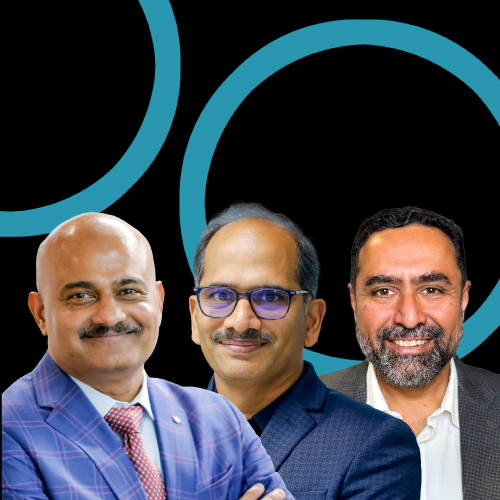
Theom’s Navindra Yadav and Ravi Sankuratri discuss enterprise AI security, data governance, building an AI-native company, and their GCC journey in Hyderabad.
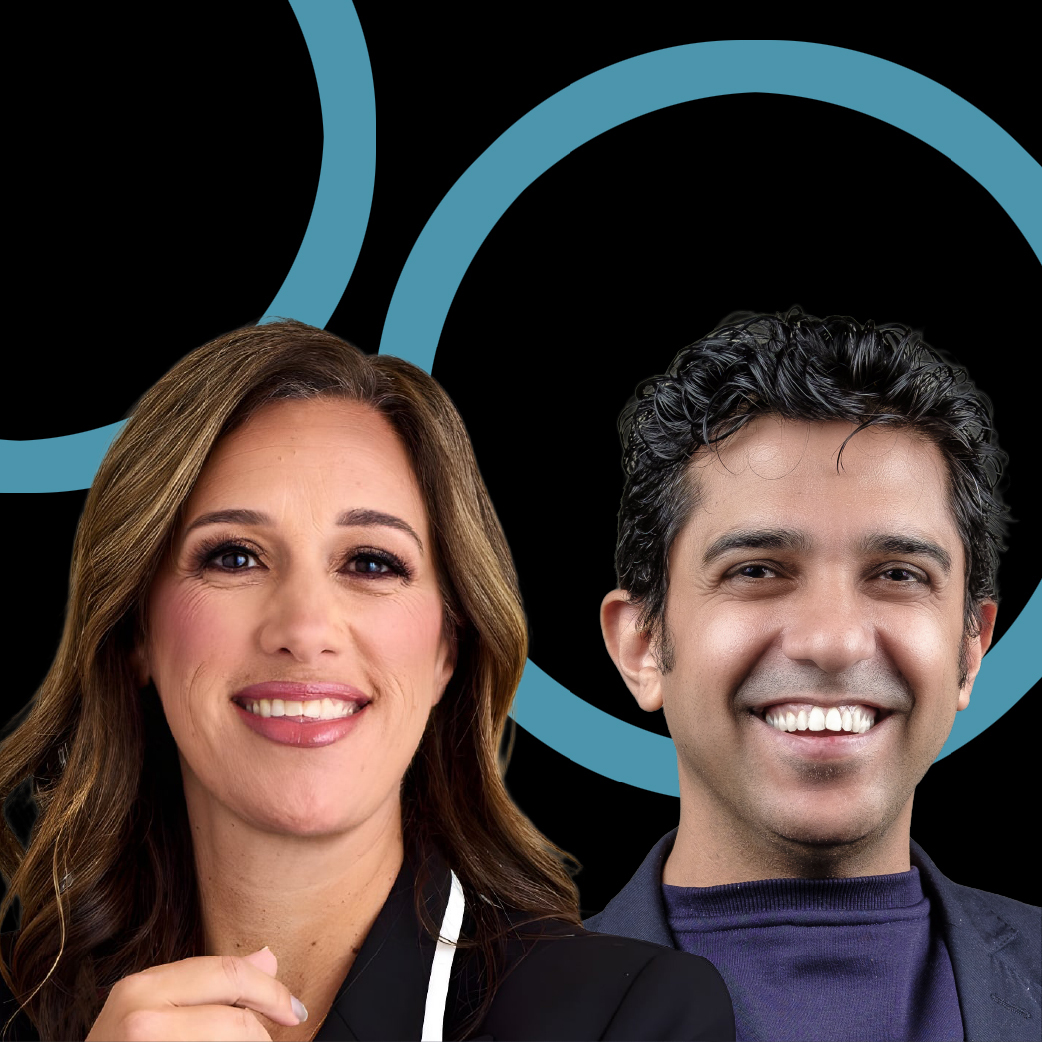
Explore AI and enterprise transformation with Erica Volini, from work redesign and human adoption to data and leadership. Tune in now.
Don’t miss any of our future episodes!
Also subscribe to the Zinnov Podcast on these platforms






Theom’s Navindra Yadav and Ravi Sankuratri discuss enterprise AI security, data governance, building an AI-native company, and their GCC journey in Hyderabad.
Explore AI and enterprise transformation with Erica Volini, from work redesign and human adoption to data and leadership. Tune in now.
 THANK YOU
FOR YOUR RESPONSE
THANK YOU
FOR YOUR RESPONSE