



BACK TO Business Resilience
ZINNOV PODCAST | Business Resilience


The partner ecosystem is undergoing a fundamental shift. What was once driven by co-marketing, channel reach, and brand visibility is increasingly being shaped by co-innovation, ecosystem integration, and customer outcomes. As AI accelerates technology adoption and customers demand faster business impact, partner leaders are being forced to rethink how ecosystems are built, differentiated, and scaled.
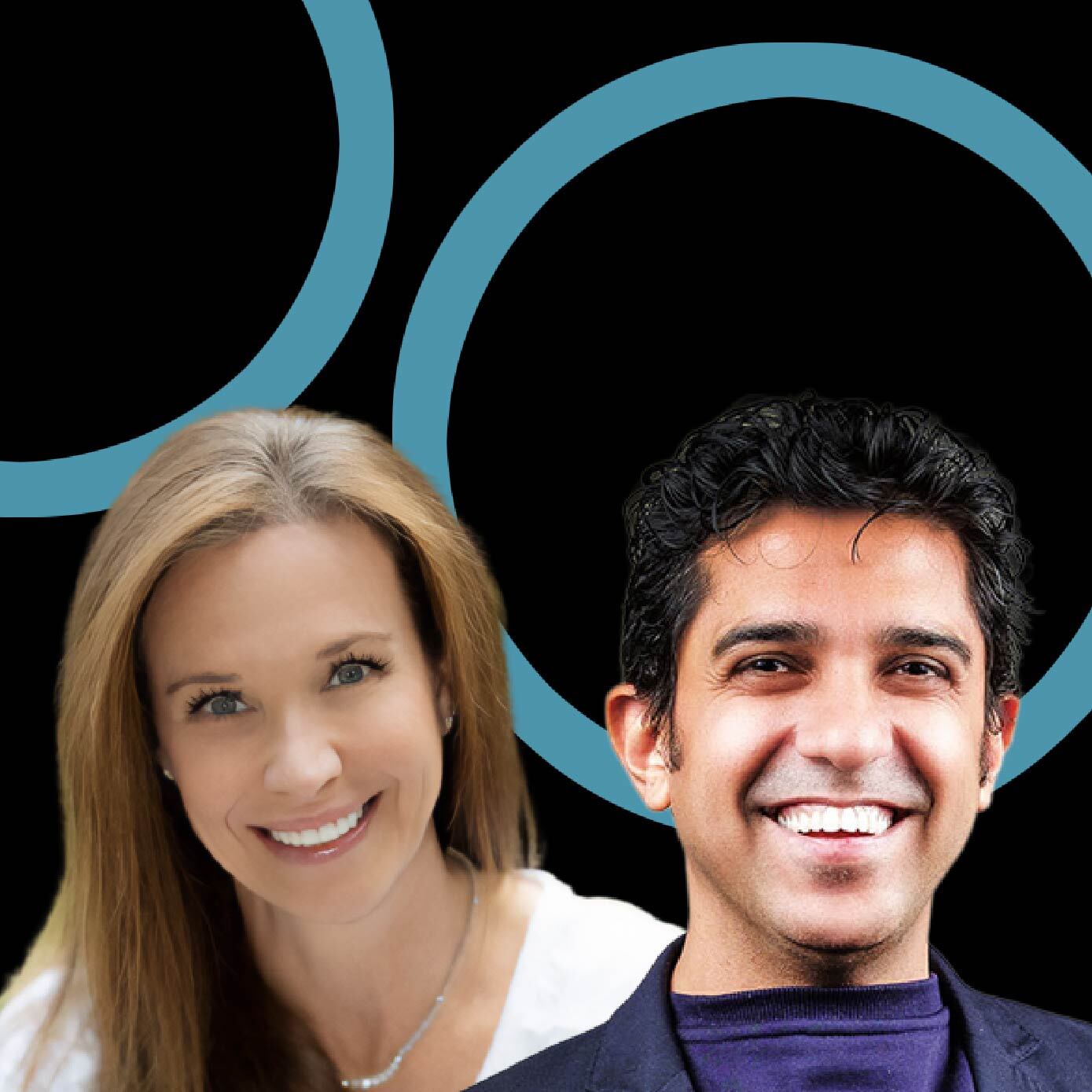
Alyssa Fitzpatrick, GVP, Partner Sales at Elastic, has spent more than three decades navigating technology transitions across startups, ISVs, consulting firms, hyperscalers, and open-source ecosystems. Her perspective is shaped by multiple waves of industry transformation and a deep understanding of how partnerships evolve when customer expectations change.
In this episode of the Zinnov Podcast, Alyssa joins Rajat Kohli, Partner at Zinnov, to discuss:
The conversation also explores a broader challenge facing the industry: how do organizations create meaningful differentiation in an increasingly crowded ecosystem? As enterprises pursue more complex business outcomes, partnerships are becoming less about individual vendors and more about bringing together the right combination of technologies, services, and expertise.
For partner leaders, technology providers, and ecosystem builders, this episode offers a practical perspective on the future of partnerships, and the capabilities organizations will need to remain relevant as ecosystem models continue to evolve.
Tune in now.
PODCAST TRANSCRIPT
Rajat Kohli: If I go back, or rewind to a couple of years back, how do you see the partner ecosystem evolving? Is the partner ecosystem growing or adopting at that same pace as you’re seeing the technology?
Also, our industry is moving very quickly. And so, when you think about what that means for a company evolving today and being partner-led…
Alyssa Fitzpatrick: I question “partner-led” as a term, because I think it’s really customer-led, and how do we all come together to meet that customer need? Because everyone looks like an A+ player. Differentiation is less about marking all the boxes and more about, what do you do best? Double down on that, because if you’re really good, then you will succeed. But if you’re a little bit good at everything, there’s nothing that’s going to make you stand out.
Rajat Kohli: If you look at it from an investment perspective, to be in front of the customer, it requires a lot of investments. Where is the next investment needed?
Alyssa Fitzpatrick: I would say, 100% in enablement and knowledge transfer. Everyone’s trying to apply AI everywhere, and what do we hear? 95% of AI projects fail. But we need to take AI and put it into our core businesses, and we need to get back to our core business and say, how do we drive efficiencies? It’s not about how big you dream; it’s how well you deliver. Trust is the most important. Most important.
Rajat Kohli: Hello, everyone. Myself, Rajat Kohli, working in the capacity of Partner with Zinnov Strategy Consulting. As part of the Business Resilience podcast series, today I have GVP, Partner Sales of Elastic, Alyssa Fitzpatrick. I’ve known Alyssa for more than a decade now, working very closely with her during her different experiences, but having this conversation specifically on how the partner landscape is changing and how it is becoming difficult to differentiate from the partner or from a technology perspective. So Alyssa, welcome to this podcast series, and good to have you on the stage, as always.
Alyssa Fitzpatrick: It’s lovely to be here with you.
Rajat Kohli: Awesome. This is great. Before we get into the topic, Alyssa, it’s always good to know about your experience that you bring to the table, when you started working in the tech ecosystem. So, can you highlight and put some color to that?
Alyssa Fitzpatrick: Well, that’s a very long story. So, I will give you the shortened version. It’s been about a 35-year career, and I started in tech as a computer science major. I started coding, and out of the gates, my degree was in artificial intelligence.
Rajat Kohli: Oh.
Alyssa Fitzpatrick: And that was in 1992.
Rajat Kohli: So, you rewind all the way back to then and then you fast-forward to today, right? And the landscape has changed so much.
Alyssa Fitzpatrick: But my journey has been a really incredible journey over these last 30 years of my career, being from small startups to very large brands, working at ISVs or consulting companies. It’s been a journey of learning and evolving, and we’ve come a long way in the tech ecosystem, in partnerships. And for me, spending 30 years at the helm of this, it’s been an incredible experience.
Rajat Kohli: Wow, that’s fascinating. Like, from coding to running the partner program or the partnership.
Alyssa Fitzpatrick: Never would I have thought that was my career choice.
Rajat Kohli: Wow, that’s so interesting. And if I go back, or rewind to a couple of years back, how do you see the partner ecosystem evolving? There are many instances where the ecosystem has evolved, transformed. Is the partner ecosystem growing or adopting at the same pace as you’re seeing the technology also?
Alyssa Fitzpatrick: Absolutely. I think that really what it comes down to is our industry is moving very quickly. Our ecosystem moves quickly. How we adapt to that has changed every year, every few years. And the role that I’m in, in partnering, has never been the same. Every year, it’s a different recipe. Every year, as the landscape changes, as companies evolve, as trends evolve, we have to adapt and learn as an ecosystem, as a community, as a family working through this. And if we don’t figure out how to come together before the customer asks us to, then that’s what makes us lose the deal.
Rajat Kohli: Interesting. So, you’re talking about the proactive versus the reactive.
Alyssa Fitzpatrick: Absolutely.
Rajat Kohli: But looking at your valuable experience, working with a hyperscaler, working with a semiconductor company, and now running with a tech ISV, a billion-dollar ISV, how is it different in the different kinds of ecosystems and personas, like a hyperscaler versus a semiconductor versus a growing tech partner? How do you see the partner program or the partner ecosystem in a different way?
Alyssa Fitzpatrick: It really does come down to understanding what is the recipe for that particular company. So, when you think about a hyperscaler and what they’re trying to address, from the largest enterprise companies all the way to the smallest SMB, they have to address that entire spectrum of customer. When you look at a company like where I’m at, at Elastic, yes, we want to absolutely delight the enterprise customer, but at the same time, we’ve got a huge base of mid-market and SMB customers. And at the size that we’re at, how do we make them all happy?
And how do we build solutions that delight the SMB but are also relevant for the enterprise? And so it’s not just the building of the solutions, but taking them to market and building those ecosystems that actually help your technology and the customer thrive. And so, when I came to Elastic, I had 30 years behind me of different partnering experiences, whether it was big brands, consulting firms, or other ISVs. Coming to Elastic, I had another solve. It was an open-source company, which I hadn’t experienced before. So, I had another recipe to figure out and to define, but it also comes down to what’s happening in the market right now.
I have been waiting for AI to become real. It’s finally here, and I’m finally at a place where we can capitalize on the data estate and actually build inference models and machine learning that can take advantage of what we’ve built over the last 30 years. That changes my ecosystem. That changes the way I am attracting partners, or I’m looking at the partners that are going to help me go to market and delight my customers.
So, what I was thinking about when I worked for a hyperscaler in scale and execution and proficiency and consistency, to what I think about now, which is bespoke, meeting the customer’s needs, understanding that everyone is a snowflake. Everyone does want a unique experience, and it’s a very different model today than it was.
Rajat Kohli: I think you touched on an important point: the best solutions. That’s very important. But at the same time, the growing billion-dollar technology companies understand that the business is partner-led going forward. It’s more partner-led rather than direct business, and to run that, it requires a lot of investments, heavy investments. How is that journey shaping, convincing the leadership that we need to invest in the partner program? And it’s becoming harder and harder to differentiate in the outside world with the customers because the customers are looking for the business outcome. So, how was that journey in the last one year or 18 months to invest in the partner programs?
Alyssa Fitzpatrick: I love all of that, because there were about five questions in one statement, right? What we talked about six months ago when we were talking about RAG and AI, now we’re talking about agentic. We didn’t talk about agentic AI six months ago, but we are now. So, the landscape changes so dynamically fast that we have to be able to adapt quickly. And so, when you think about what that means for a company evolving today and being partner-led, I question partner-led as a term, because when you think about, is it partner-led or are we just leaning on the elements of the sales cycle? Because it’s not leaning on our partners to lead our deals. It’s leaning on our partners to contribute and be part of how we sell together to make our customers successful.
And so, I kind of today question that concept of partner-led, because I think it’s really customer-led, and how do we all come together to meet that customer need? But then that begs the question of, how do we come together, and how do we find those right candidates, those right players that we want to go arm in arm with and tackle the business? And that’s where the differentiation gets very challenging, because everyone looks like an A+ player.
You can market that, and you can position yourself as whatever you need to in the market, but what it really comes down to is the proof points. Can you do it? Can you build it? Do you have customers that talk about what you’re capable of? And that differentiation is less about marking all the boxes and more about, what do you do best? And kind of grinding it down to what you do best. Double down on that, because if you’re really good, then you will succeed. But if you’re a little bit good at everything, there’s nothing that’s going to make you stand out. And how will you get picked out of the lineup?
And so, when I think about what’s happening in partnering today, it really is going back to that whole concept of marketing to one. We’ve got to figure out how we’re marketing ourselves for the customer that needs us, not marketing to everybody, but to the customer that needs us, and building the ecosystem to solve the solutions and building repeatable solutions so we can get there faster and solve the problem better.
Rajat Kohli: Got it. But in this journey, Alyssa, what you have seen is that the partner ecosystem should be in sync with you. You have a mission that we are there to solve customer problems. It should result in business outcomes. Are the partners also moving at the same pace? Or to move them at the same pace, what is the ask that is coming from the partner ecosystem?
Alyssa Fitzpatrick: So, I think that what I would ask out of my peer group, out of my ecosystem, out of all of the companies that we come together with to solve problems, is: know your space. Know what you’re good at and double down on that. And where you think you might be able to excel, figure out how to invest in that, and then chase that if you need to chase it. But if you’re really good at something, be good at that, because you will step up above the crowd, right?
And if you’re trying to be good at everything, you won’t. And I feel like today, it’s really, really hard for partners to differentiate, because everyone’s trying to check the box of AI, agentic, whatever the latest buzzword is. But if you go back to your core as to who are you, what did you build, why did you build it, and what are your customers telling you? That’s your differentiation.
And then take that all the way to the end. Work with your other partners and realize none of us can solve it by ourselves. There is no single-vendor answer. We have to come together. So, know what you’re good at so you can complement that with other partners and other products or services to make that successful customer. But if you think you can do it all, you’ve got to go back to the drawing board because you’re wrong.
Rajat Kohli: And in this journey, the A+ partners that you’re talking about, the persona of these growing, understanding the ecosystem, building or focusing on the domains, are we only talking about the GSIs, or are you seeing a shift where small and mid-sized partners are really being aggressive and going after those opportunities and the domain? How are you seeing the shift?
Alyssa Fitzpatrick: Absolutely. I think the SIs are critical for helping take that technology brilliance, those pockets of innovation that we don’t know if they’re going to succeed, but you bring an SI in and make it real at a customer, that’s where it really comes together. But where that innovation spark happens, it’s typically not in an SI. This is where the entrepreneurs are building product companies. And I love what I’m seeing in the industry now, where product companies are reaching out and picking up those startups and helping them and bringing them forth, because we all know we can’t do it alone.
And so, being able to bring up the startups and bring up each other and partner together, that’s really where the power is coming from. And it really becomes this: we have to work together, and we’ve got to break down the walls and the silos because that’s what our customers expect. And so, I do think ISVs are leading the way on innovation. Absolutely. Hands down. And I applaud all of the startups out there, and I want to help that innovation.
Rajat Kohli: Wow, that’s interesting.
Alyssa Fitzpatrick: And when we get there, let’s help each other to survive and thrive.
Rajat Kohli: Interesting. But when you look at it, there are three Cs. We call it co-innovation, co-market, and co-sell. Is my understanding correct by what you said, that co-innovation, where the product integration is an important aspect, more on the joint value proposition, is step one? And step two comes the co-market, and the third step is co-sell. Is that the way companies like you should look at it?
Alyssa Fitzpatrick: I do think it’s changed. If you asked me that question maybe 10 or 15 years ago, I think we would have led with brand. I think we would have led with co-market. Who am I in the industry? You’ve got to know who my company is. Today, it’s less about that because you can be discovered. It’s very easy to be discovered. There are people looking for you.
But if you’re not integrated with the right solutions, if you don’t have the connections to the infrastructure that a company has, then you’re starting from less than zero. And so, it’s more about the innovation that comes first. And once we have the integration and it’s proven, then we can start to co-market and start to co-sell. It’s not co-market first, co-sell, and then co-build. The build used to come after because we were like, “Oh, now that’s what the customer wants us to do.” Our customers want us to do it before they tell us to.
Rajat Kohli: And what is your playbook to decide and identify who should be the right partner for the integration? What is your strategy? Are you looking at the customer signals, or are you looking at how the hyperscaler story is? What is your playbook to identify and discover these growing, niche, boutique partners that you need to collaborate on the co-build?
Alyssa Fitzpatrick: It’s a great question, because I think it really does come down to signals. And it depends on whether it’s customer-driven, whether it’s the art of the possible, or whether we’re specifically targeting a marketing or sales play that we think is going to hunt and we’re going to go do it. So, three different scenarios.
Customer-driven: I would expect the signals to tell me, is this partner relevant to the customer? Do they have a track record? Are they trusted? And have they delivered? Those things will come first before anything else, because if the customer trusts them, then that’s a partner I can engage with.
So, different signals there. When it comes to co-innovating, I would look at their history around innovation, around their product success, around their customer support. Are they a product that I can count on that my customers aren’t going to fall over with? And so, very different signals. And I would also look at their ecosystem as to who else has trusted them, and what other partnerships do they have?
So, there’s the customer lens, the innovation lens, but then there’s the marketing lens. And that is, can we build something together that captures the interest of a customer segment? Is there a great banking solution we’re building? Are we solving a need in healthcare that is impossible to solve, but we’ve got a solution? So then I’m looking at a partner in a very different manner. I’m not looking at their customer base, and I’m not necessarily looking at their integration and that track record. I’m looking at, can they go to market with me? Do they have the ability to grab eyeballs on the solution that we’ve built? How do we amplify that? So, different signals depending on the different way I want to work with that partner.
Rajat Kohli: And so, in a way, it gives an opportunity for many partners, depending on their skill set and what kind of journey they want to go on with the partner that they’re choosing. As the focus is on the co-innovation and you’re bringing the ecosystem together, how do customers react to that?
Alyssa Fitzpatrick: They love it. They love it. What I’m finding is, when we’re closing deals, we’ve got three or four partners in every single deal.
Rajat Kohli: Oh, really? Okay.
Alyssa Fitzpatrick: And that, to me, shows the richness in our capability of bringing it together to solve customer problems. I want seven or eight. I want all of it. I’d love to be the nucleus of that. And that’s one of the things that I think Elastic brings to bear: being the vector database, being the observability solution, being the security solution. We’re at the heart of where technology comes together. And so, if we can work together with all the different partners and bring that solution together, then it’s a far richer answer for the customer.
Rajat Kohli: And how is that package really where the data, the base layer, is more on the security you mentioned, on the observability? That’s one of the key focuses, and on top of that, the solutions are coming from different entities in the ecosystem. Is this because there are many point solutions, and it’s an integrated platform that you offer to the end customer? Do we see the growth of the MSPs or the MSSPs in this world?
Alyssa Fitzpatrick: Absolutely. I think they have a beautiful future. Very, very excited for the MSPs and MSSPs. From my perspective, in the world I sit in at Elastic, we do bring together all the different solutions because we search across all of them. And that’s what the vector database that we’ve built underneath the underlying core infrastructure allows us to say: how do I search across the enterprise?
Well, now that I can search it, why am I not observing it and watching to see what the signals are coming from the different applications, whether it’s SAP, Salesforce, ServiceNow, whatever it is? What are the signals coming from those applications that are telling me what’s happening in my business? And then now that I can see all these signals, why am I not securing it?
So, it’s a very, very easy story to say, once you have this search ability, I can observe and I can secure. Or, I’m securing my business, why am I not observing? Oh, wow, now I can search. Or I can start with observability and go out the other direction, right? And so, that’s where I believe that the integration is critical.
What we’ve built in our AI ecosystem is over 300 turnkey integrations with the LLMs, the ingestion models, everything that has to do with AI. We’re pre-integrated. We’re already integrated. So, if a customer is ready to go, “I want to go down the path of AI,” we’ve got the whole landscape for you. So, how can we help you? Because every one of the customers or every one of the companies that you want to engage with to solve your AI problems, we’re integrated with, and we can help you with that.
Rajat Kohli: Interesting. And if you look at it from an investment perspective, to run this business and to be in front of the customer, it requires a lot of investments. Where is the next investment needed, which we are not doing as of today, to address the speed, as you mentioned, to deliver what the customers are looking for? Where is that investment needed?
Alyssa Fitzpatrick: I would say, 100% in enablement and knowledge transfer. It is a wild world out there, and people do not understand what they’re trying to solve. I think that this whole AI trend has gotten very, very exciting, and everyone’s trying to apply AI everywhere. And what do we hear? 95% of AI projects fail.
Rajat Kohli: That was my next question coming to you.
Alyssa Fitzpatrick: Because nobody knows what they’re trying to solve. They’re just applying AI to problems, and they’re not solving what they really need to solve. We need to enable our customers. We need to give them understanding of what’s capable, what they could do, what is possible, and then, when we do proof of concepts, take it all the way through. This is why our AI projects are failing, because we do a proof of concept in a box and it looks beautiful, and then you put it into production and it’s a very, very different story. And so, we’re not really seeing what’s possible because we’re keeping it in a vacuum where we’re not even understanding really what we’re trying to solve. But what are we trying to solve?
Rajat Kohli: How will we get to know, to that nth level, what is it that we are trying to solve? Why are we not able to get that understanding?
Alyssa Fitzpatrick: We’re trying to get to efficiencies, right? We’re trying to pull time and money out of processes.
Rajat Kohli: Mhm.
Alyssa Fitzpatrick: But I think that, with this excitement around AI, we’re turning to avatars, and we’re turning to things that are not actually powering our business. They’re fun, they’re interesting, and maybe they’re showing us new things we haven’t seen in our business. But we need to take AI and put it into our core businesses. And we need to stop thinking about these wild and crazy ideas, and we need to get back to our core business and say, how do we drive efficiencies just like we did when we started to operationalize things? But now we’re operationalizing with intelligence. Applying the intelligence the right way in a tested model and then seeing it scale in a very safe way. That’s what’s going to make AI win.
Right now, it’s out of control because we don’t know how to bound boundaries. We don’t know how to really train the models accurately, but we’re learning, right? Version one.
Rajat Kohli: Yeah, we’re in it. And in this entire journey, as a partner leader, you have to look at the partner program differently. How is there stickiness, the partner stickiness, the partner happiness score, and also how are we able to solve the customer problems? How are you looking at a different avatar or version of the partner program, so that it excites the community and we are able to do it at a faster pace and also scale?
Alyssa Fitzpatrick: That’s a really good question for me right now, because I’m in the heart of solving that.
Rajat Kohli: Oh, is it? Okay.
Alyssa Fitzpatrick: This is where I’m at right now. Coming into Elastic and looking at how we’ve built our partner program, how we work with our partners, and the results that we get today. Is this what I want? Is this what’s going to take me through the next decade of the journey of Elastic? What do I need to do to build that strength in our connection, a strength in how we grow, and where are we going from here?
I’ve done a lot of listening because the ecosystem of today is very different than what I’ve served for the last 30 years, and it’s so dynamic. It’s changing every day. And I think about who’s contributing today that’s winning versus who contributed yesterday that won. It’s not the same partners. And so, how do I build a program? And how do I build a connection with the partners of yesterday that are serving my customers that are used to that model, but build for tomorrow, where my customers want to go and where my partners want to go, but have that be future-proof together?
And I’m listening to how we sell, and how are we selling, not just from the beginning of the sales cycle, but at the end of the sales cycle. So, that’s one piece: the sales transaction. And what does that mean? How do I incentivize or reward the partners that are engaging with us in a co-sell motion?
Then I look at services. That’s incredibly important right now because that’s truly what makes a customer happy. It’s not them buying the software. It’s actually when the software turns into a return on their investment. It turns into cost savings. It turns into acceleration of sales, or it’s meeting those huge business imperatives that they’re trying to achieve. That doesn’t happen from a software sale. It happens once it’s implemented.
Rajat Kohli: Okay.
Alyssa Fitzpatrick: So, building that element of how do I reward my partners when they deliver successful engagements of my technology to a customer? So, sell, service. Next is build.
Rajat Kohli: Mhm.
Alyssa Fitzpatrick: I’ve got a bunch of partners that are my peers in the industry, and we need to co-innovate because when we co-innovate, it’s better for the customers, and we will delight them, and they will call us back. So, that co-innovate, that co-build piece with ISVs, with OEMs, or even SIs building solutions to take to market together, because it’s a better-together message. So, that’s really important.
And then the fourth pillar is managed services. Solve my problem for less. Take it off my hands, right? That still happens. That’s still very, very prevalent today, where customers turn to a managed service provider and say, “Just solve this problem for me.” Well, what does that managed service provider do? They need a plethora of technology behind the scenes solving all those problems. So, how do I make sure that I’m in that conversation, powering up those managed service providers to do what they need to do for their customers? And then, as they onboard more customers, I can scale with them. So, that’s a whole other problem to solve.
So, when I look at the ecosystem and the partners that I’m trying to attract, differentiate, and build our future, I’m looking at the sellers, the service providers, the builders, and then the ones that manage my customers. They’re all relevant, and they all require different messaging, different enablement, different engagement, and a lot of attention.
Rajat Kohli: Wow, that’s interesting. You looked at it from the four layers: the sales, service, build, and manage. Where does the hyperscaler layer come in?
Alyssa Fitzpatrick: Hyperscaler is a location. To me, hyperscaler is a place where you can transact. They’ve made it a very attractive place to transact because they provide services, too. They provide products, but they also provide a home for the rest of us to go and sell our products, to integrate with theirs, or integrate with each other.
The hyperscalers have been one of the most amazing advancements in our industry and what we do in technology to provide to our customers. It’s almost like Costco, right? Costco brings it all together. And I mean the pilgrimages to Costco every Saturday or Sunday, as everyone fills up their homes. It’s the pilgrimage to the hyperscalers. It’s the companies buying technology and sampling and trying, and trying it on, and then trying something else, and doing commits because they know they’re going to consume technology. And doing the commits allows us to say, “Hey, try ours.” So, the hyperscalers have created an incredibly rich environment for all of the rest of the technology providers, whether we’re SIs, MSPs, ISVs, whomever we are. They’ve created an incredible environment for us.
Rajat Kohli: There’s an interesting thing, like the marketplace, and I want to marry this marketplace with the differentiation. What is the differentiation in the marketplace world?
Alyssa Fitzpatrick: That’s one of the hardest things, because for the last, I don’t know, 8 to 10 years, we’ve been talking about search optimization and how do we get found, and how do we make sure that the right search terms are finding our technology? So that when a customer goes in there, because 80% of the research of a customer is done independently now, by the time they’re either reaching out to a vendor or they’re on the marketplace, they’ve made a pretty educated decision already.
So, when you think about the marketplaces and how we are differentiating ourselves, I’ve just been informed of a new term. Instead of SEO, it is AEO.
Rajat Kohli: Okay.
Alyssa Fitzpatrick: I think it’s AEO.
Rajat Kohli: Mhm.
Alyssa Fitzpatrick: And it’s really around the large language models.
Rajat Kohli: Okay.
Alyssa Fitzpatrick: And understanding how to inform them and make sure that when you do search that gives you 10 solutions, now when you do a generative AI search, you get one solution. So, it’s no longer the top 10; it’s the one and only. That’s the case. How do you become the one and only in that search, that AI-driven search, that AI search optimization or AI experience optimization? How do you feed the language models? Which language models do you feed? How do you make sure that when someone’s going to ChatGPT, someone’s going to Gemini, someone’s going to any of these opportunities for engagement, that when you ask about Elastic, it gives the right answer? Or when you ask about who’s the best search provider, it says Elastic every time.
It’s a very different model now. And in the hyperscalers, in their marketplaces, they’re folding that in as well. And so, when a customer goes in and they do a search, they’re not going to get the top 10 products. They’re going to get one. So that does make our challenge that much more difficult, but also it allows us to differentiate on where we’re really good, because now we can say, when that search happens, these are the keywords that find us.
So, we might have a few competitors that we’re competing with, but at least it’s not a list of 10. It’s going to be us.
Rajat Kohli: Got it. That’s interesting. Now, if you move a little on the other side, what are the skill sets of a successful partner leader?
Alyssa Fitzpatrick: That’s a very interesting question because 10 years ago, 20 years ago, very different answers.
Rajat Kohli: I wish I would have recorded a podcast at that time with you, and then we could compare.
Alyssa Fitzpatrick: I would too, actually. Very much so. Today, it is being nimble and being very attuned to the industry, and understanding what’s happening with the trends. What are the big players doing? What are the smaller player trends? But also listening to your partners and listening to your customers, because how we transact and how we engage is changing every day.
We’ve had a whole world of distributor, where the distribution model kind of came up. It became extremely important. Then it kind of seemed to fall, and now it’s coming back up again. How are we dealing with these trends? How do we make sure that we know how we’re evolving our ecosystems, our partner models, and engaging with the ecosystem the right way?
I look at some of the partners of yesterday, and they’re the partners of tomorrow. They don’t necessarily go away. So, who you thought was the big whale of yesterday that we thought might be dying, tomorrow they might show up. So, we have to be very open. We’ve got to listen. We’ve got to always be attentive.
And then I also think the most important thing is our peer group. I’ve got a group of 50 of my peers.
Rajat Kohli: Oh, wow.
Alyssa Fitzpatrick: I get together with them four times a year.
Rajat Kohli: Oh, wow.
Alyssa Fitzpatrick: We share stories. We share how we are dealing with deals. How are you dealing with consumption models? How are you dealing with this? How are you dealing with that? We all share together because when partners work, we all work together. We don’t compete. Partner leaders do not compete with each other. We embrace each other. And that has made me better. It has made them better. It has made us better.
Rajat Kohli: This is a wonderful discussion, Alyssa. Thank you so much for your time today, for this wonderful discussion on the partner landscape and how differentiating is very important, but it’s becoming harder and harder in today’s world. Thank you so much for your time.
Alyssa Fitzpatrick: Thank you as well. It’s been a delight. Thank you.
Rajat Kohli: Awesome.
Thank you for listening to this episode of the Zinnov podcast. Stay tuned for more such interesting episodes. You can listen to our podcast on Apple Podcasts, YouTube, Spotify, or any of your favorite streaming platforms.
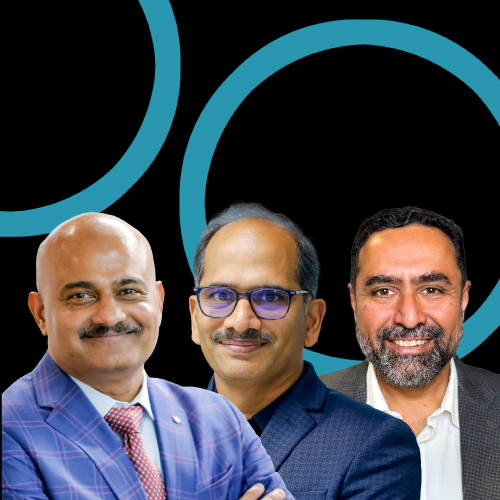
Theom’s Navindra Yadav and Ravi Sankuratri discuss enterprise AI security, data governance, building an AI-native company, and their GCC journey in Hyderabad.
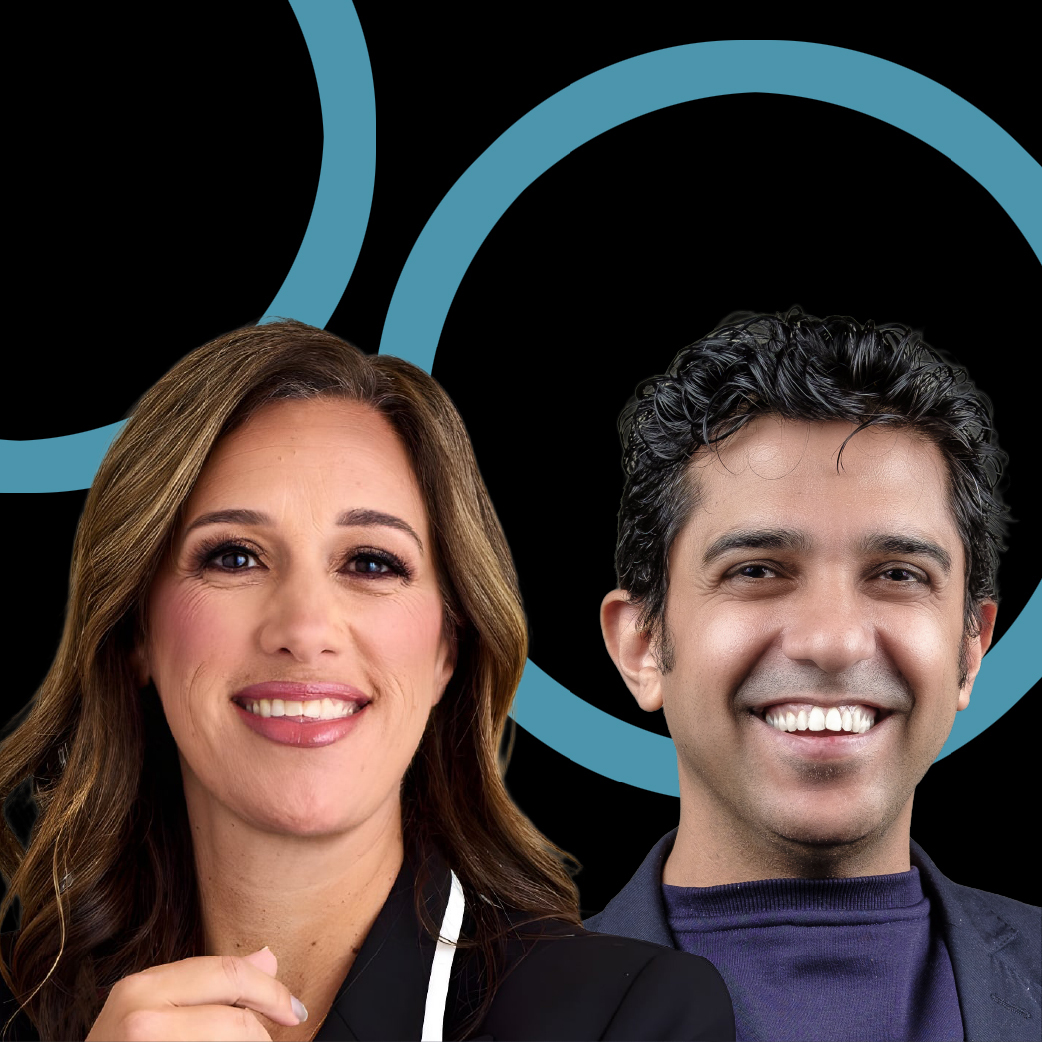
Explore AI and enterprise transformation with Erica Volini, from work redesign and human adoption to data and leadership. Tune in now.
Don’t miss any of our future episodes!
Also subscribe to the Zinnov Podcast on these platforms






Theom’s Navindra Yadav and Ravi Sankuratri discuss enterprise AI security, data governance, building an AI-native company, and their GCC journey in Hyderabad.
Explore AI and enterprise transformation with Erica Volini, from work redesign and human adoption to data and leadership. Tune in now.
 THANK YOU
FOR YOUR RESPONSE
THANK YOU
FOR YOUR RESPONSE