




BACK TO Business Resilience
ZINNOV PODCAST | Business Resilience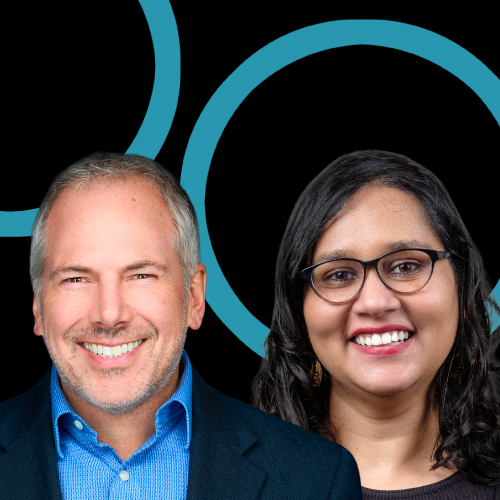



Every box on a shelf, every label on a bottle, every pouch in your pantry passed through a world most of us never think about. It’s a business of wafer-thin margins, nonstop production lines, and zero room for error, and right now, AI is turning it upside down.
In this episode, Nitika Goel, CMO and Managing Partner, Zinnov, sits down with Chuck Schneider, CEO of Amtech Software, whose systems run more than 1,250 packaging plants around the world. Chuck opens up about betting big on AI (every single employee now has an AI goal), and what it really takes to lead through relentless change.
Along the way, he shares how growing up on an island of 37 people shaped his leadership style, why he’s the last one to speak in the room, and the one thing that still keeps him up at night. It’s a candid look at technology, culture, and staying ahead — with a masala dosa detour along the way.
Tune in now.
PODCAST TRANSCRIPT
Chuck: I want our customers to know that if they’re with Amtech and they need help, they’re going to get help from us. If you were my customer, my job is to help you win. So if I can help you sell more and be more profitable, you’re winning, and you’re going to stick with me.
Nitika: So collaboration is a very key mandate for you?
Nitika: One thing is, you talked about it, right? People are uncomfortable with change. And change at this velocity, I’m pretty sure, has a bunch of skeletons in its closet.
Chuck: I want people to love being at Amtech. Our longest-tenured employee has been with the company for 43 years.
Nitika: Oh, wow.
Chuck: Some people think that once you’re bought by private equity, they’re going to cut costs, and it’s going to be terrible for the customers.
CHUCK: Vista is very different. Vista acquired us and said, “We’re going to invest because we think we can help you grow through investment.” This year, we’ll spend almost 30% of our revenue on R&D. That’s not profits; that’s revenue, and that is probably double what most companies spend.
Nitika: The other thing that I want to ask about is AI.
Chuck: So we’re investing a lot in AI right now. Every single person at Amtech has an MBO this year related to AI.
Nitika: What about you? What’s your personal AI MBO, Chuck?
Chuck: My MBO is quite tough because it encompasses everything.
Nitika: So everyone’s AI MBO is your AI MBO.
Chuck: Exactly.
Nitika: What is the one mantra or quote that you live by?
Chuck:I wouldn’t call it a quote. I tell people that I’m the kind of person who likes to get up in the morning, grab his spear, go up the mountain, and slay the beast. Always charge forward and win.
Nitika: Every product on your shelf, from a cereal box to a medicine carton to a snack pouch, has one thing in common. It had to be manufactured, printed, labeled, and delivered with remarkable precision. But behind that package is a highly complex manufacturing operation. Hundreds of jobs are moving simultaneously, raw materials must be tracked precisely, production lines run continuously, customer deadlines leave little or no room for error, and margins are wafer-thin.
Nitika: It is a business where operational precision is everything. What most people do not realize is that an entire category of enterprise software exists to make this possible, and right now, that world is changing incredibly fast. Artificial intelligence is beginning to reshape how manufacturers estimate jobs, schedule production, reduce waste, and improve profitability. Few companies are closer to this transformation than Amtech Software, whose software supports more than 1,250 packaging plants around the world.
Nitika: Hi, everyone. I’m Nitika Goel, Managing Partner and CMO at Zinnov. Welcome to the Zinnov Podcast, where we speak with leaders who are using technology to transform the industries that keep the global economy moving. Joining me today is Chuck Schneider, CEO of Amtech Software. Chuck has spent his career building software for operationally intensive industries, from logistics automation to packaging manufacturing.
Nitika: Chuck, it’s great to have you with us.
Chuck: It’s great to be here.
Nitika: I know that, on the outside, packaging seems fairly simple. You go to a shelf, you see a box, a cereal box, something like that, but there’s a lot of complexity behind it, right? We rarely think about it, but this is a very pivotal industry that keeps the entire global commerce machinery going.
Nitika: So I would love to understand what drew you toward solving problems like this.
Chuck: If you look at my background, I have a double-E degree and a computer science degree, so I’ve always been kind of a nerd. Very early in my career, I got involved in supply chain logistics, and what drew me to that was how you could take software and technology, apply it to a business problem, and actually see something transform or change for the better.
Chuck: When I looked at the opportunity at Amtech and what Amtech was doing on the plant floor to help with scheduling and make plants more efficient, I got very excited because it got back to my technical background. And the fact that Amtech had so many plants and so much experience doing this, and had a team of people who were just fantastic—
Chuck: So the combination of great, interesting technology and a great team was really why I wanted to be at Amtech.
Nitika: That is a fantastic way to look at it. I’m going to step back, because I think it will be good for our listeners to understand what Amtech does.
Chuck: So Amtech provides the core software system that runs packaging factories.
Chuck: So everything from the ability to produce a quote and cost out what it would take to make a box, to taking that order, invoicing the customer for the order, manufacturing the box, ordering all the raw materials to make it, and shipping it to the customer. We take care of all of that for our customers.
Chuck: So we have a completely integrated system that does everything from the start of the process through to the end of the process.
Nitika: That’s fantastic. So I’m going to ask you: you described your business as four main types of packaging. I’d love to understand what that packaging is.
Chuck: Yeah. So there’s corrugated packaging, which is the Amazon box that shows up on your doorstep every day.
There’s folding carton, which is like a cereal box or a box you’d use for chocolates. Labels are always fun, because that’s the label on your beer bottle or your scotch bottle. And then flexible packaging is like the pouches you might see in your pantry. So you might get protein powder or nuts in a bag now, instead of the canister they used to come in.
That’s flexible packaging.
Nitika: So if I have to ask you: the packaging and labeling industry, like I mentioned, seems seemingly mundane from the outside, but there are a lot of extraordinary parts that go into it, right? From a software perspective, could you share some examples of how that comes to light, and how you put that software together to make complex packaging happen?
Chuck: Yeah. So from a software standpoint, it does seem pretty easy. You’re making a square box. How hard can that be, right? But if you ever fold out a box flat and look at where all the creases and cuts are, if you’re off by just a little bit, you won’t have a square box.
So upfront, creating the specification for a box is very complex. And if you recall, during COVID, a lot of people were complaining about so much air being shipped, because you’d get a little tiny thing in a big box. Now they’re getting very sophisticated with the boxes, where you can have a box that folds down to the size of what you’re shipping to reduce shipping costs.
So making these things is very complex. And for packaging manufacturers, the margins are very tight. So if you go to cost something out and you’re off, it’s very easy to lose money. This is one of the things that Amtech has done really well. We got our start with independent manufacturing plants, and they needed to be very accurate in how to cost something out and how to produce a quote that will win.
And our system does a better job at costing and quoting than any of our competitors. It’s one of the areas where we’re really, really strong. So it’s about getting it right on the front end, and then, as that order moves through the plant, how do I schedule it on the right machine at the right time to optimize that piece of equipment?
Again, that drives efficiencies and saves money for the plant. So if you want to run a really profitable manufacturing plant, you’ve got to be good at every step consistently, and that’s what we help customers do.
Nitika: I think that’s fantastic. You also have very different kinds of customers, right? When we were talking, you mentioned there’s a high degree of customization that you do for customers.
Nitika: Is there any interesting anecdote or example of a type of customization you’ve done that really made your engineering team push the envelope a little bit?
Chuck: There’s a lot of stuff we’ve done. One of the most interesting things we’ve done recently is adding a new module for contract packaging, or what we call co-pack.
Many of our packaging customers are looking for new paths to revenue. So instead of producing a bunch of boxes and shipping them to—I’ll pick DeWalt, a company that makes tools—DeWalt will ship the drills to the plant, and the plant will put them in the boxes and ship the boxes to a distribution center.
So we built this whole module completely integrated, so when the boxes are produced, they can go over to the lines, get packed, and get shipped. And what that’s done is give our customers a very easy way to go find new revenue. That contract packaging revenue is more profitable than just making the box, so we’re really helping our customers be more successful.
Nitika: That’s fantastic. I think one of your core philosophies, in one of your talks, was how to be deeply customer-centric and to be the world’s best software for packaging, right? So what are some of the key things you’re putting in place today to enable that, Chuck?
I’ll tell you the way I look at business. I’ve worked in, I’ll say, smaller industries throughout my career.
Chuck: I think that if you can put your arms around your customer and deliver a great experience for the customer, it does three things for you. One, they’ll buy more stuff from you, which is good for you, obviously. Two, they’ll be a great reference. But software is hard, and sometimes projects are hard and you have issues. If you always take care of your customers, you’ll work together as good partners to solve that issue and move on, and that’s what’s really important.
One of the things we’ve done this year to improve on that is launch customer success. We didn’t have that at Amtech before, so we’ve got a whole team of people who think about the complete customer journey, how they can make that experience better, and how they can take care of our customers. That’s something really important to me and to the whole company.
Because for manufacturers, at the end of the day, if something happens in their plant and they can’t produce boxes, it costs them a lot of money. So trust, being able to trust that Amtech will be there for them if there’s ever a problem, is really, really important.
Nitika: I think you articulated that beautifully.
Nitika: How do you build that as a culture in an organization? I understand it, but customers are obviously different. How do you build the playbooks? How do you build it as a culture? And playbooks, given the Vista private equity investment, are something you’re very familiar with, yes?
Chuck: We’ve got lots of playbooks, and we’re just getting started on the customer success piece.
But one of the things I did when I joined Amtech was that I wanted to really understand the culture of the company, and we put together a set of guiding principles, and we celebrate those. We do all-hands meetings every six weeks. Once a quarter, we have one where we take all the great things people have done in the company and celebrate successes, and a lot of the success is really around collaborating with our customers and delivering value to our customers.
So we’re trying to build that into the culture at Amtech. It started in the US, but also with the team here in India.
Nitika: Got it. So I’m going to ask you: give me an example of a recent success you celebrated at Amtech that you’re incredibly proud of.
Chuck: I’ll tell you. So I mentioned the contract packaging.
We built that for a customer. We had our first go-live a couple of months ago, and the team that went out there worked tirelessly to help that customer be successful with that go-live. It really demonstrated the fact that we’re good partners with our customers. Going live on a new piece of software is hard, and they helped them be very successful, so we celebrated that as a company.
Nitika: Got it. Was it with one of the customers that had a good label we cannot mention?
Chuck: They don’t have labels. That was a corrugated one, a very large integrated corrugated manufacturer.
Nitika: A large manufacturer. Great. The other thing I want to ask about is AI. One cannot ignore that and what it means.
Nitika: It also has some implications on your business, of course, and on how your customers may think about what value-added service you can provide as an organization, right? So what are some of the changes you’re seeing from a business side, and what are the changes you’re seeing from an engineering side?
Chuck: Wow, AI has changed a lot. When Vista acquired us last year, one of the things they talked a lot about was how they wanted their portfolio companies to leverage AI to be more efficient internally and to deliver great AI capabilities for their customers. And Vista is a great catalyst for sharing among their portfolio companies.
So there are 90 other companies. I get together with other CEOs. We talk about how AI is changing things and what they’re doing. So it’s not just me on my own; I’ve got all this help. What we’ve done internally around AI is set up an AI council, which has representatives from every function in the company, and they are constantly looking at the use cases where we could apply AI to be more efficient. We track those, and we track the hours saved and what we’ve done.
So we can look across the company and say, this is what we’ve been doing. Our engineering department has made great strides in using agents to help them write code, write specifications, and find and fix bugs, and it’s made them much, much more productive. So that’s been great for us internally.
Externally, what’s been interesting is that manufacturing is somewhat behind the times in its adoption of technology. So all of my customers are trying to figure out how AI affects them and what they’re going to do. So we’ve been working on a strategy, and we actually just launched it a couple of weeks ago, called Amtech Intelligence, which isn’t just AI, but how we bring intelligence to manufacturing using AI, using analytics, and using a bunch of different tools.
And as part of that, we acquired a company called Clarico, which had an AI product for doing costing and quoting. Their product is amazing, because, as I said, creating a specification is hard. It might take you hours or even days to produce a quote for somebody if it has a lot of line items. Clarico can do it in minutes.
And for our customers, that’s fantastic, because if you can get the quote out first, you might win just because of that. So our commitment to providing AI for our customers means we’re engaging with customers, understanding the use cases that can drive value for them, and then working on how we build those into our products.
So we’re investing a lot in AI right now. Every single person at Amtech has an MBO this year related to AI.
Nitika: That’s fantastic. What about you? What’s your personal AI MBO, Chuck?
Chuck: My personal one—so Vista does an AI assessment of all their portfolio companies, and you get a score. So my personal goal is to get our score to a certain level by the end of this year, which really requires every one of our functions in the company to improve and requires us to deliver products to our customers.
So my MBO is quite tough, because it encompasses everyone.
Nitika: Everyone, yeah. It’s everyone’s AI MBO that is your AI MBO.
Chuck: Exactly.
Nitika: What do you do to learn AI in your free time? As an individual, Chuck, how are you absorbing and looking at AI?
Chuck: So the biggest thing for me is two things. One was a presentation we had at one of the Vista events on the framework for prompt engineering.
A lot of people use ChatGPT and just ask a question, and they get an answer, which is great. But if you engage with something like ChatGPT and you say, “Okay, here’s the role I want you to play, here’s the context, here’s your task, and interview me and ask me questions,” then I’ll have conversations with AI. When it starts asking you questions, it’ll ask you good questions.
You’re like, “What? I didn’t think of that.” And it forces better results. So I’ve done a lot of that to try to get my prompt engineering better. That’s probably the biggest thing. And then also, we use both ChatGPT and Claude, really using Claude to help improve what I do day to day. So I’ll have a conversation, and it will help me create presentations.
It just gets you to an answer much, much faster. It doesn’t mean that I don’t still have to do my job, but it’s a great thought partner.
Nitika: We have Chuck in the loop.
Chuck: Yes.
Nitika: So that’s that. Now, a little birdie told me that Chuck is fairly competitive.
Chuck: A little bit. A little bit.
Nitika: So I’d love to understand: in your space, what do you think are the things that are truly allowing Amtech to stay ahead of the competition?
Nitika: Or, how are you killing the competition, if I have to be nicer?
Chuck: You know, I think there are a couple of things. One, and it’s been interesting, a lot of my competition has been bought by private equity in the last few years. And I’ve learned, since Vista bought us, that all private equity firms aren’t cut from the same cloth.
Some people think that once you’re bought by private equity, they’re going to cut costs and it’s going to be terrible for the customers. Vista is very different. Vista acquired us and said, “We’re going to invest because we think we can help you grow through investment.” So one of the ways we’re looking at this is: hey, we’re going to do some things for our industry that our competitors aren’t doing, and we’ve got the investment to do it.
This year we’ll spend almost 30% of our revenue on R&D. That’s not profits, that’s revenue, and that is probably double what most companies spend. But there are some things we want to do that we know will provide great value to our customers, and Vista is supporting us in doing that. So that’s one piece of it.
The second piece, as I mentioned, is that we’re launching customer success this year. We’re doing a lot to really figure out how we put our arms around our customers and provide excellent support. Because at the end of the day, people don’t want to change out their ERP, but they will if they’re not getting good support.
And I want us to have the best support, and I want our customers to know that if they’re with Amtech and they need help, they’re going to get help from us.
Nitika: That is your moat. You will provide both premium service and technology. Great. I also want to check with you quickly on what are some of the things that kept you awake at night pre-Vista, and some of the things that are keeping you awake at night post the Vista investment?
Chuck: Pre-Vista, the private equity company that brought me in was a smaller private equity company based in Austin, Texas. They’re a great company, but they weren’t real strong in software. I think we were the first software company they bought. So a lot of what I had to do was just based on me.
I didn’t have the deep network like we do with Vista. I got help from them, for sure. But as I looked at Amtech and the potential for Amtech—
They would get me to a point, but then I knew that to get where we wanted to be, we needed more help. So what probably kept me up at night was knowing that maybe I was held back on some of the things I wanted to do that Vista has now unleashed. If you look at our vision as a company, it is to be the global leader in AI-powered software solutions for the packaging industry.
And if you want to be the global leader, you can’t just be a North American company; you have to be a global company. The second piece of that is that we’re focused on packaging, and Vista is 100% bought into that vision and is supporting us on that vision. So post-acquisition with Vista, everything they told me during the sale process—they weren’t just selling me on something.
They are delivering on it. So I couldn’t be happier with who owns us right now.
Nitika: So is the AI MBO at least keeping you awake at night then, Chuck?
Chuck: It does, because the one constant at Amtech over the last four years has been change. We’ve gone through a lot of transformation, and this AI thing is a new transformation.
For a lot of people, it’s scary, right? Am I going to keep my job, because AI is going to take it away? Or, how is this going to affect me? I’m not the youngest person—you can tell from the color of my hair. It’s like, can I learn this new stuff? So that’s the type of thing: how do I make sure we’re enabling the company to leverage all these tools and be successful?
Nitika: So I think you brought up a very interesting point on change, right? Obviously, last year has been a lot of change. You’ve had a private equity investment and a new partner. You’ve started a customer service division. You set up your India center. So there have been lots of changes—doing things a lot more globally, more playbook-driven, with AI mandates.
Nitika: So how are you able to prioritize which change to make, and make sure that the balls you’re juggling don’t drop? I know you said you’re a circus act on the side, but…
Chuck: It’s a great question. So what I did at the beginning of this year was look at my MBOs, and I wrote down the three most important things for me to focus on this year.
And one of the things I had to stop doing was being more involved in some of the details. So I’ve got a great executive team in place, and I’m trusting them to do what they need to do. I’ve got my three things that are my top three priorities, and that’s where I’m putting 80% of my focus.
Nitika: Six new people, I…
We hired—yeah, out of my whole management team, 80% are new.
Nitika: Oh, wow. So a lot of new things.
Chuck: A lot of new things, and it was because Vista was making an investment. So for example, we had a person who was running our product group and also running our engineering group, and she’s fantastic, but she had never really run engineering groups.
But with Vista’s investment, now we’ve got a great person running our engineering team who spent his whole career doing that. So we built out a team that has great focus on being really good at what they’re doing at Amtech, and we’re working really well together. So one of my top three things for this year is to make sure my team is executing at an excellent level.
They’re working well together, and we’re moving the ball forward.
Nitika: That’s fantastic. So collaboration is a very key mandate for you. One thing is, as you talked about, right, people are uncomfortable with change, and change at this velocity, I’m pretty sure, has a bunch of skeletons in its closet.
Chuck: Yeah.
Nitika: So I would love to understand how you’re dealing with it, what kind of communication you’re doing, and how you’re able to bring that change across all global locations.
Chuck: So the one thing I felt as we went through all this change was that if people didn’t know what was going on, they’d make up their own version of what was going on, and it might not be what we wanted them to think.
Nitika: And they’re very creative as well.
Chuck: Exactly. So we do all-hands every six weeks, and we’re very transparent about what’s going on with the company. I share pretty much everything I can with everybody in the company, and we record it and send it out. So the team here in Bangalore, and the team all over the world, can have access to that. I think that level of transparency, and the fact that everybody at Amtech knows that if they have a question or concern about something, I’m on Teams—they can Teams me, they can email me, and I’ll get back to them on it.
It’s really important, because if you think about packaging, I can hire people who know how to develop software, but that deep understanding of the domain we work in is hard. I don’t want people to ever leave. I want people to love being at Amtech. Our longest-tenured employee has been with the company for 43 years.
Nitika: Oh, wow.
Chuck: So we’ve got a lot of long-tenured people, because we’re trying to create a great place for them to work. And I don’t want this change to frustrate someone to the point that they think they need to go someplace else.
Nitika: So what made you decide on India, and what surprised you about India? You cannot say your team.
Nitika: I’m taking that off the table.
Chuck: So when we started looking, we wanted to have a GCC someplace that had access to great talent, especially ERP talent. We’re moving into Europe and Asia Pacific over the next few years, so we wanted to have it someplace that could help serve those markets.
India was obvious. We got really lucky that the guy from Vista who was helping us find a location suggested Bangalore, because there are lots of ERP companies here, and we ended up hiring our Chief Human Resources Officer here, because he was from a previous Vista company, and it’s just worked out really well.
We’re putting all functions here, because I don’t view this as, you know, there’s the US office and the India office. I view it as: we’re all one global company, and if we’re going to act like that, it’s not this office and that office. We’re all part of one team, so we want every function here.
Because ultimately, I want to see this office serving the Indian market when we start selling here, serving our customers here, and providing support for our products, great customer service, and sales in every part of the company.
Nitika: Got it. Is it still relatively uncommon for many global companies building a team here to have a global Chief People Officer from here?
Chuck: So I don’t know if a lot of other companies have their CHRO here. I’m very happy we have, because Vinod has been great in helping build the team here. He and I see eye to eye on how we want to build culture and on what’s important around things like career development, pay for performance, and those types of things.
So I didn’t think about it as, “Ooh, I’m having my CHRO in India.” It was just, “This guy’s great. I want him on my team.”
Nitika: Got it. Okay. That makes a lot of sense. You come from a very interesting background, and I have to tell the audience, because I would be remiss not to say it. An interesting part is that you grew up on an island that had 37 people.
Chuck: Yep.
Nitika: Then you came out into the big, bad world of lots of people. Now you’re running a company that probably has significantly more people than you had on the island you lived on. What have some of the life lessons been that you learned on the island that you now replicate in your work?
Chuck: You know, I think one of the biggest ones—so my dad did everything he could to support the family. He was a commercial fisherman. He had a cement plant where he delivered concrete. He delivered fuel. He was a ferry boat captain. So from a very early age, me and my brothers worked to help him, and I think that built a good work ethic, so I’m not afraid to get my hands dirty.
And I don’t view my position as, “Okay, I’m the CEO, I don’t do those types of things.” I’m happy to go out, meet with customers, and do whatever I need to do to help my teams. The other thing about growing up on the island, I think, was that with such a small number of people, if you’re like, “Oh, I only really want to be friends with people like this,” you’re not going to have any friends, because there aren’t very many people there.
So I make friends very easily, and I think that’s helped me throughout my career.
Nitika: So that’s fantastic. How do you also translate—did you have to be an extrovert or an introvert? Is that a personality shift you had to go through? Or is it just who you’ve been, and you’ve been an extrovert just as a function of making friends, like you said?
Chuck: That’s just how I’ve been.
Nitika: Just how you are—there’s no evolution that had to take place. One quick thing I wanted to check with you: how have you taken some of that learning and baked it into your leadership style?
Chuck: I think the biggest thing that’s part of my leadership style—and I think it’s also transparent within my team, because I probably hired people who had the same philosophy—is that I’m more of a servant leader.
So it’s not like, “Hey, you go do this.” It’s like, “How can I help you?” And that’s how my team engages with the rest of the company. So it’s my job to break down barriers and help my team be successful, because if my whole team is successful, and their teams are successful, then I’m successful.
Nitika: Absolutely. So I heard an interesting thing: that in a meeting, you’re the last one to speak.
Chuck: Sometimes. It’s something that, maybe earlier in my career, I was less good at. But I spend a lot more time listening, and I think it’s important to listen. I do want to make sure that—you know, I know the buck stops with me, but I want to hear what everybody has to say and consider different options, and not just try to enforce my will on things.
So I like everybody else to go first. And then—
Nitika: Share what you…
Chuck: And you’re sort of consulting. I’ll share my thoughts on what we just talked about, or observations, or get to a final decision on things.
Nitika: Got it. There are a lot of things that you’ve unlocked as we’ve spoken today.
Nitika: I usually do a rapid-fire round, because I think there’s a lot about a person that gets replicated in an organization as well. As the leader of that organization, I’m pretty sure there are a lot of your thumbprints or imprints on what Amtech does. So you just said pickleball, yes?
Nitika: Yeah. But if I had to tell you that you could only pick one sport, golf or pickleball, which would you choose?
Chuck: Oh.
Nitika: It’s a hard one.
Chuck: Pickleball.
Nitika: Oh, really?
Chuck: That’s a really tough one, because golf and pickleball are the two things I do. But pickleball—it’s something I can do with my wife and friends, and it’s fun.
You can do it every day.
Nitika: So what was your first impression of India?
Chuck: I’ll give you two impressions. One, everybody here has been super friendly and welcoming. The second impression is: thank goodness I don’t have to drive here.
Nitika: Oh, it’s a skill. I’m pretty sure you’re competitive and you’d be great at it as well.
Chuck: I lived in London, so I’ve driven on the other side—the wrong side of the road, as I would say. But the traffic here is—
Nitika: —is special.
Chuck: Yes.
Nitika: Love it. So from what I understand, you’re also a foodie. Have you experimented, and what’s your favorite Indian dish so far?
Chuck: Masala dosa.
Nitika: Masala dosa. Oh, okay.
Nitika: What is the one mantra or quote that you live by?
Chuck: I wouldn’t even call it a quote. I tell people that I’m the kind of person who likes to get up in the morning, grab his spear, go up the mountain, and slay the beast. And that beast might be winning a new deal with a customer or solving some problem.
So it’s, you know, always charge forward and win.
Nitika: Very nice. If someone had to write a book about you, what would the title of that book be?
CHUCK: An Islander’s Journey.
Nitika: What’s something that’s made you deeply uncomfortable recently?
Chuck: You know, as I’ve talked to other CEOs in the Vista portfolio who have been on this AI journey longer, and I see some of the things—
I was talking to a CEO, and he’s like, “I wrote a program this weekend using Claude.” I’m like, “I’m not doing that.” So I think that sometimes I’m worried, you know, that I can’t let myself fall behind, and that’s probably the biggest thing.
Nitika: That’s very interesting. One leadership habit that you had to consciously unlearn?
Chuck: It was really about not getting involved in the day-to-day of my team, as I think I mentioned earlier. I used to sit in on all the product team calls, the sales calls, and be involved. And I had to—I would say unlearn, but I had to trust that I’ve got the right leaders in place, let them go run their businesses, and if they need help, they can come to me.
Nitika: Amtech 20 years from now—what would your tagline be?
Chuck: It would probably go from “to be the global leader in AI-powered software solutions for the packaging industry” to “we are the leader.”
Nitika: Okay. Love it. Okay. Chai, filter coffee, or just a good scotch?
Chuck: I’d go with filter coffee. This is the first time I’ve had Indian filter coffee.
This stuff is amazing.
Nitika: I love it. Okay. You gave a good answer, Chuck.
Chuck: I’ve got a whole bag of filter coffee to take home with me.
Nitika: Really? Okay, you really do like filter coffee. That’s fantastic to know. If there was a piece of advice you had to give to your next generation of leaders, what would that be?
Chuck: I think it would be to listen. I think a lot of times we think we know the answers to something and don’t listen to the folks who are working for us, and I think it’s a skill that a lot of people don’t have. It’s something to just take pause and listen.
Nitika: There’s a whole new set of AI-native people that you will have in your workforce, and then those who are probably very competent with the domain and more technologically savvy than most.
Nitika: So how are you balancing those multi-generational thought processes?
Chuck: I think we’re just at the beginning of trying to even understand whether it’s going to be an issue at all. But I do think pairing people up, so that you can have someone who’s got a lot of domain experience mentor somebody who might be newer to the industry, and that person helps them understand how we’re using the AI technologies, is probably something we’ll end up doing.
Nitika: Got it. Thank you again, Chuck. It’s been a completely enlightening conversation. I loved having this discussion with you. I think for me, the biggest takeaway was just being able to absorb, to listen. Servant leadership—I know people say it, but from what I’ve even heard from your team, you live it every day.
Nitika: And I love the fact that you’re so open to change, and I can almost see it and hear it in everything you say and do. I look forward to having many more conversations. It’s been an absolute privilege.
Chuck: Thank you very much.
Nitika: Thank you for being here today.

Explore AI and enterprise transformation with Erica Volini, from work redesign and human adoption to data and leadership. Tune in now.
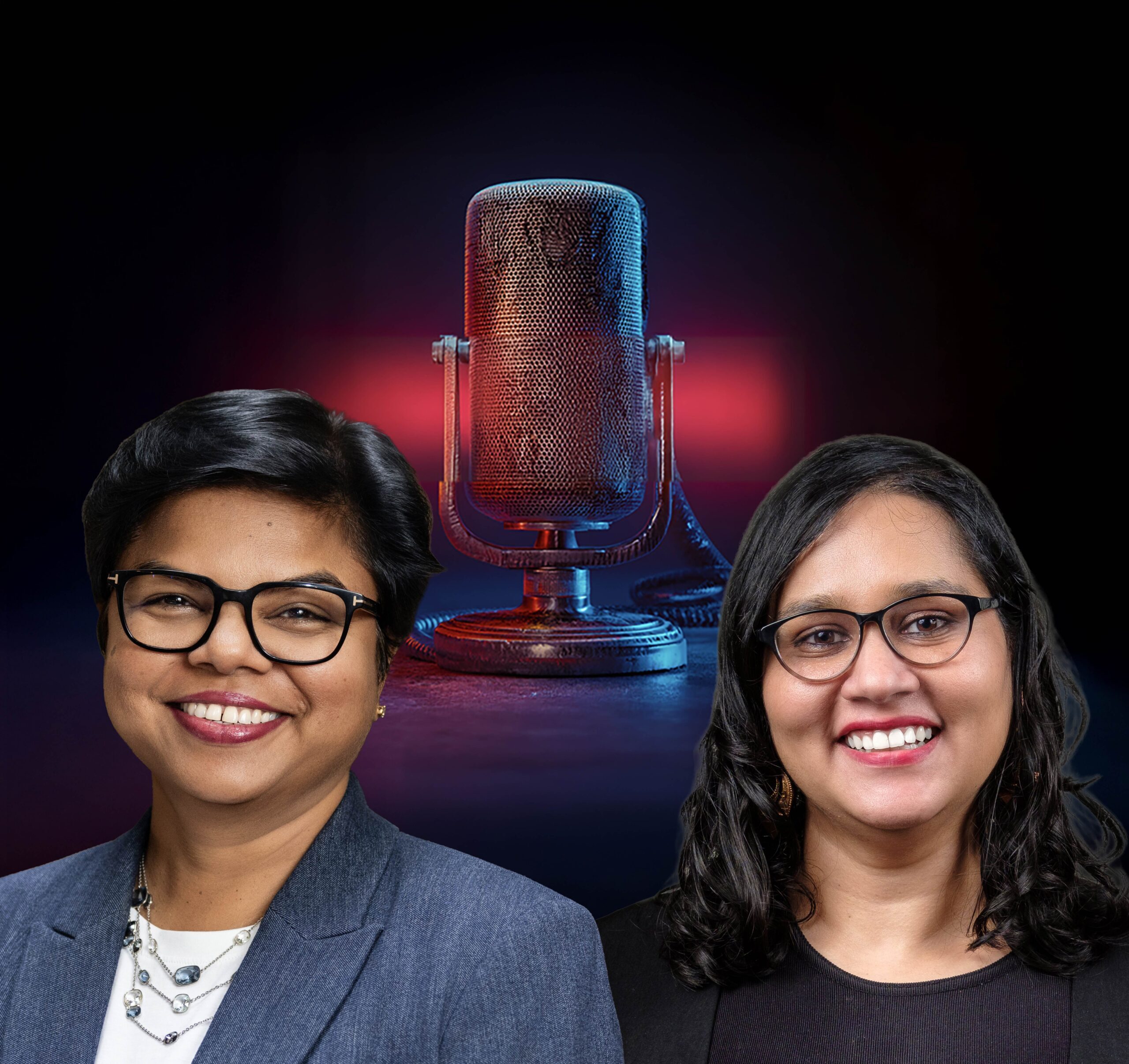
Dhanya Rajeswaran of Fluence joins Zinnov’s Nitika Goel to discuss building a high-velocity GCC, global leadership, AI, innovation, and scale. Tune in.
Don’t miss any of our future episodes!
Also subscribe to the Zinnov Podcast on these platforms






Explore AI and enterprise transformation with Erica Volini, from work redesign and human adoption to data and leadership. Tune in now.
Dhanya Rajeswaran of Fluence joins Zinnov’s Nitika Goel to discuss building a high-velocity GCC, global leadership, AI, innovation, and scale. Tune in.
 THANK YOU
FOR YOUR RESPONSE
THANK YOU
FOR YOUR RESPONSE
