




BACK TO GCCs Unfiltered
ZINNOV PODCAST | GCCs Unfiltered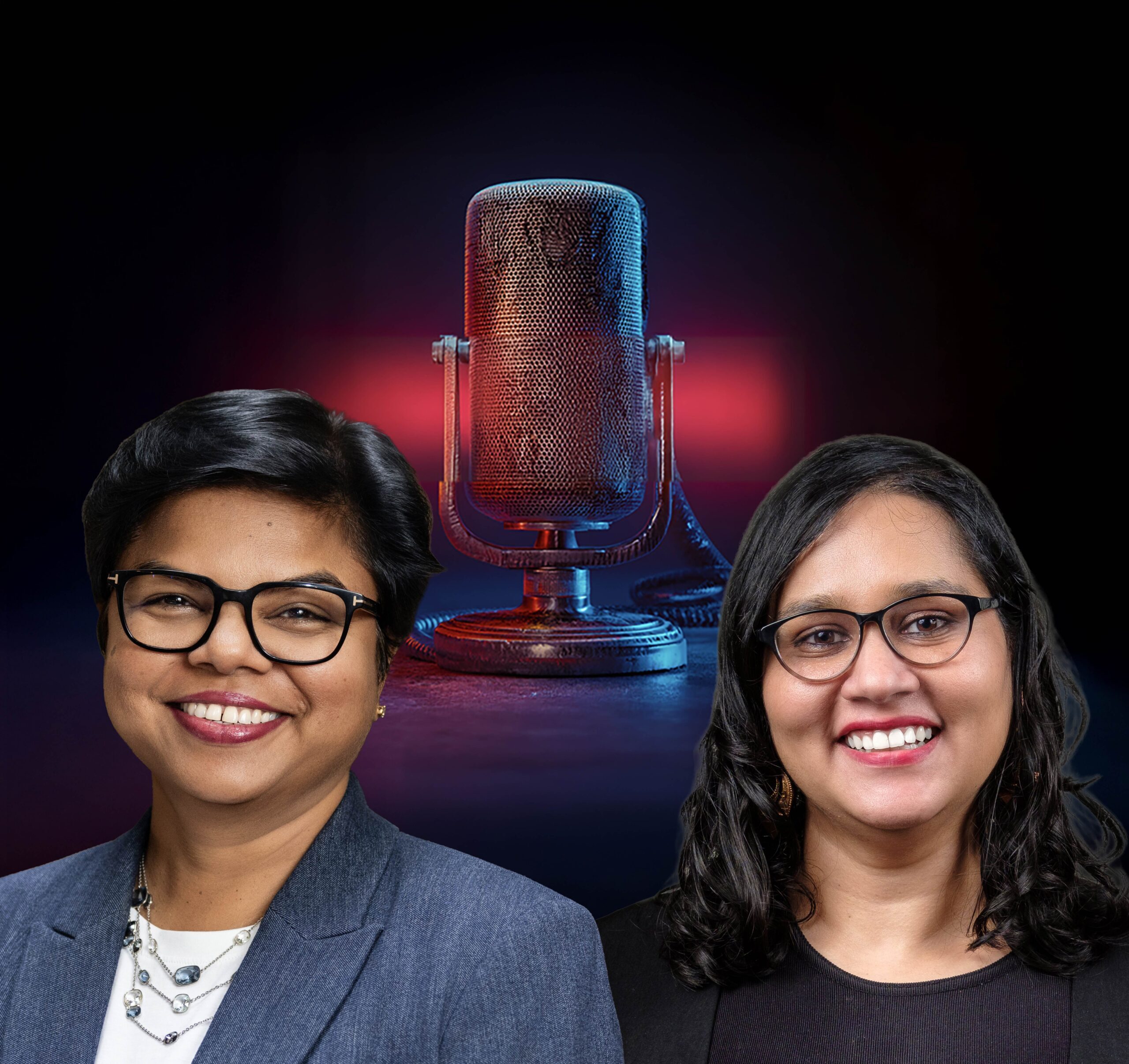



What does it take to build a GCC that moves at the speed of the business?
Dhanya Rajeswaran, Global VP and Country Managing Director(India) at Fluence, joins Nitika Goel, CMO and Managing Partner at Zinnov, to unpack how Fluence built its India center around acceleration, customer value, and integration. They talk about building high-velocity teams, creating global leadership roles from India, using AI to solve real business problems, removing friction from innovation, and leading through constant change.
A candid conversation about building from zero, scaling with intent, and making the hard simple.
PODCAST TRANSCRIPT
Nitika Goel: Does friction still exist between HQ and GCCs?
Dhanya Rajeswaran: I think, in general, friction exists between two human beings who haven’t fully understood each other. It’s like the Indian wedding. We’ll say, “It will get done. Don’t worry,” because we know it’ll get done. But then think about somebody who’s from a different European background, where they expect that predictability.
Nitika Goel: If you had to go back in time and redo one thing since the time you’ve taken over the helm of Fluence, what would you do differently?
Dhanya Rajeswaran: I might do what I did in six months in maybe a month.
Nitika Goel: I love it. Your motto is like you’re your own AI.
Dhanya Rajeswaran: There is no cavalry coming. This is not somebody else’s job.
This is us. And I always talk to my people and leaders here saying, “Simply because we exist, are we able to do something faster for Fluence?”
Nitika Goel: I know your dog is named Beam. If you had to get another dog, what would you name it?
Dhanya Rajeswaran: We have another younger dog in our other home, and we call him Chhota Beam.
Nitika Goel: I love it. I love it. Beam and Chota Beam.
You said you always have a solutions-first mindset, courtesy of your very illustrious mother.
You mentioned this, it had a high-trust DNA, right? This is what they call Murphy’s Law now. Podcast recording has to happen.
Hi, I’m Nitika Goel, CMO and Managing Partner at Zinnov. Welcome to another episode of GCCs Unfiltered.
Today, I have with me Dhanya Rajeswaran, Global VP and Country Managing Director at Fluence, a NASDAQ-listed company driving energy storage and optimization across global markets.
Dhanya has over 25 years of experience building and scaling organizations across regions, and she has been instrumental in setting up and evolving Fluence’s India center into a key part of their global operations.
Dhanya, thank you for joining us. Truly excited to have you here.
And I think we were talking off camera that I once had the pleasure of hearing you speak about diversity in the workplace. I know that’s very much a passion project for you, and I’m pretty sure you’re doing it at Fluence as well.
It left an indelible memory in my mind. So thank you, and I’m very, very excited about this conversation.
Dhanya Rajeswaran: Thank you so much for having me.
Nitika Goel: Dhanya, I am going to start off by saying I think nobody can explain their business better than the person living it every day.
So if you could give me a 30-second overview of what Fluence does, and for our audience, of course, what Fluence does and why it is a market creator in its space, would love to understand that.
Dhanya Rajeswaran: Sure.
Thank you. So think about this: renewable energy, whether it is solar or wind, for example. If you are a solar power producer, grid-scale, very large, what would typically happen is you would invest millions of dollars in setting up your solar generation plants.
And then, when you actually have to discharge into the grid, then you’re at the mercy of nature, right?
Because some days the sun shines bright, other days it doesn’t. And as a result, there is a huge intermittency in the way energy is generated and energy is discharged.
However, the grids around the world are designed for predictability, which means that they expect that you are able to discharge at a consistent pace without the intermittency.
So between this very unpredictable nature of nature’s energy generation and the predictability that the grid needs, you need a storage system that would bring that stability for the grid.
So that is where the battery energy storage system comes into place, and Fluence is the pioneer in this market, right?
Nitika Goel: So, in essence, whatever gets generated gets stored, and then it’s done in a way that it talks to the grid seamlessly.
As a result, you, who have invested millions of dollars in the energy generation side, would get maximum value for your money.
That’s excellent. I mean, a very, very important thing.
And as we move into more renewables as an economy, and I think the Strait of Hormuz is moving woefully in that direction a little bit more.
What I’d like to understand is you’ve described your India center’s role, or GCC’s role, as an accelerator, value generator, and a horizontal integrator.
Many, many big words, which is great technology, I’m sure.
But I would love to understand how that’s coming to bear.
And I’m going to ask a part two of this question because why not?
You did talk about the fact that the company went public in 2021. You have the DNA of two separate companies, and then a third company because now you’re a public-facing company.
Plus, you were setting up a new GCC, so there were a lot of variables that were coming into play.
I would like to understand what is Fluence’s DNA before that, and then also understand the India center’s role, like you said, as an accelerator, value generator, and an integrator.
Dhanya Rajeswaran: So, you know, whenever any company is a startup, and Fluence was a startup at one point, right?
It needed that DNA of exploration, of adventure, of being willing to experiment at speed, and then being able to learn quickly from what that gave us, right?
So if you think about how Fluence was different from the parental DNA, I think the parental DNA gave it the depth of technological edges.
But when the folks that actually started Fluence, I think they were, in my mind, experimenters, innovators, and explorers, right?
And when we came to India, right, so in 2022 we had set up our India location, which was already quite fast if you think about an organization that had just barely gone public.
And at that point in time, it started out as a pretty small thought, saying, “Hey, why don’t we have a group of technologists who are based out of India, part of the global R&D function, and they’re able to support that?”
But very quickly that thought expanded to say, hey, if Fluence needed to be in a market where, you rightly said, people can copy very quickly and moats were different, then we needed some things to be done really fast and in a way that we are constantly putting that edge in the market, right?
So one of our very first learnings as an organization was, how do you actually crash the cycle times of your product?
Right? When I say product, I mean the product design, development, and launch.
And so therefore, to be able to do that, and for Fluence it’s not like we have multiple products and hundreds of product lines. It is one product, but with many variants that, you know, talk to different markets.
But it still needed the entire organization to work together to deliver that particular product, whether it is from the hardware, the software, the digital, or how our supply chain is built.
In other words, integration was a mandatory need for the acceleration, right?
So if all the teams were able to talk to each other quickly, solve problems quickly, then chances are we were going to crash our product development lifecycle time.
And that was actually one of the biggest reasons when we thought about, okay, how do we actually grow India, and what should India look like for Fluence?
We actually figured collectively with the global leadership team, what are the priorities for Fluence, and to make that happen, what could a talent base like India do, right?
Vis-à-vis the traditional way of thinking, what are the things that India can do, and then something else somebody else can do?
We didn’t go at it like that.
We said, “What are our global priorities, and what can India do?”
So the moment you start thinking like that, then the word acceleration came in naturally.
And I always talk to my people and leaders here saying, “Simply because we exist, are we able to do something faster for Fluence?”
And if that is there, then that’s one goal well accomplished.
Value, and when I say value, it is about the customer value, right?
I told you that, or offline we were talking about how our customers inform the pace with which the market moves.
So how are we actually generating that customer value along with that acceleration?
And the integration word comes from how the teams are able to work together to solve problems faster.
And I think therein, if these three came together, and then we actually anchor it with the word quality and innovation, that’s when we say, “Okay, what can we do?”
Nitika Goel: A perfect trifecta, if you will.
Dhanya Rajeswaran: Exactly.
Nitika Goel: So if I have to then ask you, right, what are the value metrics that you create for the center?
Dhanya Rajeswaran: The metrics that we track for India are identical to the metrics we track globally.
Okay?
So, for example, Smartstack, which is our newest product line, we are now running to make sure that we deliver it in six months, right?
So one of the key metrics is, are we actually going to be delivering Smartstack in six months, and toward that, what are all the various teams in India doing to enable that?
So where I’m going with this, and I can give you a few other such metrics, like, for example, the global availability of our fleet, which means that, you know, customers who have bought our product before, they expect our systems to always be turned on and operating, and we commit a 98% guarantee.
That means that 98% of the time your system will be on, and that is a global metric that we hold ourselves to, right?
And if we don’t meet that metric, then, you know, we actually, in some cases, even pay our customers if we slip on that.
So if that’s a global metric, that’s a global metric we track over here as well.
Are we running 98% availability on our systems, right?
Nitika Goel: I think you’ve brought in a very good thing. You’re led by what customers need and want, right?
Coming back to that, now we’ve talked about what you measure. It’s the same global measure.
Even the teams, like you said, it’s a talent play. Do you see that reflected even in leadership roles?
Obviously, you have an MD role and a senior role, but do you also have other global roles based out of India?
Dhanya Rajeswaran: And that has also evolved over time.
You know, for example, when we were setting up our team over here, right, and at that time it was a simple vision of saying, “Hey, can we actually…”
I’m going to step away from product for a second and talk supply chain.
It was a simple vision to say, how do we actually diversify our supply chain globally and de-risk it?
Because we were just coming out of COVID. There was always this need for, you know, making sure that you have choices of where you could manufacture and where you could get products delivered.
So when we wanted to build that diversification, we started with hiring a senior leader out of India to be able to look at that, and the leader came in with the mandate at that point in time to do APAC, which means all the APAC countries were something that this person was hired to do.
Similarly, when we started out our services business, right, and again, we started at the very top.
So it was always intentional to bring in a really smart senior leader who can then build the team out.
Likewise, on the software side, so we have the VP, Software Delivery, based out of India. The Global VP for Software Delivery is based out of India.
So there’s… I can give you more examples of that.
Nitika Goel: But I think that’s fantastic, right?
So they have teams reporting from other parts of the world…
Dhanya Rajeswaran: Yes.
Nitika Goel: …into them and things like that.
I think it’s really great that you’re saying it’s happening across different levels.
One interesting thing I heard more recently is that they open the role and say whichever location fills the role first, it belongs to them, and the process is the same.
Do you have it like that? Or how does that get determined that this role will be based out of India?
Is it because you want to build the teams around the leader and that role?
And again, it doesn’t need to be co-located anymore.
So in that sense, how does the organization determine that this particular global role will be based out of India?
Dhanya Rajeswaran: In the early days it was more to say, “Hey, we wanted some roles out of India,” and as a result, we were building those functions out of India.
But what I’ve realized over time is then we’ve said, “Where does this role make the most sense?”
Like, for example, cybersecurity. It’s core to our product, and it could have been built anywhere.
However, we chose to build it out of India simply because the product teams and the supply chain teams and the services teams, they’re all co-located over here, which means that it’s easier for the team to then work together and deliver, right?
So sometimes decisions like that also get driven through where does a role make the most sense?
Nitika Goel: Got it.
So I think you talked about something which was very interesting, and you said you almost have a unified and an integrated DNA, right?
So how integrated is your GCC across the stack with global decision-making, not just structurally, but also culturally?
You know, I’ve worked with multinational companies for most of my life, and this cross-cultural integration is always the thing that, in many cases, keeps leaders up at night, right?
Because it’s one thing to have the vision and say, “We want this to work,” and then it’s another thing that people actually…
Dhanya Rajeswaran: Yes.
I think it’s… I’ll go back to the DNA of what made Fluence Fluence, which was that whole entrepreneurial, explorer, innovator mindset, right?
And when we were building India, we continued to look for that kind of talent.
So we were always looking for what we call high-velocity talent.
We do that globally, and we didn’t make a different call for India.
We said we needed that high-velocity talent.
Now, what’s a high-velocity talent?
You know, the running joke in Fluence is always that our roles expand faster than what you can fill that role with, right?
And what does that mean?
It means that our industry is evolving so much that we might have hired the person for X, a particular job, say, six months ago, but the job has already expanded.
Nitika Goel: So it’s now X plus Y.
Dhanya Rajeswaran: Exactly.
So you’re not hiring for that point in time, but you’re hiring a leader at all levels who’s able to expand themselves to what the…
Nitika Goel: Business needs.
Dhanya Rajeswaran: Right.
And that’s what we mean by a high-velocity talent mindset.
So I think the core DNA, I would say, from that lens, is this need for people who will constantly be innovating and pushing the boundaries.
And from a cultural alignment standpoint, our core values are what drives it.
We have four very simple core values, and one of them is leading, which actually, in many ways, translates what I just explained about high-velocity talent.
It is your ability to lead in any situation with respect to whatever level you are in your hierarchy.
And that’s leading for the customer, leading for your team, leading for yourself, all of that.
Likewise, we have another one. I won’t drain all four for now, but we have another one which we call fun.
And fun is what excites us because we want to enjoy what we do, right?
So it’s always the thing about, when can you enjoy?
When you’re fearless, when you’re not worried about failure, and you’re curious about what you’re doing and you’re able to, you know, have that camaraderie.
So those are the things that we still are keeping intact, irrespective of whichever part of the world we are in.
Nitika Goel: I love it.
And, you know, when you’re describing Fluence’s culture, I have to say it feels like Zinnov’s culture, because I’m going to pick up high-velocity talent as well.
Because I feel there’s a metamorphosis of the role every day as we speak, because situations change.
The other thing that I would love to sort of understand is, how do you do this at scale?
Because when you’re building in a smaller team, we see this even with startups, we see this with the companies that we consult.
When you’re a smaller team, when you’re building that entrepreneurial culture, it’s very easy… Nothing is easy, but let’s assume that it’s more flexible to maintain.
But as you start building in a little bit of scale, having a culture of entrepreneurship, intrapreneurship, like you said, leading, and having every single person do it is a hard thing to do.
So how do you codify it in your day-to-day work and everything that you do?
Dhanya Rajeswaran: So one of the things that we did a couple of years ago was institute a program which we call Innovolt.
Okay?
It’s an innovation incubator program designed with the intention of making it super easy for you to innovate.
Nitika Goel: Yeah.
Dhanya Rajeswaran: So what does it mean?
We simply say, if you have an idea, just an idea, all you have to do is write two sentences about it and click a button.
Nitika Goel: Wow.
Dhanya Rajeswaran: Then somebody will take a look at it, and if that feels like, “Hey, it’s an interesting idea,” then let’s assign a mentor.
Then the mentor helps you flesh out that idea in a way that you can actually make a presentation, and then you come and present to a group.
Then the group feels, “Oh, there’s potential over here. Then what do we need to take it to its next level?” Right?
And then we work through a very systematic…
Nitika Goel: You move through the funnel.
Dhanya Rajeswaran: Yeah. Exactly.
We move through the funnel.
And as a result, what happens is people feel it’s easy to innovate because they have to just put two…
Nitika Goel: You remove every point of friction. Got it.
Dhanya Rajeswaran: Okay.
You just have to put the two lines, and then there’s enough in the environment that comes and pulls you through it, right?
So that’s one. So where we make it easy for people to come up with their ideas and share.
The second is what I love to call a roadblock crusher.
And when you’re trying to do things at pace, at scale, and your processes are evolving, your tools are evolving, which means that roadblocks are inevitable, okay?
And that’s what stalls people from making progress at scale.
So we run what is called a roadblock crusher meeting.
We call it exactly that.
And the intention is, you know, I host this depending on the level of urgency for different topics, whether it’s a weekly roadblock crusher or biweekly.
Those are my only two frequencies.
But I bring people in, and it’s not a review.
They come, they just anchor to…
Hey, for example, I’ll go back to my Smartstack example.
Like, if the factory test was supposed to be done by a particular date, then the only thing we talk about is, are we going to make it?
What’s going to prevent us?
Are we struggling with anything?
And people feel safe and comfortable to just talk about, “Hey, here are three things I wish were out of my way.”
And then we figure who’s the right person to crush the roadblock.
Nitika Goel: I like that.
It’s also creating a place of psychological safety, right?
So I think that combination, that you have the room to solve, and you’re also forcing a solutions mindset, in a sense.
That is fantastic.
Now, I wanted to talk about the biggest thing that… You can throw a stone and you’ll hear it: AI, of course, and what is happening.
When AI starts compressing work, like how much of AI and AI-led charters are you leading in the GCC at Fluence in India?
And what do you think has unlocked the maximum value?
Are you leading that for Fluence globally?
Are you doing a part of that work?
Do you believe that Fluence India can unlock the most amount of AI capability?
Would love to hear your thoughts on that.
Dhanya Rajeswaran: So, you know, we’re in a very interesting space.
So what that means is even as early as three and a half, four years ago, we already had an AI-led digital tool that was a differentiator for us in the market, right?
It’s our bidding software.
So just as an example, whatever you produce obviously gets stored, which is our battery energy storage.
But for you to get maximum value out of it, you should know when to bid in the market.
Nitika Goel: Right.
Dhanya Rajeswaran: And for that, I think it’s some 5,000-plus parameters that need to be processed within a fraction of a second, and you have to make your decision, right?
So we had the AI-led tool way back.
Another example I’ll give you.
I told you we have our installed base around the world, right?
That generates petabytes of data, and we are using AI to be able to analyze our faults faster…
Nitika Goel: Right.
Dhanya Rajeswaran: …so that we can solve them faster.
We’re using that data to inform us on reliability engineering, which means which of our components are…
Nitika Goel: Correct.
Dhanya Rajeswaran: …functioning or not.
Nitika Goel: Right. Predictive maintenance as well.
Dhanya Rajeswaran: So there’s stuff like that where we are integrating AI into it so that we are then taking it back to the product development lifecycle to say, “Oh, okay, we use this particular version of a chiller or that particular version of an inverter, and that’s not working…”
Nitika Goel: Then the performance…
Dhanya Rajeswaran: “…and here’s what we need to do.”
So we’re able to leverage AI to be able to close that loop to be able to deliver things smarter.
Nitika Goel: Even predictive maintenance as well, right?
Dhanya Rajeswaran: Of course. Of course.
Nitika Goel: So that’s something.
Now I would come back to a question. I mean, there’s no simple answer, and it’s not as black and white.
Does friction still exist between HQ and GCCs, or is that something that you think is just transient and moves along?
Or do you think the integration is fairly complete?
Dhanya Rajeswaran: I think, in general, friction exists between two human beings who haven’t fully understood each other.
There is, in my view, it’s not an HQ-versus-a-location thing.
Like, let’s say you have a new leader who’s taken a new role globally, right?
And then the team has to now work together.
There’s an adjustment period.
Nitika Goel: There’s an adjustment period.
Dhanya Rajeswaran: There’s an adjustment period, and that adjustment is literally only the time that they get to know each other, right?
Because the moment you think about friction as institutional friction, or HQ thinks this about a location, we will never be able to solve, because…
Nitika Goel: It’s an us-versus-them conversation…
Dhanya Rajeswaran: There is only one us.
Nitika Goel: Us, yeah.
Dhanya Rajeswaran: And that is us as an organization.
And the moment you anchor to that, then you start thinking people.
And then, you know, one of the other things that we do is we call it Building Bridges as a program, especially for cultural awareness and integration, right?
Classic example, we Indians are wired for jugaad.
We can, like…
Nitika Goel: Yeah, we’re quick on some things, and we’re also a little bit…
Long-term thinking, systems thinking is slightly narrow…
Dhanya Rajeswaran: Right?
Because it’ll be like, it’s like an Indian wedding.
We’ll say, “It will get done. Don’t worry.” “Ho jayega.”
Because we know it’ll get done.
Nitika Goel: Yeah.
Dhanya Rajeswaran: But then think about somebody who’s from a different European background, where they expect that predictability or, you know, where their systems are very…
Nitika Goel: They want a plan.
Dhanya Rajeswaran: Exactly.
So that is where programs like Building Bridges allow you to help people talk to each other in the same language.
And I think that’s also part of the job when you’re trying to build it.
I’ll go back to the word integration.
If the teams here are not well-integrated with teams in any other part of the world, we’ve lost the play.
Nitika Goel: Got it.
Now I ask this question because very often when I speak to leaders, right, they keep saying that once the sponsor understands what’s happening here, there is obviously a lot of belief and growth and change.
But once the sponsor changes, it’s almost like they go back to step zero, and then they need to rebuild.
But if you’re truly integrated across the levels, and if you see our conversation in terms of how the global roles are evolving, you have a span of work that’s being done, so it’s not really a single sponsor anymore.
You are a part of a machinery that is…
And you’re an integrated part, right?
So we call it cogs, clogs, and lightning rods.
So your roadblocks are the clogs that you’re crushing.
The cogs, we don’t want to just be cogs, but we also have to have those lightning-rod moments as a center, right?
So I think that’s a beautiful way to look at it.
The next thing that I want to talk about is your personal leadership style.
A lot of this appears to have a Dhanya DNA, so you please tell me, how much of it do you think is a reflection of your leadership style, and how much of it is also an…
I mean, it’s not either/or, I understand that, but I would love to understand what part of your thinking you have brought to shaping the Fluence of today.
Dhanya Rajeswaran: So, you know, we didn’t go into this, but I also don’t come from an energy background, right?
And so when I was trusted with this role, it was a very interesting transition for me as well, saying, how does somebody who’s not from a core functional domain, in as technical a company as this, get trusted with a role as large as this, right?
So a lot of it had to then start from, how well do I get the business, and how well am I able to translate it into simple terms for the team to get the business?
And as a company, I don’t think this is just my DNA. I think it’s the company’s DNA.
My role, and the way I interpreted my role, I was coming into it with a few different handicaps, if you will.
I had joined Fluence as a VP, Human Resources, right?
To transition from there into an MD role to lead and build such a team meant that I had to acknowledge to myself that I don’t know everything.
Chances are I didn’t know anything.
But that acknowledgment meant that there was a certain way in which I would seek to understand, the way in which I would engage with people.
And when I was hiring people, I was also looking for that, because not everybody was coming from the industry.
They were not from the same background.
So I think, in a way, that acknowledgment that, you know, you need to learn something to be able to do something, and you’re looking for people with that learnable ability, was definitely there.
The second is being hands-on, right?
There is no cavalry coming.
This is not somebody else’s job.
This is us.
Like, you know, I told you, you are it.
Nitika Goel: You have to get your hands dirty.
Dhanya Rajeswaran: You are it.
And if you can’t solve it, there is nobody else who’s going to come and solve it.
So, as a result, there was never this luxury that I might have afforded myself to say, “Oh, I have the seniority. I don’t have to get into this.”
I always get into it, not with the intention of micromanaging, but with the intention of knowing if the team needs help, they know that I’m there and I’m aware of their context, right?
So a lot of those things go into also building a team that is also then oriented like that.
Because then when they see their leaders act in a particular way, then they think it’s normal.
Okay, it’s normal for me to feel it’s okay if I don’t know something, but it’s equally important for me to go and find out what to do about it, or to take that ownership, or to solve that problem, or to be engaged in something till we figure it out, right?
So there’s definitely that.
Nitika Goel: That’s fantastic.
Thank you, Dhanya.
That, I think, has truly been a masterclass of how to build a truly intrapreneurship-first culture in terms of how do you build a high-velocity team, how do you think of…
And you’re actually putting into play practices that are allowing people to get to the best outcome with the least possible friction.
And I think that’s when your systems, the psychological safety that you’re building in, are seeming to work very well for your organization.
And the fact that you have over 70 of the 120 functions based out of here is already a testament to that.
The fact that you have global roles based out of here is a testament to that.
The fact that you’re leading a lot of the AI charter is also a testament to that.
And the fact that you’re doing it with a mindset that is to be better every day, again, is a testament to that.
Nitika Goel: So, but before you go, I keep telling everybody my guilty pleasure is watching Karan Johar and his Rapid Fire round.
So I know it’s not something that you’d say is the coolest thing, but I have to do it and I have to follow through.
What is the most Indian thing you have ever done in a global setup?
Dhanya Rajeswaran: I don’t know if this is Indian or if this is just me being me.
I am me, meaning I never try to fit into something.
Like, I take a lot of pride in who we are as a country, as a culture, and I have only immense pride in just bringing that whole self.
So whether it’s overfeeding visitors who come to India, you know, it’s always a joke, right?
This is not exactly a rapid-fire moment, but there’s always this joke that, hey, when we get foreign visitors to India, we go on overdrive.
Atithi Devo Bhava.
I realize that that’s who we are, right?
And we welcome people with open arms, and sometimes that’s very different and intense for, you know, a first-time visitor into India, but I enjoy that, and I think they’ve learned to enjoy it.
Nitika Goel: Kill them with love and kindness.
Dhanya Rajeswaran: Just overwhelm them with that hospitality.
Nitika Goel: Love it. Love it.
If you had a superpower you wish you had for this job, what would that superpower be?
Dhanya Rajeswaran: I don’t think there is any such superpower except an unlimited reservoir of energy and resilience.
Because when you’re in an industry that’s as fast-paced as ours, I think you constantly have to have it to go at pace.
So I think that’s the reservoir I’d want always replenished.
Nitika Goel: So I love it.
And you talked about the reservoir always being empty.
What are your energy suckers, and what gives you maximum amount of energy?
Dhanya Rajeswaran: So in my early days in this role, I used to really worry about the amount of navigation and, you know, interactions that was needed to move a simple thing, right?
And I remember my husband.
I came home one day and I told my husband, “Oh my God, this is so hard. Why does it have to be so hard?”
And he said, “That’s exactly why you’re paid. That is the job.”
So it is your job to make the hard simple.
And I thought that was…
Nitika Goel: Profound.
Dhanya Rajeswaran: Profound, right?
And so my reservoir is actually my family.
So my husband, he’s my biggest coach and mentor.
My mom, my biggest role model.
I think between both of them and my dog, they keep me very grounded, very honest, and very real.
Nitika Goel: Honest.
If you were not a Managing Director at Fluence, what would your alternative career be?
Dhanya Rajeswaran: I might have been building a business or, you know, growing a farm and, you know, doing something, creating.
So I… But definitely not an artist.
I cannot draw to save my life.
But I would have definitely been building something.
Nitika Goel: If you had to go back in time and redo one thing since the time you’ve taken over the helm of Fluence, what would you do differently?
Dhanya Rajeswaran: I think my first six months were much slower to my liking because I was still figuring it out.
If I had a do-over, I might do what I did in six months in maybe a month.
Nitika Goel: I love it.
Your do-over is like you’re your own AI.
Like, compress yourself as much as possible.
Fantastic.
If somebody had to write a book about you…
Dhanya Rajeswaran: That would be a huge privilege.
Nitika Goel: What would that title be?
Dhanya Rajeswaran: I don’t know.
The first word that came was “Unstoppable.”
Nitika Goel: Love it. Love it.
If you had to pick one big bet for your business and in your own personal life, what is the next big bet that you would pick?
Dhanya Rajeswaran: And I say this not just for myself.
I genuinely believe in this.
Food security, energy security, is probably fundamental to human existence, and one drives the other.
So that would be my biggest bet.
Nitika Goel: All right. And personally?
Dhanya Rajeswaran: Personally, my biggest bet would continue to be food security.
I really want to learn to grow food.
Nitika Goel: I love it.
Are you going to be living in a bunker also now?
Dhanya Rajeswaran: Or not, I don’t know.
But it’s always fun to, you know…
Nitika Goel: I think it’s important. I agree with you.
What’s some of the best advice you’ve received, ignored, but now regret?
Dhanya Rajeswaran: My dad’s best advice was, “There’s no problem in this world that cannot be solved without talking.”
Like, you know, if there’s a problem and if you talk, it will get solved.
That was his advice.
But I think it takes a little bit of maturity of yourself because, you know, to break through that and talk to somebody and solve it, I think it needs you to humble your own ego and put it aside and say, “No, my goal is to solve the problem, and it doesn’t matter if, you know, if you had been very rough with me or whatever.”
So the ability to split that.
So I think that’s always been my go-to.
Whenever there’s a problem, whenever there’s a situation, let’s just talk.
Nitika Goel: Oh, love it.
If I had to ask you, what do you want to be known for as a part of your career?
Like, if somebody says Dhanya, what should it synonymously be?
What would that be in your mind?
Dhanya Rajeswaran: I think someone who can build things from ground zero and really scale it to unbelievable heights.
That would be my wish from a career standpoint.
Nitika Goel: If I had to tell you your vision for the Fluence GCC five years from now, what would it look like?
Dhanya Rajeswaran: I think we’ll continue to be the heart and the nerve center of Fluence globally.
I’d love for our team to be able to bring in so much innovation that we are just churning out what the market needs at scale and pace.
I’d definitely want to see more and more of our leaders globally, you know, diverse leadership, which means that it doesn’t matter whichever part of the world you are in, which includes India, and you’re able to build that breadth of leadership, not just depth.
That would be my wish.
Nitika Goel: Love it.
I know your dog is named Beam.
If you had Beam, if you had to get another dog, what would you name it?
Dhanya Rajeswaran: Oh my God, this guy is such a…
I think he’s going to live with us forever, so I haven’t thought that far.
Nitika Goel: No, with him. I’m not saying replace him.
Dhanya Rajeswaran: Oh, to get a second one.
Nitika Goel: Yes.
Dhanya Rajeswaran: No, I’m…
Nitika Goel: Oh, Dhanya…
Dhanya Rajeswaran: I want him to live forever.
Nitika Goel: I’m a dog person. Okay.
Dhanya Rajeswaran: Forever and ever.
You know, it is so interesting.
So we have another little… When I say little, a younger dog, in our other home, and we call him Chhota Beam.
Because somewhere we believe that maybe he’s Beam’s son, but Chota Beam is what it has come out to…
Nitika Goel: I love it.
I love it.
Beam and Chota Beam.
Thank you again, Dhanya.
It’s truly been a great conversation. Love your thinking.
Couldn’t agree more in terms of energy security, food security, and I think just generally being secure as human beings also.
I think one of the biggest things that I get off you from an energy standpoint is the fact that you’re very secure in knowing, not knowing.
And I think that’s very important as leaders, and especially in times like these where things are changing.
I think being vulnerable is as important as being adaptable.
So thank you again for your time.
It was a pleasure having this conversation.
Dhanya Rajeswaran: And you are amazing.
You just made it so easy and so comfortable.
Really appreciate the depth that you brought to this.
Thank you so much again.
Nitika Goel: Thank you.
Lovely conversation.
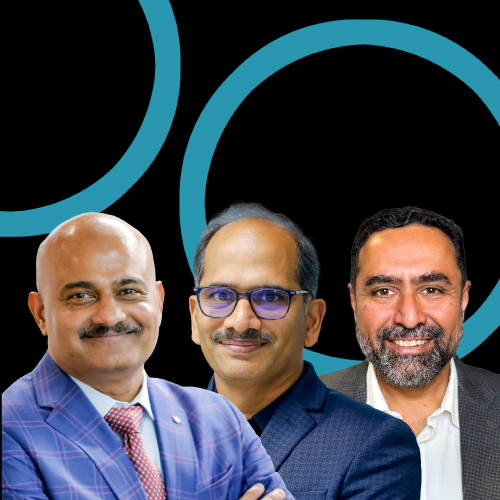
Theom’s Navindra Yadav and Ravi Sankuratri discuss enterprise AI security, data governance, building an AI-native company, and their GCC journey in Hyderabad.
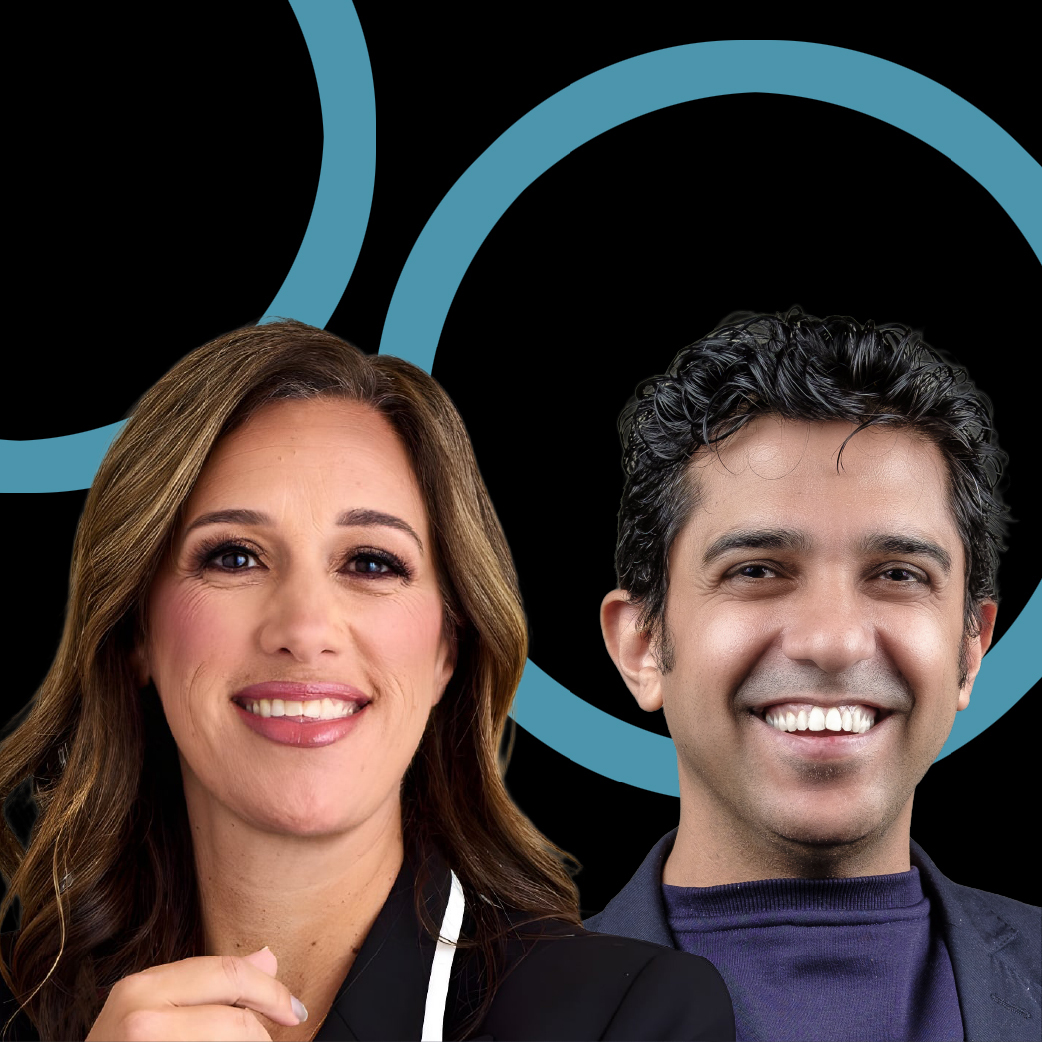
Explore AI and enterprise transformation with Erica Volini, from work redesign and human adoption to data and leadership. Tune in now.
Don’t miss any of our future episodes!
Also subscribe to the Zinnov Podcast on these platforms





Theom’s Navindra Yadav and Ravi Sankuratri discuss enterprise AI security, data governance, building an AI-native company, and their GCC journey in Hyderabad.
Explore AI and enterprise transformation with Erica Volini, from work redesign and human adoption to data and leadership. Tune in now.
 THANK YOU
FOR YOUR RESPONSE
THANK YOU
FOR YOUR RESPONSE
