




BACK TO GCCs Unfiltered
ZINNOV PODCAST | GCCs Unfiltered


In this episode of GCCs Unfiltered, Nitika Goel speaks with Ruchika Panesar, CDIO, Group Functions & Country Head – India, NatWest Group, about leading one of India’s most mature banking Global Capability Centers (GCCs).
With over 18,000 professionals and a 25-year presence, NatWest India represents the evolution of GCCs from cost arbitrage centers to enterprise transformation hubs. Ruchika shares her leadership philosophy on building T-shaped enterprise leaders, embedding systems thinking, fostering customer-back innovation, and navigating digital transformation in a regulated banking environment.
The conversation explores leadership in the AI era, scaling judgment, and why belief and behavior matter more than organizational structure.
Tune in now.
PODCAST TRANSCRIPT
Nitika: Hi everyone, and welcome to another episode of GCCs Unfiltered. I’m your host, Nitika Goel, CMO and Managing Partner at Zinnov. Today’s conversation is about what it really takes to lead at scale when the hard part is no longer growth, but judgment.
I’m joined by Ruchika Panesar, the Country Head of NatWest India and the Chief Digital and Information Officer for the group functions at NatWest.
NatWest has had over a hundred-year relationship with India, and its India GCC is one of the most mature and scaled banking GCCs. Ruchika has joined the group just 1.5 years ago, stepping into an organization that already has deep talent, credibility, and institutional memory.
At this point, leadership is no longer about what to build from scratch. It’s about deciding what to change, what to protect, and where presence really matters. And none of that works unless trust comes first.
Welcome to this episode. I know you’re dressed in NatWest colors, you’re living the brand every single day.
Ruchika: Totally.
Nitika: You know it. One thing that really struck me is that this organization has institutional memory. You’ve inherited this role just 1.5 years ago. What’s been hard? What’s been easy? What’s been the juice with all of this?
Ruchika: Thank you for the question, first of all, and thank you for having me.
When you join any new organization or role, approaching it with an empty cup and seeking to understand before you seek to be understood is really important.
Yes, I bring experience across industry and tech, but the organization has a phenomenal foundation—great talent and strong results.
This chapter is about how we take something superbly good and make it great, how we evolve into a future-fit innovation and capability powerhouse.
Ruchika: It has been about learning, understanding what we do, our purpose, and what matters to our customers.
Also, understanding where we have strengths we can build on, and where we may need to do things differently.
The first 90 days are critical. Be intentional about where you spend your time, what you learn, and what you act on.
What are the quick wins? What are you observing?
Meeting people halfway is important. Sometimes you go all the way and bring the organization with you by showing what “good to great” looks like.
Nitika: If you had to give advice to a new leader, what should they focus on in the first 30–90 days?
Ruchika: Approach it with an empty cup. Listen deeply. Listen to what is real versus what people think you want to hear.
Don’t lose the freshness of your first 30 days. Write down your observations and revisit them.
You need both structure and intuition. That balance is critical.
Nitika: What mattered more – changing structures, incentives, or beliefs?
Ruchika: I don’t think it’s about structures. Structures are often overrated.
It’s about belief and ambition—raising the bar and ensuring there is collective belief that we can get there.
Nitika: And how do you build belief?
Ruchika: By building belief in people’s own capabilities. You remind them of their strengths and their “right to win.”
Also, by bringing everyone along on the journey. It’s not about the leader—it’s everyone’s ambition.
People need to see how they contribute and how their work connects to enterprise outcomes.
Nitika: And at your scale – 18,000+ people – how do you drive that?
Ruchika: You create listening posts. You stay close to the work. You open channels for dialogue.
It cannot be just top-down; it has to be collaborative and inclusive.
Nitika: How are you building systems thinking within the organization?
Ruchika: It starts with connecting people to purpose. We are a bank that turns possibility into progress.
You need deep customer understanding. What is the “so what” for the customer?
Spend time across the business. Sit with teams. Understand what they are building.
Leaders help by asking questions: What would you do differently today versus two years ago?
Systems thinking is about thinking enterprise-first. If you built this once for the entire enterprise, would you design it differently?
It’s also about avoiding duplication and driving reuse.
Innovation must be purpose-led and customer-backed.
And importantly, you need feedback loops—data, insights, and continuous learning.
We are no longer operating in 3–5 year cycles. Organizations must be agile and able to adapt quickly.
Nitika: How do you build T-shaped leaders and balance depth with breadth?
Ruchika: Some career moves are intentional, and some are organic.
I moved from building technology into strategy, and then into digital experiences. Each move helped build breadth.
To build enterprise leaders, encourage people to take lateral roles and gain exposure across the business.
But first, master your craft. That’s your foundation.
Then build breadth by working across domains.
Every senior role today is an enterprise role.
Nitika: And how do you shift people who’ve been generalists?
Ruchika: By asking better questions. Depth shows in your ability to answer both complex and simple questions.
Sometimes the simplest questions are the hardest—but if you know your domain, you can answer them.
Nitika: What skills will matter most going forward?
Ruchika: Judgment. The ability to connect solutions to the right problems.
Learning agility because things are changing rapidly.
And human connection and humility will never go out of relevance.
Nitika: You’ve built this learning muscle very quickly—what’s your playbook?
Ruchika: I’ve worked across geographies and cultures. But at the core, people are people.
My approach is simple: how may I serve you? How may I make your life simpler?
Nitika: One underrated leadership skill?
Ruchika: Silence.
Nitika: How do leaders design more?
Ruchika: Create white space. Be intentional about making time. Don’t be a victim of your calendar.
Stay hands-on. Keep experimenting and learning.
Nitika: How have you used AI?
Ruchika: On the personal side, my daughter and I are building something creative together.
At work, I’ve used AI for marketing—copy, subject lines, creative briefs.
Nitika: If you weren’t in banking?
Ruchika: I would be in academics.
Nitika: Your autobiography title?
Ruchika: And she was born again.
Nitika: Thank you so much. This was incredible.
Ruchika: Thank you. I absolutely loved it.
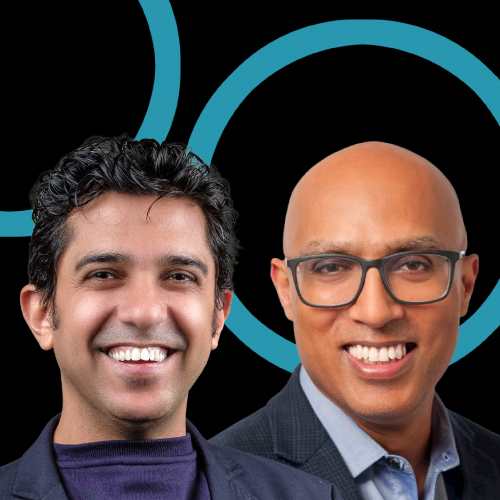
Cloud platforms scale through ecosystems. Tune in as Pallab Deb of Google Cloud discusses partner roles and growth.

Jason Day and David Neely, StarRez, on why culture is what makes Global Capability Centers (GCCs) grow and stay relevant in an AI-driven world.
Don’t miss any of our future episodes!
Also subscribe to the Zinnov Podcast on these platforms





Cloud platforms scale through ecosystems. Tune in as Pallab Deb of Google Cloud discusses partner roles and growth.
Jason Day and David Neely, StarRez, on why culture is what makes Global Capability Centers (GCCs) grow and stay relevant in an AI-driven world.
 THANK YOU
FOR YOUR RESPONSE
THANK YOU
FOR YOUR RESPONSE