



BACK TO Business Resilience
ZINNOV PODCAST | Business Resilience


The tech services industry is entering a new phase. What was once a model built on headcount and billable hours is shifting toward outcomes, automation, and measurable returns. And as AI reduces the cost of execution, the firms that thrived in the cloud and SaaS era are being forced to confront an uncomfortable question: how do you create value when execution itself is being commoditized?
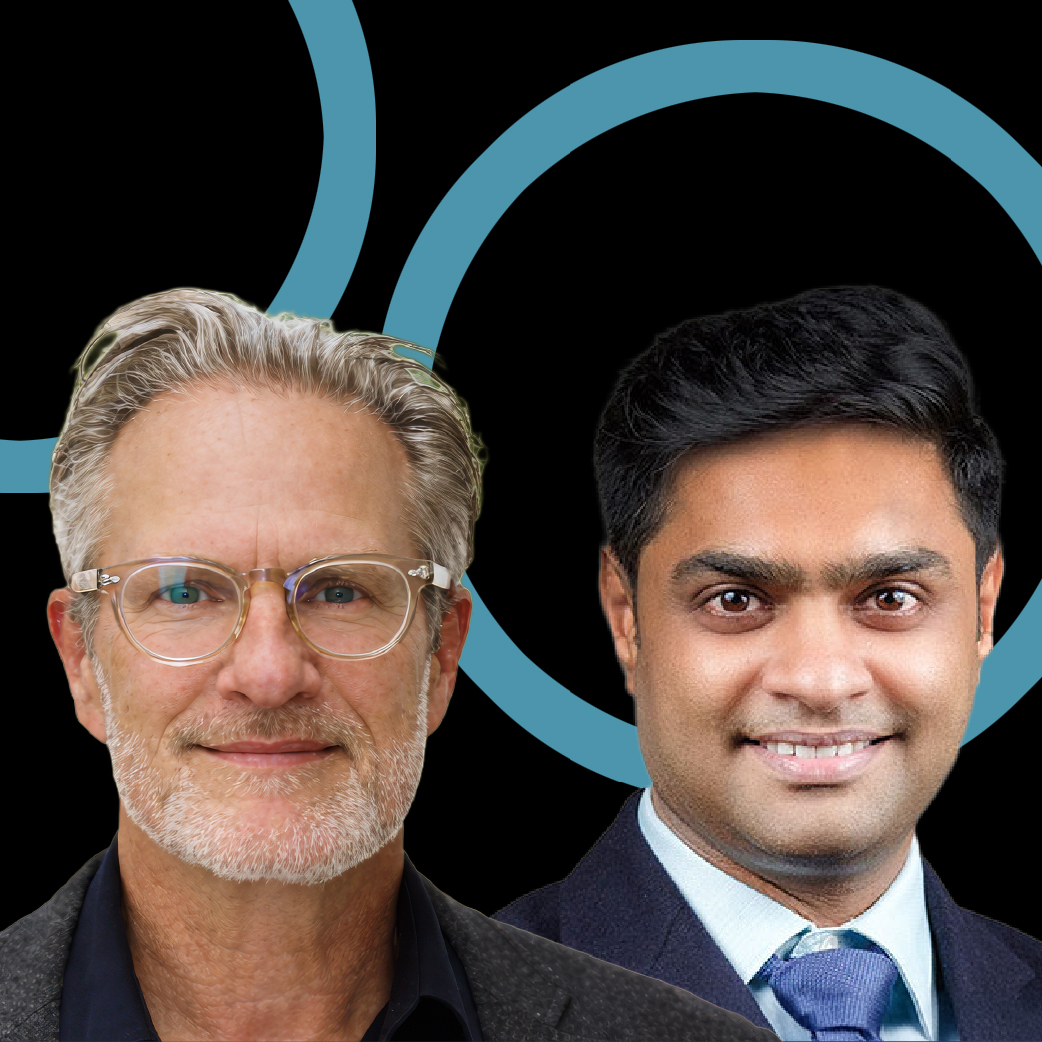
Jeff Rich, Operating Partner, Sunstone Partners, has navigated these cycles before. Having helped scale a tech services company into a multi-billion-dollar business, his experience spans building and investing in firms across cloud, data, and AI. His lens is shaped by what actually drives enterprise value, not what should.
In this episode of the Zinnov Podcast, Jeff joins Sidhant Rastogi, President, Zinnov, to discuss three shifts defining the industry: the move to outcome-based pricing, the rise of AI agents across enterprise systems, and the growing importance of vertical depth as horizontal services commoditize.
The conversation also surfaces a tension that PE investors know well. Buyer depth shrinks as firms scale. Timing and entry price matter as much as capability. Growth without a clear path to exit destroys value.
The filter running through the entire discussion is direct. If AI does not show up in revenue growth, gross margin, or EBITDA improvement, it does not matter.
At the same time, investment behavior is evolving. Capital is becoming more selective, with greater emphasis on scalable platforms, execution capability, and clear paths to returns. Entry price and timing are carrying as much weight as growth.
These shifts carry different implications depending on where you sit.
For Founders: Relevance requires moving beyond effort-based models toward outcome-driven delivery and vertical expertise that can hold its value as pricing compresses.
For Investors: The focus is narrowing toward platforms where execution is proven and AI is already showing up in the numbers, not just the narrative.
Tune in to hear the full conversation.
PODCAST TRANSCRIPT
If you think about what the IT services industry’s been doing, they’ve been helping customers transition to cloud, transition to SaaS, configure SaaS, and that’s been going on for 15 years plus.
Now, it’s going to be about an AI transition. And just because you were part of the SaaS transition and the cloud transition doesn’t guarantee you’re going to be part of the AI transition.
Outcome-based pricing, right? What is the cultural or what is the biggest problem in achieving it? I think the biggest issue is having a clear measurement of output value. How do you measure AI usage within a company? So unless it shows up in revenue growth or gross margin or EBITDA margin, then it’s not — financial metrics are the only true metrics.
Consulting firms like yourselves and others play a really valuable role helping crystallize management’s thinking. Very often, particularly in times like these, the future’s not clear. We’ve poured a trillion dollars into this and something’s going to happen. And we’re all marching into this brave new future together.
Sidhant Rastogi: I think we have a wonderful podcast session today. I am joined by my longtime friend and somebody who I have admired for his sheer wisdom when it comes to technology services.
There are a lot of people who have spent time within this industry. Jeff is unique because he comes from, almost like he says, having grown up in Citibank right here in New York, and he has spent a lot of time building tech services from scratch — taking a company that was less than half a billion to about USD 5.5 billion, then exiting. And for about a decade now, Jeff has been helping multiple companies grow and scale, and helping Sunstone Partners do a lot of investing and growth for their technology services companies.
Thank you very much, Jeff, for joining us today.
I will just start with an overall question. What made you get into this world of technology services? You were happy in your banking world in New York. Where did tech services come into your world?
Jeff Rich: It is a great question and a funny story. Thank you for having me.
I was having a great time at Citibank here in New York. I loved it. It was a great institution, and I loved the people I was working with. But I did notice that the customers of the bank were doing better than the bankers.
I was in my late 20s, and we got these new devices at the bank called personal computers. This was 1986.
I thought it was interesting. And all we had were blank spreadsheets. There were no financial models. We had to build them ourselves. Over the course of six months, I said, “Computers sound like a really interesting field.”
A fellow investment banker of mine, who was at Morgan Stanley, left Morgan Stanley and started telling me about a company in Dallas called ACS. He ultimately recruited me to join that company.
I did not know what I was doing. It was quite a foolish move on my part in the beginning because it was a bank data processing company, and I joined the company in July, three weeks after my daughter was born.
By September, all the bank customers were failing. It was the Southwest lending crisis in full bloom. Savings and loans were failing, banks were failing, and our customers were failing. It was like, “Oh my gosh, what are we going to do? We have to pivot.”
That is where I learned to pivot really fast. And that is how we got into IT outsourcing. Of course, the rest is history.
Sidhant Rastogi: Amazing. I like the words “the rest is history,” because I do want to touch upon your work at ACS.
When you joined, I think it was less than USD 300 million?
Jeff Rich: USD 70 million.
Sidhant Rastogi: USD 70 million. Wow. Classic, right? We see so many of these sub-USD 100 million services companies. If I look at the data, I would say very few of these sub-USD 100 million companies have gone on to become billion-dollar companies.
The last time we did that check, what we saw was less than one in 500 or 600 firms reached that billion-dollar number. Most of them fail at USD 300 million. Some of them get to USD 500 million, but not beyond that.
So Jeff, according to you, what was the thing that allowed you to scale at that time? And if you were to try and do the same thing now, how would it be different?
Jeff Rich: You have set the table for a great question. The simple answer is I would not build the same company today, because you cannot. Companies are built in a specific time, and most have a finite lifespan.
We learn in business school that industries have a growth phase, a maturation phase, and then a decline, and then they settle into whatever they are going to become. I like the growth phase. That is when business is fun. Maturation and decline are not very much fun.
But when you look at the reason most companies do not scale up, it is that they get sold or they fail. Most of the good ones get acquired.
And that is one of the big mistakes I made at ACS, because we had ample opportunities to sell our company. We could have sold it at USD 200 million, USD 300 million, USD 400 million, USD 500 million, even a billion dollars. Every time the offer was 20% to 30% more than what we were worth, we thought, “We can just grow another year and we will be there.”
And we did. We kept doing that and growing. We would just put our heads down and keep growing.
Then I realized I had made a big mistake. I grew it too big.
When we were USD 4 billion or USD 5 billion, there were only three companies in the world that could even afford to write a USD 10 billion check.
That is one of the great learnings we have at Sunstone. You want to sell a company when there are lots of buyers. In the IT services landscape, there are lots of buyers around USD 500 million down to USD 100 million — tons of buyers, PE buyers, strategic buyers.
As soon as you go to a billion dollars, the landscape changes. There are not many CEOs who are willing to spend a billion dollars in one shot.
Sidhant Rastogi: Let me talk about the other firm you have been associated with for at least about five to six years now — the company 66degrees.
When you bought it about five or six years back, it was a Google Cloud shop, right? Last year, I remember they won an award to become the AI partner for Google, like the best AI partner for Google kind of award.
What does it take to transform a firm, which was in your own words a classic cloud firm, something that was relevant earlier, into something that is AI-relevant right now?
What are your learnings on how you did it in 66degrees, and also for anybody who is watching this podcast and still wants to look at a classic platform or cloud firm and think about how to make it AI- or agentic-relevant? What would be your advice?
Jeff Rich: Going from a cloud firm to an AI firm is complicated, but relatively easy compared to what we did with 66degrees, because 66degrees was a Google Workspace shop.
When you are doing a transformation of a young company like that, it starts with systems and people. A lot of people want to be in AI, but being in it is difficult. You have to attract the right engineering talent.
At 66degrees, we first had to change it into a cloud company. That took us, to be honest, a good three years. Then it has taken another two years to become proficient in AI.
But first, we had to go from Workspace to cloud. Five years ago, we were doing a lot of cloud migrations. We are not doing any cloud migrations today. Then I had to go to data. Then I had to go to AI.
Sidhant Rastogi: Interesting. What are some of the key organizational success factors?
Every leader typically comes with their own style and way of doing things. At the same time, when you are part of a large conglomerate or part of a private equity family, if I may use that term, what are some of the boundary conditions, guidance poles, or lighthouses that you create to ensure that whatever the style is, they are working in a manner, direction, and at a pace that you really want them to?
Jeff Rich: We are very rigorous around dashboards and metrics, and what we are going to measure around delivery execution, go-to-market metrics, marketing funnel metrics, lead generation conversion rates, initial sales to sale number two to sale number three, and trying to create lifetime customers.
We try to bring a rigorous approach to measuring things that matter and get the whole organization watching these dashboards.
The interesting thing about leadership is that you do not have to change everybody in a company. You just have to bring in a few people who show them how to operate.
What do we do as a PE firm about pace? We have regular in-person quarterly board meetings. We have monthly updates. We have weekly calls with the CEO and the CFO, and then maybe other members of their leadership team, depending on what the topic is.
The hard playbooks are around delivery and go-to-market. Most founders, we find, are selling because they are struggling. They have grown the company as far as they can, and they are worried that they are lacking some skills to take it to the next level.
So they reach a point when they are in the USD 20 million to USD 50 million range where they say, “I need help.”
We try to have adult conversations with founders about what is hard, what is easy, what they like doing, what they do not like doing, and try to dig in and get them to open up and have alignment about the things we want to try to change together.
Many times, that means them stepping out of the role of CEO. Sometimes they can stay in the role of CEO. They just need to let go of their best friend who helped them start the company.
I tell founders all the time: there is nothing wrong with running a business and owning it until you die or giving it to your children. There is nothing wrong with that. But if you want to build a high-performance company, you are going to need some capital and some help.
Sidhant Rastogi: Makes sense. I will now come to the other interesting firm that you have been part of through your investment journey.
The reason I like it is because it seems to have gone through this whole AI and self-commoditization journey — the company called EverService. It started off as something, then it went to virtual receptionist, virtual desk, and you went through different industries and tried to figure out where it is working best.
Do you want to talk about that journey and what it taught you about where AI is working, where it is completely disrupted, and where the disruption still has enough time to make it a decent enough business opportunity to stay within the business?
Jeff Rich: Sure. EverService is going to be a great Harvard Business School case study someday.
It started out in 2019. There was a rage going on in Silicon Valley to create virtual receptionist companies. Nexa was the name of the company at the time. It was an after-hours answering service that we turned into a virtual receptionist company.
Then that was not working so well, so we turned it into an engagement company. Then we figured out that call center services were just not going to have much of a future, and we should get out of it.
So we sold that as we were building up our digital marketing agencies. Digital marketing was a great business, and it may still be a great business, but it is now being challenged by AI.
Digital marketing used to be about directing traffic to websites, and there was actual attribution. If I ran a campaign and you answered by spamming him, you would go to the company’s website and we would know that Sid was the guy I found for you.
Now Sid just uses Gemini or ChatGPT. He does not go to the website. He gets the answer right on his computer screen, and we never see it. So attribution is a challenge.
In the digital marketing space, people are still running digital campaigns because they know intuitively that it works, but we do not have as much data as we used to have to prove it.
So I think EverService is going to be a story whose future is still being written. We will see where it all ends up.
Sidhant Rastogi: Just one follow-up on EverService. Where do you see the future of this type of service?
When I say future, I do not mean long term, because they say in the long term everything is dead. But in a one- or two-year timeframe, which industries or which types of workflows do you think are still very relevant for an EverService kind of model?
Jeff Rich: Fundamentally, when you zoom back on what a digital marketing agency does, it is helping the marketing department be more effective in its lead generation programs — better, high-quality leads.
That is the fundamental mission of the company. A company like EverService has to stay locked in focus with its customers on what is the most effective way to generate leads, and we have to go do that.
I think AI can definitely help in automating campaigns, preparing campaigns, and shrinking cycle times. But at the end of the day, EverService is a company about generating leads for its customers.
It is like any consulting business. Are you selling the same consulting services you did 10 years ago, 20 years ago? No. You have to morph to what is relevant today.
Maybe right now, you should be selling AI transformation. I do not know when you should start selling quantum computer transformation. It is a little early for that, right? But you will figure it out.
Sidhant Rastogi: One of the things we are seeing, Jeff, is the amount of work within the IT services world that is getting done by AI, or what people like to call commoditized by AI, AI agents, or LLMs, is significantly increasing and moving higher and higher.
For example, we all know that any kind of software development or SDLC is getting commoditized. Just yesterday, the CEO of Perplexity said that 90% of their next LLM is going to be written by their existing code. So we are moving at such a fast pace.
One of the things that our latest research shows, and it is to an extent evidenced even by how the market has received Fractal Analytics going IPO or public, is the fact that a lot of the data engineering work, which even until last year we as consultants were very bullish about, is also changing.
Every enterprise sits on a huge amount of data, which is difficult to understand, organize, and make sense of, or to even put some kind of AI tool on top of it. There is so much work. But if you look at some of the latest tools, a lot of this data engineering itself is going to be done by AI in the not-so-distant future.
That brings me to a question. One of the companies within your portfolio that we really like is KMS, and I remember you recently did an acquisition of Addepto, which is a Polish data engineering firm.
If you look at KMS, you look at Addepto, and the fact that data engineering again is getting rapidly AI-ized, if I may use that term, how do you see Addepto and KMS and this whole world of data engineering move forward?
Is there a time window for data engineering firms to stay relevant, or do they need to do something very different to stay relevant? How do you see this whole thing pan out?
Jeff Rich: Great question. The truth is, I do not have a firm answer on how it is going to turn out.
I do know that data quality, data ingestion, and data engineering have been complex problems since I joined the tech business. It is going to continue to be a problem because data is in so many different places.
Even at 66degrees, we are automating conversions from one data store to another data store. But data engineering is not just about where it is stored or how you migrate it from one storehouse to another. It is about what data we ingest, how we trust it, how we govern it, and how we are going to use data in our business.
So I think there is lots of opportunity for data firms to thrive and exist. Just do not get caught in the trap of being commoditized, or do not be afraid of commoditization.
I think commoditization is a beautiful thing. Anytime we can lower the price of something, people use more of it, and that is a good thing.
Now, it is bad if you are selling time and materials and people do not want to buy billable hours anymore. But so what? I much prefer output-based metrics in billing.
Sidhant Rastogi: I think you hit two or three very interesting points, and that builds into a lot of the things that we are also crystallizing in terms of the future of the whole technology services space.
The first thing you mentioned was: is there really a problem that you are solving? Whenever you look at a problem and a solution, it typically becomes domain- or vertical-aligned.
The second thing you mentioned is: are you able to solve the problem repeatably? That is almost like saying, do you have a solution, do you have a product IP? People jump to a different extreme when they say product, where you are almost selling SaaS. But something that can take an input and solve something repeatedly — that is what I call a product or a solution.
You mentioned these two things. If we look at the whole crash of all these SaaS platform companies, and if we look at the market discounting a lot of the IT services world, both seem to be converging on a place where the question is: how do I add value to the enterprise, or how do I solve certain problems for the enterprise repeatedly?
It is back to the same two points that you mentioned. The third thing you touched upon, which adds complexity, is pricing — outcome-based pricing.
These are three different interlinked topics. Can I take them one by one?
The first thing you mentioned is being able to solve a certain problem. That would happen either as a horizontal solution, which is largely getting commoditized, or by solving a problem at the vertical level.
How hard do you think it is for IT services companies? Do you think they really have the domain understanding and workflow understanding to create some of these agents or platforms that can do these things repeatedly?
Jeff Rich: If you think about what the IT services industry has been doing from a big-picture point of view, it has been helping customers transition to cloud, transition to SaaS, configure SaaS, and that has been going on for 15 years plus.
Now, it is going to be about an AI transition. And just because you were part of the SaaS transition and the cloud transition does not guarantee you are going to be part of the AI transition and have the right skill sets to help companies adopt change, change the way they work, and build out the agents.
Now we are going to flip into vertical domain knowledge because you have to have vertical domain knowledge to properly transform a company and the way it operates into AI.
Most companies are not going to rip out their SAP system, Salesforce system, or ServiceNow system. But they are going to build agents in between those that start taking action where we used to have humans logging into systems and doing things.
We do not need to now. I would love not to have to log into my system every day. If I could just talk to the computer, that would be great. That future is coming, but it is not here yet.
Sidhant Rastogi: Interesting. The third point is on outcome-based pricing. What is the cultural, or what is the biggest problem in achieving it?
Jeff Rich: I think the biggest issue is having a clear measurement of output value that the provider and the customer agree on.
This is what we want to have happen, and this is the quality and the speed with which we want it to happen, and that is how I will pay you.
It is very easy to measure and attach a blob of overhead and have a unit price according to volumes, and then try to get that price coming down, because we know if we can get the price going down, people will consume more.
So I think that is the challenge. Particularly, customers like having their IT teams. Even though they are provided by Infosys or Cognizant, they like to have a lot of say about what those engineers are doing every day without being terribly specific at the start of the contract.
So if we can agree on what the output is, it will be real easy.
In the AI world, are we going to talk about harnesses? Are we going to talk about tokens? What is the output that we want to produce for the customer?
In the old dev shop, it was lines of code, right? Well, how big is a line? And if the line is produced by AI, it does not cost very much anymore.
That is the beauty of the AI shift: the cost of prediction is getting cheaper and cheaper.
Sidhant Rastogi: Interesting. You touched upon two interesting points. One is that there are certain measures and parameters that can be put in place to actually think about whether the company is transitioning to outcome-based or not.
The second is that there are certain workflows where this can be done more easily than others.
Jeff Rich, the question I have is: in practice, are you measuring some of, maybe one, two, or all of your portfolio tech services companies in terms of what percentage of their revenue is coming from outcome-based pricing?
Or do you have guidelines in terms of how much of this work should be outcome-based, and then kind of push — maybe push is not the right word — but nudge them in that direction and give them the support needed to get there?
In your mind, what is a good healthy mix right now for a company, and what should be the benchmark they should get to by, say, the end of 2026?
Jeff Rich: I think it depends upon the business, as almost all the companies are measuring their internal AI adoption and how they use AI to drive down their internal cost.
We are struggling, honestly, with measurement. How do you measure that? How do you measure AI usage within a company?
There is everything from the number of times you open ChatGPT to the number of tokens you create. But what if you create tokens that are useless? How do we measure the tokens you have created? Are they any good?
So we are struggling with that in real time.
We have a great saying at Sunstone: if it is not in the numbers, it is not true.
Unless it shows up in revenue growth, gross margin, or EBITDA margin, then it is not significant. Financial metrics are the only true metrics.
At the end of the day, unfortunately or fortunately, we live in a capitalistic society, and capital wants a return. It does not care about anything other than getting a return.
It is competitive, brutally so, and you have to be able to deliver that return in this society.
So we are always looking for ways to drive down cost and improve revenue. If it does not do that, why are we doing it?
Sidhant Rastogi: You also mentioned a point on platforms being relevant, but there will still be agentic AI in the middle, and then you will have tech services.
I think an amazing example is Thirdera, which I would say, if I look at Sunstone, is one of your signature deals. You took about three firms — all different companies working on different areas of ServiceNow — and ServiceNow is also creating agents on top of it.
Then there is the world that says if that is happening, then tech services become less and less relevant.
What are your one or two quick takes on how to still stay relevant? Are the platform companies really taking out the work that is traditionally done? What do you do to stay relevant if you are something like Thirdera?
Jeff Rich: We have had a lot of success building services firms within platform ecosystems.
Thirdera was actually our second ServiceNow company. The first one was a great Chicago company called Fruition Partners, and we sold that successfully to DXC. Then we waited five years.
We decided there were a lot of small ServiceNow companies that did not exit in the first wave of consolidation, and we decided to do another one.
I do not have any relevant ServiceNow experience right now, but I do in Salesforce, which is pushing Agentforce.
Our Salesforce company is called OSF Digital, and they are doing a lot of work with Salesforce in deploying Agentforce to clients.
You cannot deploy agents in your internal environment without supervision. They have to be deployed intelligently. They have to have governance, and they have to have babysitters who are paying attention to what they are doing.
What you want an agent to do can change over time, and it can take on more function. Part of what we are doing and helping clients do is eliminate the labor content in their business.
Whether it is in the sales function, HR function, finance function, factory floor, or operations team, we are helping them eliminate the labor.
The initial agent build is just the initial agent build. There are going to be many more agents built. We have even joked that we are going to have to have two org charts in our companies — the carbon-based org chart and the non-carbon org chart, the digital org chart.
I would love to have a bot be the CEO of our businesses. That would be great. They listen to everything you say. No, just do it.
Sidhant Rastogi: I think if I look at Sunstone and your portfolio, you are in your third fund, right? Fund Three. You have some very interesting firms.
You have Clearwater, which is almost like you might have designed it yourself. It has healthcare and cybersecurity, two of the areas that we believe are going to be AI-resistant or on the right side of AI.
You have Aculocity. You have very interesting firms that you are recently investing in.
If you were to advise any of the upcoming investors or any of the funds that do not have too much experience in the technology services space, what would be the top two or three things that you would say or tell them that would help them evaluate or look at tech services firms that will be relevant in the next two to three years?
Jeff Rich: Patience.
Have patience is what I would tell any new investor in tech services. It is probably not the best time.
Look, fundamentally at Sunstone, our job is to make money for our limited partners. We are in the business of making money.
You can make a lot of money in tech in emerging technologies. You can also make a lot of money in the backwater of technologies. It just depends upon your entry price.
So a new investor in tech services should be pragmatic.
It is very expensive to be on the leading, bleeding edge of tech. To be really in the AI large language model game right now — oh my gosh. I would love to have a tech services firm that did nothing but that. I am afraid we cannot afford it right now.
So just be patient and let things bake. Hire young kids who have an aptitude for AI and an aptitude for how to use data intelligently, and grow organically.
We are trying to take our existing firms and grow capability more than we are looking to buy an AI services firm today. But these AI firms are being created. I have invested in a couple of them. Hopefully, three years down the road, they will be right in the sweet spot.
Sidhant Rastogi: Jeff, you have been very patient and answered a lot of my questions.
Finally, I think you touched on one question that is very close to the kind of work we do. If you look at the work we do for companies such as yourself in the tech services space, in the diligence space, and so on, where do you see that work evolving?
What is it that you would love for them, or maybe even for us, to change in the way we approach either the private equity world and tech services, or tech services firms themselves?
Jeff Rich: From my perspective, consulting firms like yourselves and others play a really valuable role in helping crystallize management’s thinking.
Very often, particularly in times like these, the future is not clear. Nobody really knows what is going to happen, other than we have poured a trillion dollars into this and something is going to happen.
We are all marching into this brave new future together.
It is really hard to do when management teams are not aligned on what they should be doing and what they should not be doing.
I have been through a lot of technology transitions in my career, and I have lost more money by being too early than by being too late, which is interesting.
Part of getting good at something is repetition and failures. Success usually comes only after a lot of failures.
Like you said, ChatGPT has been around a long, long time. It feels like it is just recent, but it has actually been around for 10 years and has been working quietly behind the scenes, failing and getting better, failing and getting better.
That, to me, is the value of your industry: helping align our management teams around what they should think about strategically, what they should tactically focus on right now, and what we should maybe set aside for later — put it in the parking lot.
Sidhant Rastogi: Great. I think this was an amazing chat, Jeff.
I think we could go on because I am super passionate about this space, and I see that you are almost this whole well of wisdom within this space. I could just go on speaking to you.
Thank you so much, Jeff. We have a wonderful event today where you will be part of it, and hopefully we get to discuss some of these areas more. Hopefully, the different companies and CEOs who are coming in will add more light to our topic as well.
Thank you very much, Jeff Rich.
Jeff Rich: Thank you. I am feeling great, and I am looking forward to learning today. Thank you.
Sidhant Rastogi: Thank you. Thank you so much, Jeff Rich.
Thank you for listening to this episode of the Zinnov Podcast. Stay tuned for more such interesting episodes. You can listen to our podcast on Apple Podcasts, YouTube, Spotify, or any of your favorite streaming platforms.
Theom’s Navindra Yadav and Ravi Sankuratri discuss enterprise AI security, data governance, building an AI-native company, and their GCC journey in Hyderabad.

Explore AI and enterprise transformation with Erica Volini, from work redesign and human adoption to data and leadership. Tune in now.
Don’t miss any of our future episodes!
Also subscribe to the Zinnov Podcast on these platforms






Theom’s Navindra Yadav and Ravi Sankuratri discuss enterprise AI security, data governance, building an AI-native company, and their GCC journey in Hyderabad.
Explore AI and enterprise transformation with Erica Volini, from work redesign and human adoption to data and leadership. Tune in now.
 THANK YOU
FOR YOUR RESPONSE
THANK YOU
FOR YOUR RESPONSE