







|
|
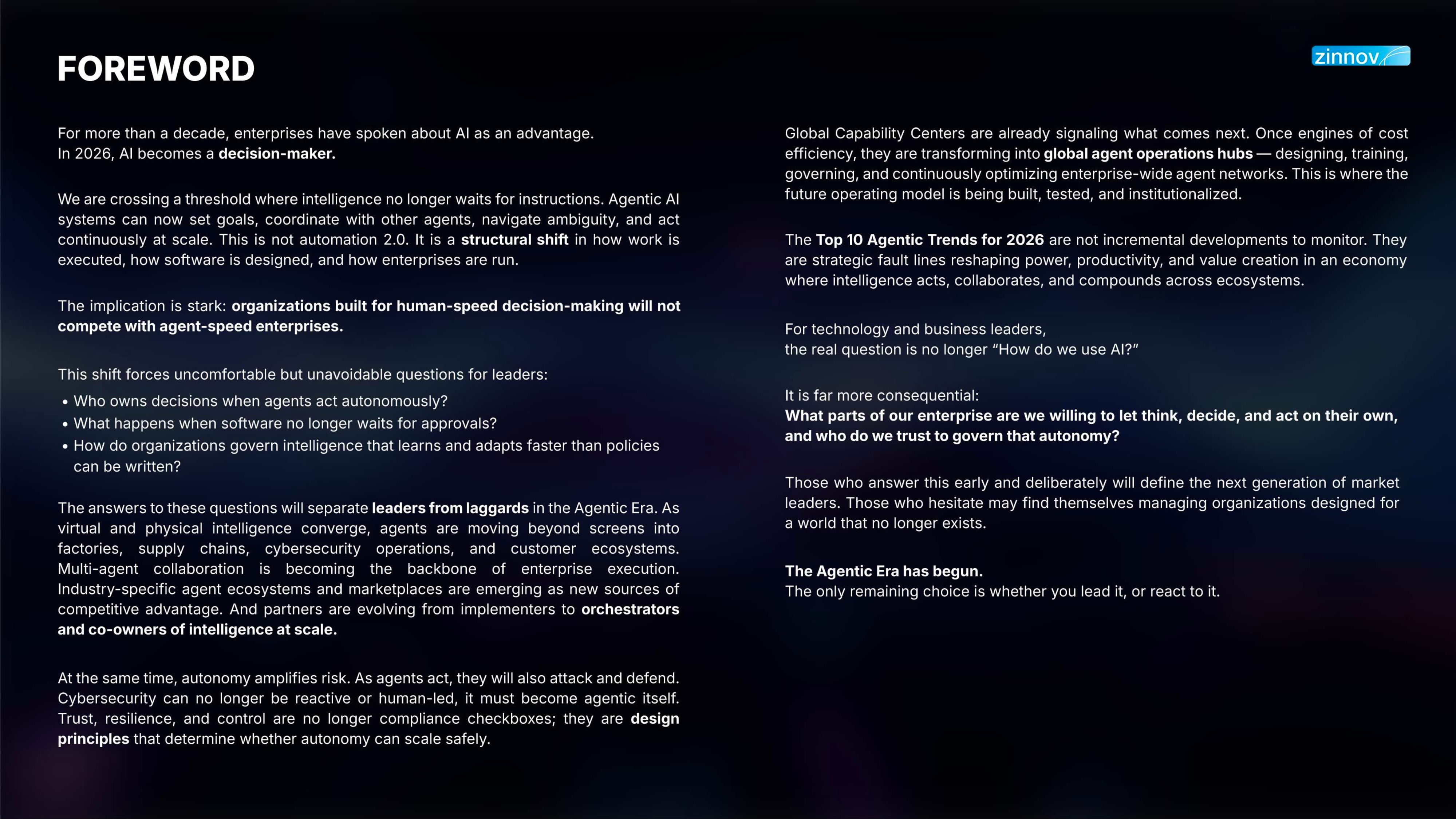
Over the course of 2025, in conversations with CIOs and CTOs across industries, one theme kept coming up. The early excitement around AI helping teams work faster was giving way to a more pointed question: what can we automate end-to-end, and what happens when AI starts running the work itself, when AI becomes Agentic?
That shift matters. For most enterprises, productivity gains from copilots and recommendations are already priced in. What leaders are now grappling with is scale, how to move beyond assisted tasks to systems that can plan, decide, and execute across workflows with minimal human intervention. This is where Agentic AI enters the picture.
CTOs aren’t looking at agents as another feature to deploy. They’re looking at them as a way to address very real constraints: brittle workflows that break across systems, manual handoffs that slow execution, rising operational complexity, and teams stretched thin trying to coordinate work across an ever-growing stack. The focus has shifted from “Where can AI help?” to “Which processes can agents own safely, and how do we stay in control?”
Agentic AI changes the nature of work itself. Instead of AI living inside applications, agents sit above them, connecting systems, orchestrating tasks, handling exceptions, and driving outcomes. That difference is subtle but profound. It turns AI into an operating layer.
The choices enterprises make now, around orchestration, governance, accountability, and trust, will determine how effectively autonomy can scale in the years ahead.
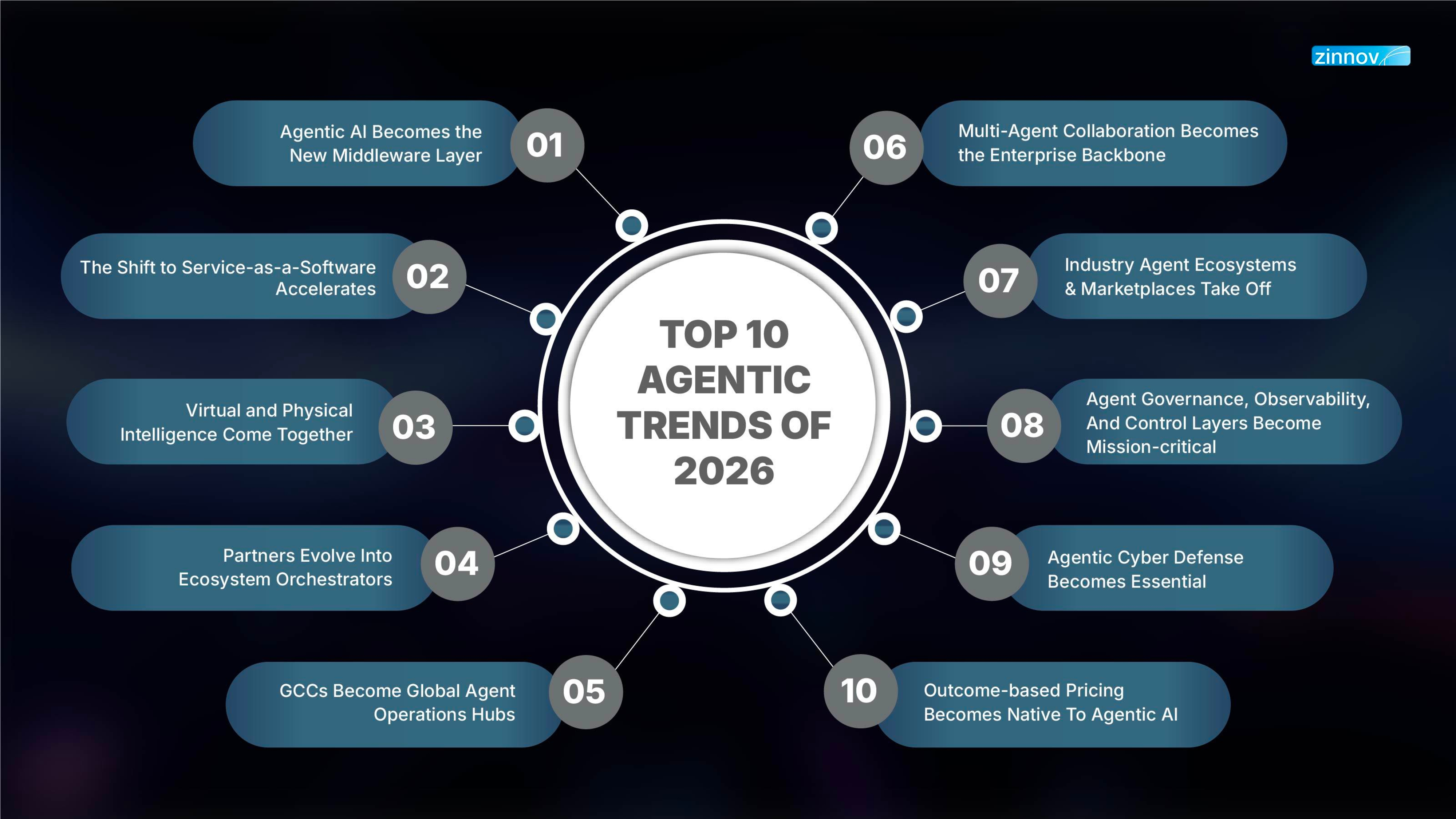
That’s why we’ve brought together our perspective on this shift with our report titled, “Top Agentic AI Trends for 2026″. Not as a list of technologies to watch, but as a practical lens for leaders navigating a future where agents don’t just support work, they increasingly run it.
Download the report now!




 THANK YOU
FOR YOUR RESPONSE
THANK YOU
FOR YOUR RESPONSE

