




BACK TO GCCs Unfiltered
ZINNOV PODCAST | GCCs Unfiltered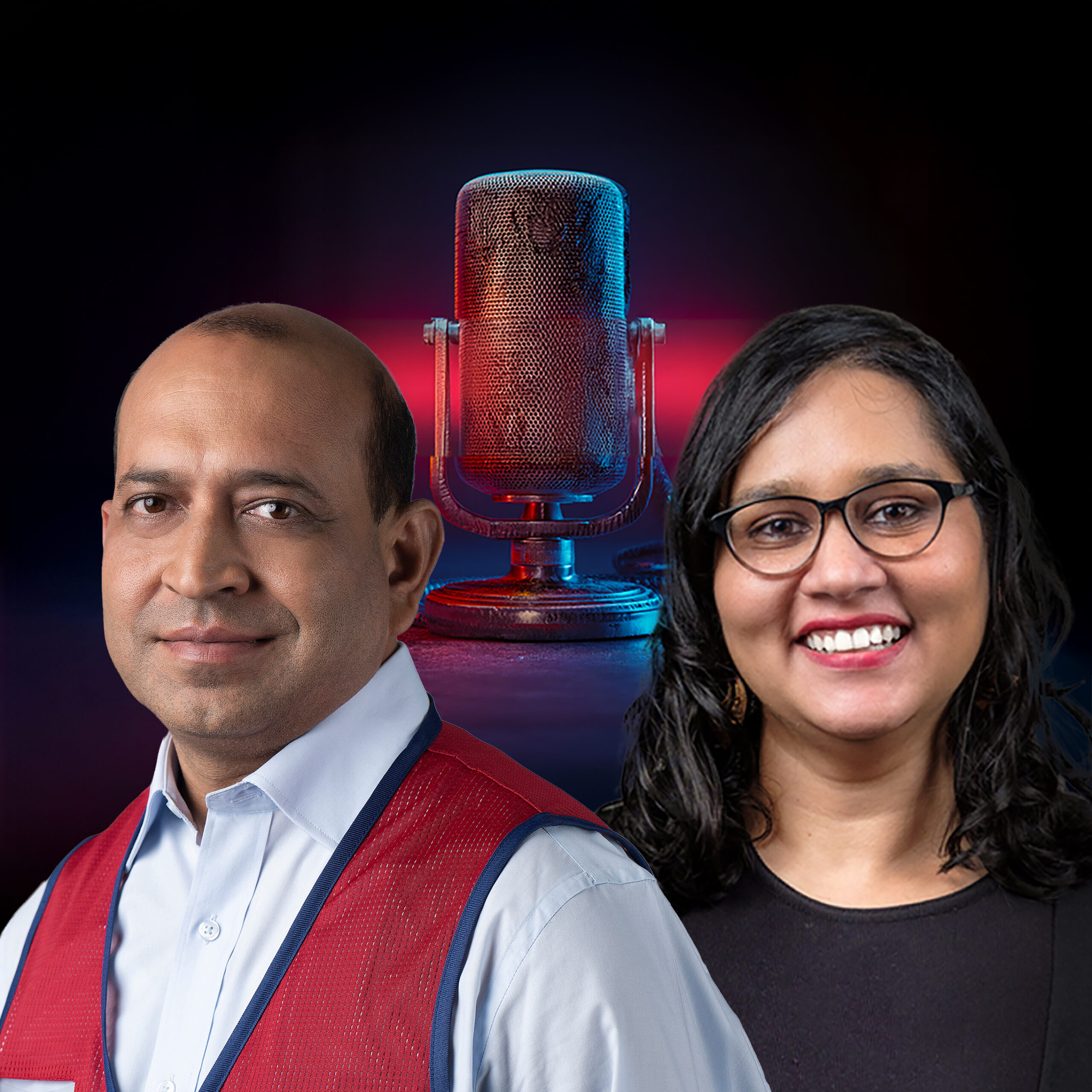



16 million customers walk into Lowe’s stores every week.
At that scale, small decisions have very large consequences. Inventory, supply chains, store systems, customer experience – everything has to work together seamlessly.
Our guest today is Ankur Mittal, who leads technology for one of the world’s largest home improvement companies.
Ankur oversees technology across omnichannel platforms, enterprise architecture, infrastructure engineering, and AI-led transformation – shaping the systems that power millions of customer interactions every week.
In this episode of GCCs Unfiltered, Nitika Goel speaks with Ankur about what it really takes for teams to move from execution to influence – building trust, scaling leadership, and staying relevant as technology and business continue to evolve.
Tune in now.
PODCAST TRANSCRIPT
Nitika Goel: You know, when we talk about global capability centers, we often hear about scale, transformation, and innovation. But behind these words are real people, leaders who have built, reshaped, and reimagined what global teams can do.
That’s why GCCs Unfiltered is all about honest conversations with people driving that change. Hi, everyone. I’m Nitika Goel, managing partner and CMO at Zinnov, and today I’m really excited to be speaking with Ankur Mittal, who’s the senior vice president and chief technology officer and managing director at Lowe’s India.
Those titles are heavy but come with a lot of interesting things behind them. He is fun, full of mizzaz. I had a lot of back, like, behind the scenes conversations with him, and I assure you this is going to be a conversation worth waiting for. Ankur has over 20 years of experience in tech, from Target to Infosys to Wipro.
He has seen how large enterprises evolve and how the right mix of strategy and empathy can change the game Today, we’ll dive into his story and Lowe’s story and what it takes to lead at scale and the lessons that come with. Ankur, really excited to have you. Welcome to this episode of GCCs Unfiltered.
Ankur Mittal: Thank you so much for having me over here.
Nitika Goel: To kick things off, it would be really great if you could explain what Lowe’s does in 30 seconds and the role of the India center in enabling that.
Ankur Mittal: So, Lowe’s is a 104-year-old company. It’s primarily into home improvement retail. Now, the concept of home improvement retail is little alien to, to the Indian customers or Indian population is…
So, Lowe’s, what it does is whatever you need to construct or build your home, to decorate the home, to build your garden, everything is what Lowe’s provides. So, from lumber to appliances to concrete, plumbing, electricals, paint, outdoor fur- furniture, lawn and garden, patio, everything is being provided by the Lowe’s in one single store.
Now, if you look at it, the Lowe’s stores are on an average is around 120,000 square feet and 120,000 square feet of parking. Wow. So, it’s like a massive few football fields coming together to open its stores.
Nitika Goel: That is such a fantastic way to think of it. A lot of India GCCs currently have a center head that sort of stitches together these functions, so they say there’s a microcosm, and in fact, a lot of the dot connection happens better because you have that horizon- horizontal layer.
What has your experience been? What’s worked, not worked?
So where they run a function, plus they take the center head role. Do you think that can work? Does that work? Does that not work? Or do you think it’s just very organizational specific?
Ankur Mittal: See, it is definitely organization specific. In my personal opinion, I think that is how it should be structured.
See, when I say the functional roles and functional teams, I think the main thing which we are talking about is the KPIs of a particular team. So let’s say if you have an accounting team or let’s say you have a team for certain set of engineers working in AI or dotcom or anything, [00:03:00] as long as you have the same metrics to measure the people or measure the outcomes across the board same, that, in my mind, is kind of a functional role and functional alignment within the teams.
Now, you will always have a center head who is trying to bring people together and making sure. So there is a kind of things which center head should be doing, and there is this kind of thing which functional head should be doing.
Nitika Goel: So, if I have to ask you, lots of center heads today play a T-junction role, right?
Ankur Mittal: The functional role is what should be earning your compensation or paycheck. According to me, that’s how it should be structured.
Nitika Goel: Do you think the Indian GCCs are structured like that, or do you think we
Ankur Mittal: are—Not yet. I think some of them are, and they are doing really well. Most of them are in the journey to become that.
But when I meet my industry peers, I think everybody seems to be striving or move towards that space where they have the functional role. See, once you have the functional role at a center head level, it will also start to percolate down to the other levels also, and that’s what’s going to make the difference, in my opinion, for most of the GCCs.
Nitika Goel: Do you think it’s a function of the way that organizations are designed or is it will? Are some people just comfortable being horizontal leaders without taking functional responsibility?
Ankur Mittal: There are people, and I won’t say that this is the only way to run the things. I think you can run the things if you are only doing a kind of a horizontal role and playing the center head role, but the expectation has to become then different.
The expectation shouldn’t be that the individual will be able to take care of entire delivery, because then if you start taking care of the entire delivery and entire responsibility of each and every function’s outcome, then you are breaking the integration between the teams. [00:05:00] So yes, it can be done, if certain companies want to do it that way.
But in my opinion, having a good functional role is something which can give you a lot more empowerment, lot more seat at the table.
Nitika Goel: I 100% agree, and I think we’ve seen that repeatedly as well. Now we are seeing a V-shaped role where there are actually one deep in one function and two responsibilities, not just a center head responsibility, but sometimes a COE responsibility and things like that.
So very interesting come to play. So, I’m going to then ask you, right? You obviously, you’re doing good work, you’re on a higher scale of maturity. What do you think has been the right steps to earn that credit? One, you’ve talked about having functional alignment. What other things have worked in your Favor?
Ankur Mittal: See, functional alignment and functional responsibility comes only after you build the trust. So, for example, we started to get some functional roles in India because there was good alignment and [00:06:00] the CEO, the CIO thought that it can work out. But how the things change is primarily because of some of the two or three critical things getting delivered out of India, which nobody expected it.
Ankur Mittal: Once you start doing that, then there is a trust, then you get some more work, then you deliver that also extremely fine, then you get more work. So it’s a kind of a thing which you have to keep on building. We already had the self-checkout in our store, so it’s not that we didn’t have the self-checkout, but it was not stable.
Ankur Mittal: The number of transactions which was going through that was much lesser. We said, “Okay, let’s go ahead and build it.” Nobody asked us to build it. We created the proposal, took it to the SVP of store. He said, “Yeah, let’s try it out.” Did a POC, then make it big, then make it big, then we invested a lot of money to build the lab.
Ankur Mittal: And another thing which I keep telling all my peers in GCC is that—Just one win is not enough. You have to earn win every [00:07:00] single day. Like I cannot keep saying that, “Okay, I delivered self-checkout four years back, and now it’s going to be fine.”
Nitika Goel: It’s not a one and done.
Ankur Mittal: No, you have to earn your bread every single day.
Ankur Mittal: So those are all the things you have to do it to be able to have the seat at the table and continue and continue to have them.
Nitika Goel: GCCs talk about being strategic. You said you did something strategic, and like you said, you have to earn your bread every day. Yet, there’s still a cost line in the P&L, right?
Nitika Goel: Can those narratives really coexist?
Ankur Mittal: If you look at it, most of the GCCs are probably serving corporate functions, and the reason why I say this, that everybody talks about efficiencies and productivity. In my opinion, efficiencies and productivity has a limitation to it. So let’s say you are spending 100 rupees today.
Ankur Mittal: You can optimize it to 75 and then maybe 50, but there is a limitation that you can’t go below 50 or maybe 40 in whatever, two-year, five year, 10 years, whatever time it takes for you.
Nitika Goel: So Ankur, you bring in a bunch of very interesting questions, right? So one thing, like you said, you have to have domain, you have to have technical, but what I keep hearing also is the ability to articulate that value.
Nitika Goel: I think that is what a lot of the Indian centers struggle with, right? You may have had that great idea, but you had to create that proposal. Did that proposal make sense? Did that speak the language of, for your SVP? So how do you build that muscle?
Ankur Mittal: See, I would add one more thing. So, you have to have the domain expertise.
Ankur Mittal: You need to be knowing retail. Like for Lowe’s, you need to be knowing retail, but just knowing retail is not enough. You need to be knowing how the home improvement business works and what are you doing to learn that thing. Then you need to have technical expertise if you are working in technology or whatever field you are working in.
Nitika Goel: But how do you build articulation muscle? Because most Indians are incredibly technical and maybe even domain competent. You’ve brought in a construct, right? Domain is not understanding retail. It’s understanding retail in the context of market, right? I think that was a fascinating point you brought up.
Nitika Goel: The second is articulation is simpler said than done, right? How do you create that business case? They actually hire consultants like us to create business cases because they’re not easy, right? And it’s a fundamental and a core muscle change. So how do you even think through that and build that muscle in a team?
Ankur Mittal: My opinion is start small. Small business case for your local people itself, and then go one step at a time. See, here is the thing For me to build a business case and sell a business case, I need to be understanding that what the other person is looking for. So as long as I start to understand that what the person is looking for, and so if it is a CFO, the business case is going to be very different—
Nitika Goel: It’s going to be very numbers-oriented,
Ankur Mittal: yes
Ankur Mittal: than if you are talking to, let’s say, EVP of stores or a person who is operating the store versus a person who is setting up the merchandise. You need to be understanding what their KPIs are, what their goals are, and speaking that language is the most important thing. And it is not easy to [00:10:00] build that, but it’s not hard also.
Ankur Mittal: See, everybody’s—if you look at it, every group’s KPIs, every group’s what they are working on is already out there and it is available for everybody to read. Now, if you start reading all those things and then build your business case, which is addressing a very important question, which is, “What is in it for me?”
Ankur Mittal: As long as you are able to answer that question for all the stakeholders sitting in the room, you’ll be fine.
Nitika Goel: How—You may have this as an individual, Ankur. How are you building it systemically to your leaders, through the funnel?
Ankur Mittal: See, so there is a lot of—So every time people will come with the ideas that, “I want to do this thing.
Ankur Mittal: This feels cool.” And we ask the same questions. So, let’s say if you are going and talking to a merchant, what is in it for the merchant? So, people come in every time and they’ll talk about, “Can we open a different type of format store?” Or “Can we do this thing? Can we do that thing?” And when you start asking those questions, you will see that people are going to go and try to find those answers.
Ankur Mittal: Sometimes they will come up with the right answers, sometimes they’ll come up with the wrong answers. But my fundamental thing is that don’t catch fish for the people. Teach them how to catch fish. So asking politely more and more questions, guiding them to the direction where they should be going and looking for the information.
Ankur Mittal: And then I have seen 90% of the time, either people are able to find that information and answer themselves that, “Yeah, this will probably make sense. This probably won’t make sense.” 10%-time people just drop it—They’re
Nitika Goel: like, “I don’t want to do it.” ”
Ankur Mittal: Nahi karna.” But that’s okay.
Nitika Goel: Yeah, and it’s fine. If you have a 90% ratio, your odds are in your favor.
Nitika Goel: I think you’re talking about some very interesting things. Now, if I have to talk about three, four different things that we talked about, right? number one is you’re talking about an efficiency play, then you’re talking about a value play, and then you are talking about a Continuous play.
Nitika Goel: So, it’s not just you have to deliver good quality, good value, good efficiency every single day. How do you build that culturally? And how do you do it with a generation of new people who come from different context? How do you do it with people who have now been with your organization for multiple years?
Nitika Goel: And how do you do it when there are multiple new entrants who want your talents?
Ankur Mittal: The philosophy, like in Lowe’s, we have a philosophy of continuous learning. We want our people to have the curiosity. These two things coupled with taking actions and having a right number of risk-taking abilities. If you have these four things as part of your culture, as well as your core values, behavior, you will see that every single day people are becoming and asking more and more questions to themselves as well as to the teams and to their leaders also, that what can I do differently to make it better?
Ankur Mittal: As long as that is the thing which is percolating down from top management to every single person in the company, you will see that culture where people are not just thriving for efficiency, they are also thriving for creating new streams and delivering every single day better than what they did yesterday.
Ankur Mittal: So that has to be demonstrated in the actions by every single person in the company. Now, coming to the new generation, I think it is just a matter of time. They’re coming in new. They have some sort of sometimes an entitlement, sometimes not understanding the corporate culture. But over a period of time, I strongly believe that they could also be tuned into having the right conversations.
Ankur Mittal: And again, it comes to what they see in their immediate leader. Immediate leader or the frontline managers makes the most impact to the people who are coming into the teams. So, we in Lowe’s ensure that our frontline leaders are equipped to talk about those things and equipped to showcase that behavior on a daily basis.
Nitika Goel: So, you talked about it’ll take a little time for them to get integrated. How much time do you think is literally time now?
Ankur Mittal: See, it will vary. Some people it’ll be like few weeks, some people it’ll be few months. But-
Nitika Goel: years also, but you’re being kind.
Ankur Mittal: Yeah, could be. Could be. But see, here are the things.
Ankur Mittal: Sometimes, you have to value what they bring to the table, because some people who are not so into the corporate rhythm, but if they are able to provide you significantly new ideas, it’s fine. I think you can live with them, and you can mildly keep continuing to coach them.
Ankur Mittal: Absolutely
Nitika Goel: You also talked about doing things differently every day. When we were speaking before this, you have a very interesting routine about calendars, meetings, how you are not in many meetings, and I think that’s a life lesson for many of us who are doing it as well. Would love to hear and understand a little bit more.
Ankur Mittal: I keep telling all my teammates as well as friends also that I’m very possessive about my time. If I want to waste my time, it has to be me, not somebody else wasting my time.
Nitika Goel: What does waste time include?
Ankur Mittal: Anything and everything. If there are meetings which can be avoided and the communication can be through emails, I like that.
Ankur Mittal: I want to keep the meetings to the agenda. Most of my meetings range anywhere between three minutes to 10 minutes. I don’t do one-on-one scheduled status with my team or my DRs, but I probably talk to them three times or four times in a week because I don’t want them to be thinking that I can talk about these four issues or four things or four topics only when the time is scheduled.
Ankur Mittal: Generally, anybody who wants time from me, they get the time in 24 hours, so that’s how I operate.
Nitika Goel: That is fantastic. What about things which are systemic? Like, you have a new bunch of new entrants into your organization. There’s Gen Z-ers who you are also in a way the culture keeper as the center head, right?
Nitika Goel: And I think as I mentioned before, you obviously have a bunch of titles, so you’re playing a functional role, you’re playing the center head role, so how do you do that with the different generations and teams?
Ankur Mittal: See, we don’t do anything specific for a particular generation, but what we do is something called break room, where me and few of the other leaders will come in, and it’s kind of a free-flowing conversation.
Ankur Mittal: So we encourage our associates to join that session. It’s kind of a grab some tea, coffee, and then just meet with the leaders and ask anything, whatever running in your head, whether it could be a personal question, it could be question about business, it could be question about how to grow in their career.
Ankur Mittal: All those kinds of questions are welcomed. The openness in the team, the openness in the communication is what we want to establish, and that goes really well with the new age generation also because they are able to understand what we are doing and why we are doing certain things.
Nitika Goel: That’s good. I think there’s transparency in communication, which they appreciate and like. You partnered early, Ankur, with OpenAI, right? And now deploying store-side agents. What’s the most overhyped and underhyped AI use cases in retail stores?
Ankur Mittal: AI was there always. It was more of analytical AI. Then you have the GenAI coming in.
Ankur Mittal: Then you have computer vision coming in. Then you have agentic AI coming in. AI, whether it is analytical, gen, computer vision, or agentic, is going to make our associates, our teams a lot more efficient. There is no doubt about it. You will still need a lot of associates for doing different kind of work.
Ankur Mittal: It’ll open up the new ways of doing the work.
Nitika Goel: You talked about micro agents. Do you personally have one?
Ankur Mittal: I have multiple micro agents. I need to stitch them together to make it one. But yes, there are some which is being used for summarizing the emails or summarizing a big document. There are ones which is helping me write the emails.
Ankur Mittal: There are one which is helping me create presentation, though I create very few presentations. So I have some of those, but yeah, it’s still a journey to get one who can do everything.
Nitika Goel: That’s fantastic. What a good aspiration. Will that need 2035 or can it be done in 2030?
Ankur Mittal: I’ll talk to my CEO and let you know.
Nitika Goel: What’s the hardest gap between Indian delivery leaders and truly global product owners, and how are you aiming to close it?
Ankur Mittal: What I’ve seen Indian delivery leaders are extremely good in execution. But if you pair that up with little bit of risk-taking ability, little bit of asking questions, little bit of going out of the comfort zone, that becomes a deadly combination, and that’s what I think more and more our Indian leaders have to start doing, go onto the path where it’s not very comfortable.
Ankur Mittal: So, I keep telling another thing to my folks on my teams is, “Be passionate about ideas, be passionate about things. Don’t get married to them.” So, if it’s okay if you have to drop this idea and pick up something else. But just keep doing it. Just keep picking up new ideas. Just think of, “What I’m going to do new today?
Ankur Mittal: What I’m going to do different today? How I’m going to do better than yesterday?” Has to be there.
Nitika Goel: How much of it do you think can be changed? Because some of these are ingrained in us from our time we were in school, how you take orders, respect. Respect means listening. There’s some fundamental hard coding we’ve gotten as we’ve grown up.
Nitika Goel: Yeah. So how do you rewrite that code?
Ankur Mittal: I don’t think there is going to be a silver bullet which, or something which you can tell that, “Hey, this is how you have to do it.” You just have to demonstrate. And if your management start to demonstrate, people start demonstrating, it will be fine for the people who is coming through the ranks right now.
Ankur Mittal: Second is having to create an environment in the company so that people are not worried about the failure.
Nitika Goel: Psychological safety, if you will. Yeah
Ankur Mittal: They should feel that if I bring this idea and if it is not a good idea, I won’t be looked down.
Nitika Goel: Got it. That’s a great point. What do you do at Lowe’s to do that repeatedly?
Ankur Mittal: Encouraging people to ask questions is every single time, and we are personally and my leadership team also try to provide not all the answers. It is how do you have person go and figure out the answers, guiding them into the right direction and not just saying simple yes or no.
Nitika Goel: solutioning for them.
Ankur Mittal: Yes. Yes. So that is very important.
Nitika Goel: So, it’s a fantastic way to think of it, right? GCCs, now coming to one of the questions, like if you had to set up a GCC from ground zero today, who are the first three types of employees you’d hire?
Nitika Goel: So, it’s a fantastic way to think of it, right? GCCs, now coming to one of the questions, like if you had to set up a GCC from ground zero today, who are the first three types of employees you’d hire?
Ankur Mittal: So, four, not three, I would say four. One is somebody who has a very good domain understanding, person who has spent some time in similar kind of companies, preferably in the country where they’re operating in.
Ankur Mittal: So having a good domain knowledge. Second person I would hire probably some CTO of an upcoming startup or a really good technology person, because most of the GCCs will end up doing technology. So, domain, technology. The third one is what I call a talent magnet, the person who is known for pulling or being able to attract the talent from the market, to be-
Nitika Goel: This is not HR.
Nitika Goel: It would be a person who’s a technologist, who’s-
Ankur Mittal: It could be HR also, but I would prefer a person who is coming in from the business side, whether it is technology, merchandising, marketing, but people look up to that person in the industry. And the fourth person would be my cultural champion, the person who can build a good network and good relationship with the headquarter and replicate the right culture back in India.
Nitika Goel: Ankur, this has been a very, very interesting conversation. I’m gonna do a segment which we are calling our rapid fire. What do you think is a leadership habit you swear by?
Ankur Mittal: My swear by being authentic and honest.
Nitika Goel: If you had to give Lowe’s India a tagline, what would it be?
Ankur Mittal: The gold standard GCC for Indian market and a strategic arm for Lowe’s.
Nitika Goel: I love that. What do you do with your free time, apart from going to work?
Ankur Mittal: I’m double PhD in Netflix.
Nitika Goel: What is the show you’re watching currently?
Ankur Mittal: Currently, Billionaires’ Bunker.
Nitika Goel: What about tri- You have a very different career trajectory, if you will.
Ankur Mittal: See, when I started my career or when I was doing engineering, my dream was to become an Air Force pilot, but for variety of reason didn’t happen.
Ankur Mittal: So then, I joined Reliance. Infosys at that point in time, late ’90s, was really a charming company. So I also joined Infosys. I wasn’t enjoying tech work, so then I moved into… And then I wanted to go for umpiring in cricket. I did close to 75 corporate tournaments umpiring, got selected into that time, for closer to Ranji Games and the State Games.
Ankur Mittal: But that compensation was 75 rupee a day, and which wasn’t making sense in terms of leaving the job and doing that full-time. So then I stayed in tech, and then again, left Infosys to go and do my MBA so that I can come out of tech. But again, finally landed up in tech, and then been doing tech forever.
Nitika Goel: Basically, tech did not want to leave you, no matter how much you wanted to leave tech. Yes. That is how it worked. You umpiring is probably the first of its kind that I have heard in one of my podcasts. What lessons or if you had to draw an analogy of cricket and GCCs, what would you say?
Ankur Mittal: I won’t say GCC.
Ankur Mittal: I would draw the analogy between cricket and a leadership role in a corporate. Okay. See, umpiring teaches you to have control on your emotions and making the fair decision, whether you like one particular team or not. It doesn’t matter. The same thing you have to apply every single day in your corporate.
Nitika Goel: That is actually, given that you were aspiring to be a pilot, that would have been a huge disappointment. How do you take care of disappointment psychologically and just move on to the next big thing? How do you re-find passion?
Ankur Mittal: Yes, this was a big disappointment because I was very passionate about it.
Ankur Mittal: And every single day or every now and then you will have some disappointment, or you’ll make some mistakes, or something didn’t go right. I keep telling myself every single day, morning, that whatever happened, you can’t change. If you can’t change, I’m not gonna think about it. There are certain things you learn from it.
Ankur Mittal: Just learn and move on.
Nitika Goel: If we had to make a Netflix show or a book or write a book based on your life story, what would it be titled as?
Ankur Mittal: “Living the Life on the Edge.”
Nitika Goel: Ah, love it. Great. Thank you again, Ankur. It’s been a wonderful conversation, a learning conversation. I think I just totally love your approach to how you deal with the problem at hand.
Nitika Goel: You’re redefining your new normal for the center. You’re thinking as a system rather than an individual, which is truly what makes a difference with GCCs. It’s been a pleasure having you at this episode.
Ankur Mittal: Thank you so much for having me over here. Thanks once again.
Nitika Goel: Thanks.
Dhanya Rajeswaran of Fluence joins Zinnov’s Nitika Goel to discuss building a high-velocity GCC, global leadership, AI, innovation, and scale. Tune in.

isolved's Pragya Gupta & Amy Mosher on building a GCC for AI era as an office of equals with AI and humans in the loop.
Don’t miss any of our future episodes!
Also subscribe to the Zinnov Podcast on these platforms





Dhanya Rajeswaran of Fluence joins Zinnov’s Nitika Goel to discuss building a high-velocity GCC, global leadership, AI, innovation, and scale. Tune in.
isolved's Pragya Gupta & Amy Mosher on building a GCC for AI era as an office of equals with AI and humans in the loop.
 THANK YOU
FOR YOUR RESPONSE
THANK YOU
FOR YOUR RESPONSE
