




BACK TO GCCs Unfiltered
ZINNOV PODCAST | GCCs Unfiltered


|
|
GCCs are evolving. Workspaces should too.
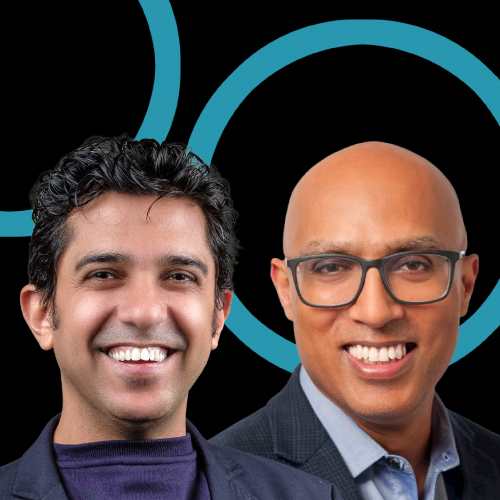
In this episode of GCCs Unfiltered, Amit Ramani, Chairman & Managing Director of Awfis Space Solutions Ltd. joins Nitika Goel, Managing Partner & CMO at Zinnov, for a candid conversation on how Global Capability Centers are reshaping the modern workplace.
From the early days of GCCs being cost-focused back offices to today’s human-centric capability hubs, the discussion unpacks why culture, workflows, and employee experience now drive workspace decisions. Amit offers a pragmatic take on AI’s real role in office design, the growing importance of distributed and Tier-II city work models, and a future where offices adapt dynamically to how people work – individually, collectively, and collaboratively.
Tune in to hear the full episode.
PODCAST TRANSCRIPT
Nitika Goel:
Welcome to Gccs Unfiltered, where we look past the buzzwords and uncover the real stories of global capability centers – the tough choices, the tradeoffs, and the leadership that makes them matter. I’m Nitika Goel, Managing Partner and CMO at Zinnov, and today I am speaking with Amit Ramani, Founder, Chairman and Managing Director of Awfis Space Solutions Ltd.
I’m pretty sure you would have seen an Awfis board somewhere in this city or any other city in India. So it is definitely a household name, or a start-up name, or a GCC name for sure. With over 20 plus years in real estate and workplace solutions, Amit has built more than just workspaces. He has built platforms for people, for innovation, and even for change.
In this episode, we will dive into what it takes to build something from the grounds up, how design, operations and cultures intersect, and how you can lead an organization that thrives in change. But more importantly, as we talk about the hype cycle of GCCs, coworking spaces like Office become a very key player, and getting his perspective on: Is it myth? Is it reality? Are they enablements? Are they accelerators? I think those are very interesting conversations that are gonna come into play.
Amit, it’s great having you at this episode of GCCs Unfiltered. Welcome. Really excited. So for our audience, it’d be great if you could just give us a short investor summary version of what Awfis does and what your USP is?
Amit Ramani:
Sure. When we started the business, we were solving for three things.
We were solving flexibility – so people should have the opportunity to take one desk, a hundred, for a day or five years: their choice.
Second was accessibility, because I think one of the pain points that is there across all metros today is traffic and commute times. And we wanted to make sure that we had an office center within a 15, 20 minute driving radius in all of the seven metros. Glad to report that in five of the major cities including Delhi, Mumbai, Bangalore, Hyderabad and Pune, we already achieved that.
And then thirdly was ease of use. We were just talking earlier about how difficult it’s to innovate even a house, so to build an office becomes a very, very big pain point. So I think how people can just be able to book something on the floor, easily be able to move into a space which is fully managed – these are the three things kind of we were solving for today.
The USP of office today is around the network. We have 250 odd locations across 19 cities. Second, I would say, is the customer service that we deliver – the experience that we deliver in our centers – one of the highest NPS scores in the country, 70 plus percentage points. Third, I would say, is essentially the level of client base that we have. We have over 3,500 client companies that we service.
And then finally, I would say, it’s about the level of services that we are able to provide in our centers. So it’s just not a workspace. We do whole level of experiences, engagement, and also experience beyond the workspace. So I think those, I would say, are the USPS for office, but the biggest one would be the network.
Nitika Goel:
That’s fantastic. So we are talking about GCCs, and I think we’ve had the privilege of working together and setting up and scaling many of the GCCs together, but I know you’ve been doing this for a long, long while. What have you seen change ever since office started in terms of the setups and scale outs of GCCs?
Amit Ramani:
So I think GCCs has been there for the last 25 years. In fact, when I came to India in 2001, we had brought Bank of America Continuum Solutions. They were setting up their GCC.
I think what has changed is the kind of work that’s been done in the GCCs, and hence the workspace has evolved. So in the early days this was being set, it was about cost efficiency, it was about operational efficiency, it was about cost control, and not so much about the kind of workplace that was being created. And essentially the processes were all back office, etc. The kind of teams that were being hired were entry level staff and so on and so forth.
If you fast forward to today, GCCs are basically doing three kinds of things. They’re doing the back office, they’re doing knowledge process outsourcing, and they’re doing real work – frontend work – that they could be doing anywhere in the world. So the evolution of all three has evolved.
The first one, which is the BPO, I think has evolved in terms of being much more human centric. So the processes might be similar, but there’s a lot more focus on ensuring that the people working in it are taken care of. It’s still about corporational efficiencies and so on.
The second one has evolved where the KPO part of it, I think, is almost becoming mainstream. There’s a thin line between the two today, and the mainstream one – there’s a focus to recreate spaces that are existing, let’s say in the US or in the global markets, in India. So there is an equality that’s being created. One of the first things that we hear from GCCs is: it has to look like my office in Silicon Valley. And there are positives and pros and cons to that, but that is the equality that’s being brought today.
As I said, a lot more focus on human-centric design, wellness of the people, ensuring that people have choice of how and when they work. Technology has got integrated and, as a result, a lot more hybrid solutioning is happening. There is also a focus on ensuring that there is clear demarcation of me, we and us spaces. Some of that evolution has happened post COVID, and that’s also reflecting in what GCCs are doing.
Nitika Goel:
I’m gonna come back to that point. You’re talking about the evolution post COVID. Some of it obviously has enabled technology to come into play. You said more human-centric design, but on the flip side, post COVID, companies are still struggling or GCCs are struggling to get people back to work. There is hybrid. So why should companies even invest so much in their infrastructure, and why is it even important?
Amit Ramani:
So I think post COVID, hybrid kind of came into play. I don’t think there’s any company that allows its employees to work all five days from home anymore. Clearly there is companies asking for people – few, but very few. But I would say all mainstream companies: either maybe couple of days, or all five days in office.
I think what has happened is that because of the human-centered design, the employee has come at the center of the workspace. So it now starts with the employee, and then the workplace kind of adapts around it. And as a result, the companies have to invest the right amount of infras, right amount of investment to create the right infrastructure.
Because the employee’s question is: if I’m gonna travel three hours every day, then it better be worth a mile, because otherwise I can just do it from home. So I think from that perspective, there is clear focus for companies to create a great workspace.
And I think obviously there are multiple reasons why people come to a certain place to work. I think workspace is one of the top three reasons, and hence it has a clear impact on how employees behave in that space, how their productivity gets impacted. The workspace has to ensure that the productivity of the employees is paramount. And I think that’s why it plays a bigger role today.
Nitika Goel:
I’m again gonna be slightly contrarian. Is it also a worrisome thing that our employees today in GCCs are slightly entitled? If they’re working or saying, “Why should I travel?” All our families did it. In the past, every person who went for a job did it in a pre COVID era. So why does it change in a post COVID era?
Amit Ramani:
So, Nitika, in my view, companies that take care of their employees only thrive. Other companies cease to exist. So in my view, giving these kinds of benefits is part and parcel of a great company. If you wanna build a great company, you have to adapt to the employee’s needs. And today the employee needs have evolved.
Clearly if somebody needs a bit of flexibility to be able to take care of an aging parent or a young kid, I think we need to do that. So I wouldn’t call it entitlement – I would say these are benefits of working for a great company.
Nitika Goel:
You have probably worked with GCCs, but today we have a velocity of GCCs coming in which are unprecedented. I know personally we are doing six GCC setups in the next couple of weeks. For you, you probably have much more than that. So in that case, how do you manage to do it from a workspace perspective? How does that velocity not compromise quality?
Amit Ramani:
So, Nitika, from our standpoint, what we’ve been able to do, at least at office, is able to see trends faster than others. We saw some of this GCC boom happening almost three years ago – we started predicting.
To that end, what we did was we built one of the best design and build firms in the country. Today, one of our common clients came to us and they wanted to recreate an office similar to their US office in India and they only had 45 days to do it. We were able to do it only because we have built the best design team, the best build team in the country today, the best procurement team.
From that real estate standpoint, we now control the end to end. So from acquiring the property to the design to actual build out, all of it is done in-house. And when you do it in-house, you are able to deliver at a pace which is unprecedented.
Second is technology. We use technological tools. Today, obviously AI is an extension of a design tool. It doesn’t do its own thinking – obviously the designer does majority of that – but we have integrated that into our platform so that we can deliver high quality design as fast as possible. Every client does multiple rounds of iterations before they finalize a certain layout and a 3D visual. It’s our job to be able to do that faster.
And then the third piece is we have some of the best teams that essentially transition the client. So today the client is not about just the real estate itself – we transition by giving them an operational seamless experience. So it’s the complete end-to-end solutioning.
From our standpoint, I feel that for GCCs, the real estate and the workspace is a very, very important tool: to attract talent, to retain talent, to make them productive. And it is our job to give them the workspace that works for them.
Nitika Goel:
Since you’ve done so many of these setups, I’m gonna ask you – this is a two part question. Part one is: what are some of the things that you believe that new entrants to the GCC space have done right? And when they’re doing a build out, or when they’re doing a workspace which is truly futuristic from a design and an implementation perspective. And on the flip side, what are the common mistakes that they make?
Amit Ramani:
So I think good companies across India do the right thing in terms of understanding how their company functions. Every company has a different style of working. Every company has a different culture.
I think companies that invest the right amount of time and effort to understand how their workflows work, how their work style works, what is the culture that they want to deliver for the employees – I think do the best in creating the best workspaces. Clearly GCC clients that have done it well, and Indian multinationals that have done it well – they have essentially adapted the workspace around the employee. Human-centered design.
One of the mistakes is that you can’t take a Silicon Valley and you try to build it in Bangalore. The reality is people work in Silicon Valley differently than what people work in Bangalore. Culturally we work differently as Indians versus Americans. So I think the biggest mistake is they don’t adapt.
Nitika Goel:
So I’m also now gonna ask you a question in terms of what does AI do for the workspace – not in terms of how it physically changes the workspace – but in the recent past we’ve read like one major giant is supposedly laying off en mass at a scale which is fairly unprecedented. In those cases where organizations that are either right sizing or are getting disrupted internally because of AI, what will happen to their workspaces?
Amit Ramani:
AI, in my view, in some ways is getting overrated. Today AI is a sentence finisher. AI is a chief of staff. AI doesn’t think – it does what you tell it to do. So it’s a tool, just like when internet came, everybody said e-commerce will rule and there’ll be no shopping malls and we now see how they coexist.
So I think AI is here to stay and people will adapt to it. Certain jobs will get eliminated, I’m sure there will be because some of the more mundane processes, some of the most straightforward things, will get eliminated. But I think it’ll create newer opportunities ultimately.
If you look at the evolution of mankind – industrial evolution – if you plot the productivity chart, it’s been the same. So even with AI, I think it’s not that we’ll figure out how to make AI lazy.
Nitika Goel:
That’s correct. Two, three different questions again. So you have GCCs – commute is a pain. I think that’s the bane of most people’s lives in India. Do you think there’s a possibility in the future that a company will have like 10 different federated workspaces in each location where employees can go to those workspaces? Is that a possibility, probability? What are the pros and cons of that?
Amit Ramani:
According to you, it’s happening today. Post COVID, large companies would set up large campuses in core areas. So for example, large IT/ITS companies – we would have maybe two key locations in a city like Bangalore, outer Ring Road, and let’s say, you know, Koramangala. Post COVID, they kind of expanded the horizon.
Second, what they did was they adapted to this in an even more expanded fashion where they said, “Well, I will now go to where the talent exists.” So tier two cities came mainstream. Essentially, five years ago, if you ask somebody who are the companies that are sitting in Bhubaneswar, you would have probably very few companies. Today, I can tell you that all top hundred companies would have some presence in Bhubaneswar – a city like Bhubaneswar which does not have any. Similarly for Jaipur, similarly for Indore, similarly for Coimbatore.
So I think this is happening today and I think companies will have to deliver on this promise – which is our promise technically at office – having an office location within 15, 20 minute driving radius. Companies will have to provide that as a service.
Nitika Goel:
So if I come back to another point – on the flip side of what you enable is speed, acceleration, yet customization. So it’s like creating a bespoke suit, but in record time. I hear a lot on social media saying this is like a 90 day hoax. It’s just trying to accelerate something. The processes wind up becoming substandard. The physical infrastructure starts becoming substandard. How much can you do with quality in that period? What is your opinion on that, and is it a possibility, or do you think we are cutting corners?
Amit Ramani:
Nitika, I think it depends on what you are trying to deliver. If you are trying to build a seven star hotel with every perfect minute detail taken care of, it will take time, because there are certain things which need a certain sequence to happen at site.
At least the way we look at it is: what is the outcome that you’re looking for? If the outcome is a great design, if the outcome is a workplace that resonates with the organization, you will have to spend equal amount of time planning versus executing.
So for us, what we at least tell our clients is: it is upon us to match your speed and efficiency by creating tools and technologies, by creating teams, by creating resource pools, by creating method statements that deliver on that 90 day period for you. But do not compromise on either quality or the final outcome.
We firmly believe that it is our duty to be able to deliver on that promise. We have delivered national Stock Exchange, which was one like 75,000 square feet in less than 50 days. So it’s not a hoax – it can be done. Does every project need to be in that scenario? I don’t think so, because if every project is being done in that haste, then at some point you will end up making mistakes.
Nitika Goel:
I couldn’t agree more. But I love the fact that you did 175,000 square feet in 50 days. I just taken three years for my 2000 square foot hour, so it’s trauma. But yes, we’ll figure that out. So a quick question that I had – if you had to redefine the office from scratch tomorrow, what is the first thing you would throw out?
Amit Ramani:
I think the first thing I would throw out is: as organizations grow, they build mental barriers. And they build these mental barriers to say no to more things than yes.
I’ll give you a very simple example. When COVID hit, obviously my business was in trouble. If people didn’t show up in office, I had no business. We were in the middle of COVID, revenues dropped by half, and we were in a big challenging scenario.
I went to the team and I said, “We will go from 50 locations today to a hundred locations.” We used to add five centers in a year. I said, “We want to add 50 centers in a year.” And they said, “You’ve lost your marbles.”
So I think the ability for people to hustle, the ability for people to have an entrepreneurial mindset – that’s something we need to imbibe again. To answer your question a bit more bluntly: I’d take out some of the bureaucracy that gets built into a large organization.
Nitika Goel:
What do you think an office in the next decade will look like?
Amit Ramani:
We are in the business of predicting the trends. For us, some of those things are important because otherwise the clients look at us to give them where the future will hold.
As I said earlier, I think it’s all about human centric design. Today, if you look at it, the human being is at the center of everything. It starts from us and then it emanates outside. That’s how the workspace will adapt.
With AI and some of the interventions that are happening in terms of technology overall, I think workspace will start adapting. I coined the autonomous workspace of the future – where essentially you would be sitting in a room and the room will adapt to your work style. If you and I need to collaborate, it’ll become a meeting room. If you need to do heads round work, it’ll become a private cabin. If you need to do a larger meeting, it’ll become an open workstation area.
Nitika Goel:
So you’re saying automated cubicles.
Amit Ramani:
Absolutely. And with AI, it’ll predict your day and give you those workspaces as you move through the space.
Nitika Goel:
Can it predict my mood? What if I was in a bad mood?
Amit Ramani:
Well, I think the mood is already predicted even today. If you look at social media, it kind of figures out what you were thinking. So I think that’s already here.
Nitika Goel:
But you think it’ll happen in the workspace as well?
Amit Ramani:
See, in terms of workspaces, there is a thin line of privacy that comes into play. I’m a huge believer in ability for people to have their privacy. So if I want to filter that component where I don’t want you to understand my personal mood, I think that should be my choice.
From that standpoint, can the workspace do it? I’m sure it can do it, but is it the right thing to do? That’s another question.
Nitika Goel:
Yeah. Very valid point. Let’s look at an organization of Gen Zs. It’s a completely new breed of employees that are coming into the workspace. Do you think our current workspaces are ready for them?
Amit Ramani:
Only time in the recent past that there are four, five different generations that coexist in a workspace. I think great workspaces are that adapt for all type of generational types.
That’s why I’m saying: if it’s around choice, if it’s adaptability around you, then I will define my own workspace. If I like to work on a sit-stand desk, it should be available. If I like to work in a collaborative zone or in the cafe or in a meeting room, these spaces should be available today. These are today rigid.
I think the adaptation will happen very fast. When the adaptation starts, then the whole idea of “I’m a Gen X,” or “I’m a Gen Z,” or “I’m a millennial,” is in consequences.
Nitika Goel:
Great. I think that’s a great point. I’m gonna now do what we call the rapid fire round. I’m pretty sure you’ve seen Karan Johar show.
But mine are not so scandalous. They’re more pared down. So I would love to understand: if you had one piece of advice for GCC leaders, what would it be?
Amit Ramani:
I think invest enough effort in planning like you do in planning your processes – enough effort in planning your workspaces as well. Don’t try to hasten it because you are committing for the next maybe 25 to 50 years in the country. The first initial focus to getting it right, I think is very important.
Nitika Goel:
What is the most unreasonable ask you’ve had from a leader from a GCC?
Amit Ramani:
Speed of delivery. I think everything should be done yesterday. I think GCCs take years to decide if they’re gonna come to this country, and once they decide, then they will all want it yesterday.
Nitika Goel:
So today the GCC world is being enabled by a series of enablers like yourself, us, etc. Like how do you see that enablement channel evolving?
Amit Ramani:
See, I think the challenge channel has already evolved. Earlier, if you look at maybe five years ago, companies only did process consulting. They only did adaptation into the country. They did workplace infra. They did consulting around the compliances, etc.
Today, I think it’s all becoming a single platform. That’s because GCCs – especially the mid-tier ones that are coming the first time – obviously have a fear factor. In terms of ease of doing business, we’ve improved, but we are not in the top 50. So reality is that GCCs are making a big investment and they want somebody who can handhold them.
I think that’s where companies like Zinnov come in, where they become the single platform and bring all the stakeholders, the best relevant stakeholders, into a single platform to deliver the final solution. I think that’s where this whole evolution and journey up happening.
Nitika Goel:
Okay. What is one unpopular opinion you have on the future of work?
Amit Ramani:
I’ve been hearing this for the last 20 plus years: that everything will exist in the virtual world. There was a game called the Second Life, and then people said, “Second Life,” and that’s the end of the story. All social engagements will end. I truly believe that the physical infra will always exist.
Nitika Goel:
What’s the biggest myth about offices that you would love to bust?
Amit Ramani:
One of the biggest myths is that the work only happens inside the office. I think work happens in cafeterias, work happens in smoke breaks, work happens around pantry counters, etc. It doesn’t happen at the desk. It happens everywhere else, in my view.
And I think that’s the beauty of the workplace – that it creates these kind of mini units where work happened. So one of the biggest myths: it happens at desk. In my view, it doesn’t happen at the desk at all. It happens everywhere.
Nitika Goel:
Everywhere. Got it. If you had to build your own GCC from scratch, what would be the top two, three things you’d do?
Amit Ramani:
So first I will completely understand what is it that we are gonna do in that GCC. Understand this work styles, understand my culture, understand and adapt all of those elements.
I would go through a complete process of change management, where I will engage my employees because they should feel connected to the workplace. And then obviously I will build one of the best workplaces ever built in India so I can attract the best talent.
Nitika Goel:
That is fantastic. What do you do at your spare time, Amit?
Amit Ramani:
So, Nitika, from my standpoint, obviously we live in a – you mentioned your 3000 square foot house. We build 3 million square feet every year. So it’s a high pressure, stress environment. So I take a 14 day detox every year, and I think that keeps me sane. And then I follow it up with – as frequently as I can – I can do yoga and meditation.
Nitika Goel:
If you had to write an autobiography about your life, what would it be? What would the title be?
Amit Ramani:
I’ve never thought about it because I don’t think I’ll ever write an autobiography. Let me be honest with you.
Nitika Goel:
Somebody wrote it for you.
Amit Ramani:
I think it would be something around real estate because I think we understand real estate as a service. Probably that’s what it will end up being called – something around real estate as a service.
And obviously we believe that we have innovated extremely well in the whole coworking space. We were the first ones in the world to successfully go public right when people told us. So I think we feel that there is a lot that we can share with people around the real estate space, and I think we can set the tone for the future. So I think it’ll be something around that.
Nitika Goel:
Great. That’s awesome. So today real estate is almost like a category of investment which is very distinct, which it was not a few years ago. What has been one of the hardest things as part of your entrepreneurial journey?
Amit Ramani:
So I think the hardest thing – we picked up a space which is very complicated. As I tell my teams, our strategy focuses only 5%. 95% is execution.
If you can execute well, in a country like India, which is so complicated – you go to Singapore, the buildings are so great that you can kind of get the 90 day hoax actually done. In India, it’s a very complicated environment.
So I think from that standpoint, the hardest pieces: we have picked up a very complicated space. But I think also because we have picked up a complicated space, there is a lot of opportunity in it.
Nitika Goel:
And you are one of those companies that have obviously gone public – not an easy thing to do. Any learnings for that or any advice for other folks that are looking to truly capture and understand and become top of their line in their own sphere?
Amit Ramani:
One of the first things that you need to understand is: why are you going public? That’s the one fundamental question that I would ask all companies looking to go public today, and I think most times people don’t have a clear answer.
Second learning is: clearly communicate. Clearly communicate to your investors, shareholders, your employees, etc.
Second is discipline. Discipline not just pre IPO – it’s post IPO. You have to be prepared of what’s gonna hit. QS QT sounds cool as a movie, but ” quarter se quarter tak” becomes very, very challenging.
Thirdly, in my view, you have to take everyone along. I think most companies go public, most promoters go public, and they do not care about employees. I’m very proud to say that when we went public, the top hundred people at office all became Crorepatis. So I’m very, very blessed to have them with us. So I think these are a few lessons I would suggest to people.
Nitika Goel:
Okay, great. And that’s a wrap. Thank you so much, Amit. Thank you. It was a learning lesson for me. I love the analogy. I’m now very interested to go see World Trade and see how it unlocked itself. For me, a key takeaway was the construct of the “I, we, and Us”.
And I really do imagine the workspace of the future – maybe, who knows – Zinnov’s office will be forward, a little prototype of what that is. Look forward to creating that. But very excited, and thank you again. And thank you so much. Thank you for the partnership. Thank you for the podcast. No
Amit Ramani:
Thank you.
Nitika Goel:
And thank you for the time that you’ve spent.
Amit Ramani:
No, thank you Nitika, and thank you for the partnership again. Thank you.
Cloud platforms scale through ecosystems. Tune in as Pallab Deb of Google Cloud discusses partner roles and growth.

NatWest’s Ruchika Panesar with Nitika Goel on Zinnov podcast - GCCs Unfiltered, on leadership, systems thinking & judgment. Tune in now.
Don’t miss any of our future episodes!
Also subscribe to the Zinnov Podcast on these platforms





Cloud platforms scale through ecosystems. Tune in as Pallab Deb of Google Cloud discusses partner roles and growth.
NatWest’s Ruchika Panesar with Nitika Goel on Zinnov podcast - GCCs Unfiltered, on leadership, systems thinking & judgment. Tune in now.
 THANK YOU
FOR YOUR RESPONSE
THANK YOU
FOR YOUR RESPONSE