



BACK TO GCCs Unfiltered
ZINNOV PODCAST | GCCs Unfiltered


|
|
When does a GCC earn the right to be trusted with core business work?
When it consistently delivers reliability, takes ownership of outcomes, and proves it can run critical business operations, not just build solutions.
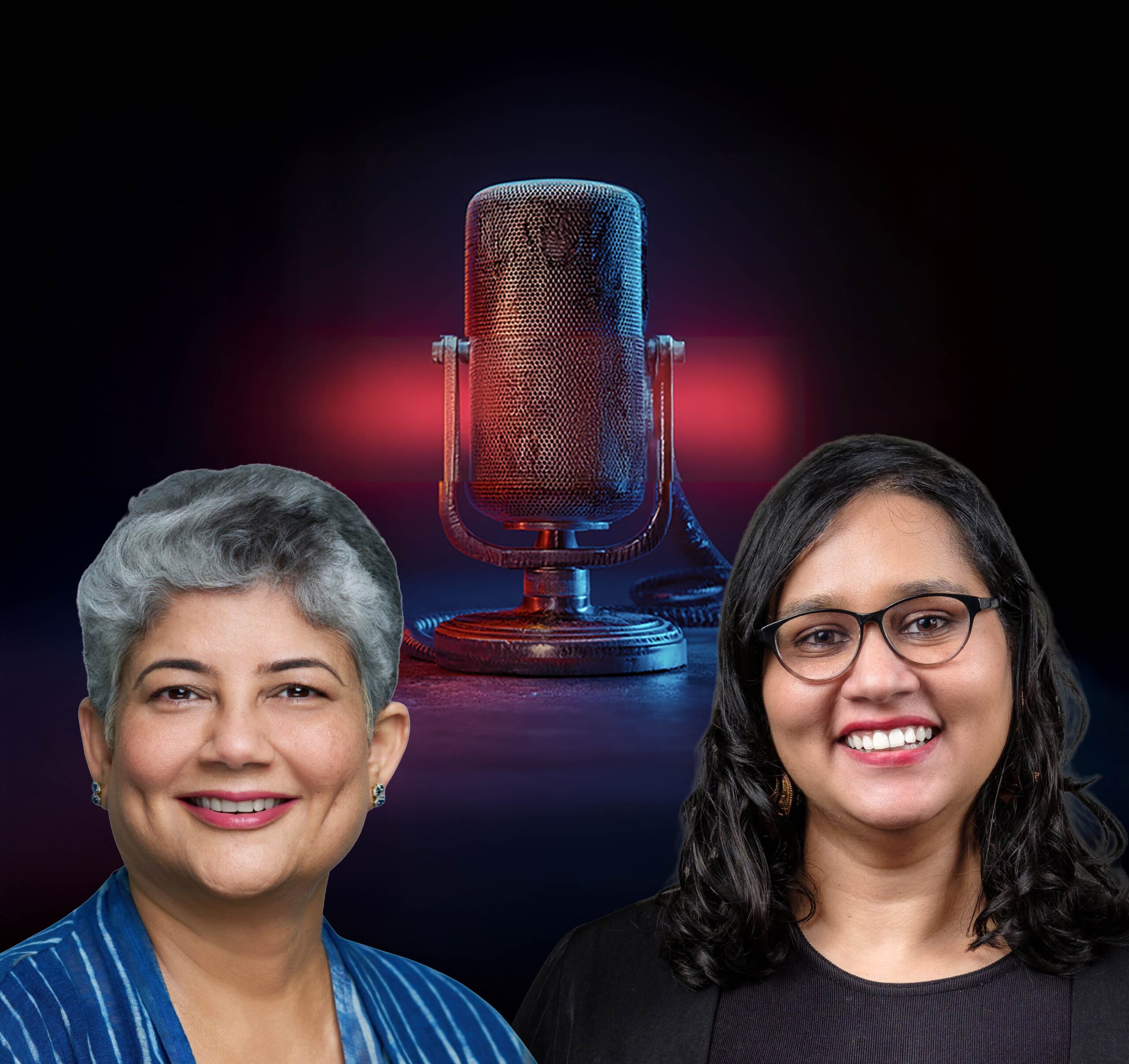
In this episode of GCCs Unfiltered, Sheenam Ohrie, Managing Director, Broadridge India, joins Nitika Goel, Managing Partner & CMO at Zinnov, to unpack how GCCs move from execution roles to positions of enterprise trust.
Drawing on Broadridge’s long-standing journey in India, the conversation examines why running the core business matters before pursuing transformation, how unlearning the “they vs us” mindset enables deeper integration, and what leadership accountability looks like beyond titles or hierarchy. Sheenam also reflects on the broader responsibility that mature GCCs carry in shaping talent, partnering with academia, and contributing to the ecosystem.
Tune in to hear the full episode.
PODCAST TRANSCRIPT
Nitika Goel:
Welcome to this episode of Zinnov’s Podcast, GCCs Unfiltered. Whether you are leading a GCC, building one, or are just plain curious, this is where we bring you the real insights that matter. Hi everyone, I’m Nitika Goel, Managing Partner and CMO at Zinnov, and today I am thrilled to be speaking with Sheenam Ohrie, Managing Director at Broadridge Financial Solutions India.
Now, Sheenam to many of you probably needs no introduction. She is not just the head of Broadridge, but what we call a true blue ecosystem orchestrator. She is a catalytic thinker who sees systems not just as symptoms, but problems that need to be solved, and she does this every single day. Her roles included Dell Technologies, EdgeVerve, and SAP, where she’s driven innovation and business transformation across industries.
Thank you for making the time to be here today. I’m really excited about what this episode is going to cover.
Sheenam Ohrie:
Nitika, thank you very much for having me here. Thank you for the brilliant introduction. It’s always an honor and a privilege to be here.
Nitika Goel:
To get us started, I would love to understand a little bit more about Broadridge. Could you tell us about your organization in less than a minute?
Sheenam Ohrie:
Our vision from a Broadridge perspective is pretty simple. We are in the business of enabling better financial lives, and we do it through technology that enables investor communication, governance, capital markets, wealth, and asset management.
Over ten trillion dollars’ worth of transactions flow through a Broadridge system every day. We operate in a very niche, boutique segment where we power 85% of U.S. equity markets in one way or the other.
In India, Broadridge represents almost one-third of our global strength. We’ve been in the country for about 28 to 29 years, doing really well for the company and contributing to core products, innovation cycles, customer innovation, and experiences we want to deliver.
Nitika Goel:
You mentioned you are a third of your global organization and doing high-order work. What do you think has been the biggest shift from a systems thinking process as well as from a people and leadership lens?
Sheenam Ohrie:
That’s an excellent question. When we started off as Broadridge globally, we were an offshoot of ADP. In 2007, we were about 450 people, doing both development and R&D.
Over the last two and a half decades, we’ve grown in India – not just in managed services or shared services, but substantially in engineering capability. Today, Broadridge India houses over 300 fully formed, cross-functional squads capable of delivering anything the global organization delivers.
From that perspective, we are as competent as anybody else in the organization. I think Broadridge India was never created by John Hogan and Rich Daley as a cost arbitrage center. The founders came to India, saw talent, and wanted that talent contributing to the organization.
Over time, we built Centers of Excellence in India – the blockchain COE contributing to our distributed ledger technology platform, as well as AI engineering capabilities – all housed in India.
Nitika Goel:
Did that evolution happen organically, or did it require a leadership shift or cultural shift?
Sheenam Ohrie:
A lot of it was driven by leadership. Some of it predates me – I’ve been with the organization for four and a half years. The hunger, pride, and passion of the teams here, and the ideas coming from the site, enabled trust.
We’ve been a highly trusted capability arm for the organization. We are transforming ourselves to be the capability center for all of Broadridge. We focus on talent, high-end transformation, the ecosystem, and our clients that have GCCs here.
When you are far away from headquarters, there is always a sense of “Do I belong or do I not belong?” Creating a one-company culture – a one Broadridge culture – is very important. How do you create a culture where associates believe they will be heard?
Nitika Goel:
Do you think what brought you here can take you to the next level?
Sheenam Ohrie:
What got you here is never going to get you to the next level. That’s fundamental to any growth story. Good work gets you to a particular level, but then you have to change trajectory and figure out what’s next.
AI changes the way we work. With everything happening in the world today, it’s very important to focus on human-centric creative thinking and innovation. Organizations have to build that kind of culture.
At Broadridge India, we built a culture of saying, “I’m boundless.” Boundless has two pillars. One is complete ownership. The other is entrepreneurship and risk-taking.
Ownership is about output, outcomes, and impact. Entrepreneurship is not about massive change. It’s about asking every day: are you becoming better by 1% than the day before?
Are you willing to take risks? Are you leveraging your seat at the table to have a voice? How are you pushing your teams forward?
We’ve taken people through communication exercises, talked about impactful communication, the art of storytelling, and how you leverage yourself as a brand.
The thinking process has to change. You have to challenge the status quo more often. Can I do this better tomorrow? Can I be made redundant the day after tomorrow? These are difficult questions.
The next culture shift is enabling associates to confidently unwind and relearn.
Nitika Goel:
From an overall GCC lens in India, what are some of the mistakes organizations are making?
Sheenam Ohrie:
One mistake is defining personal agendas instead of aligning with enterprise goals. As a capability center, my goals are Broadridge’s goals. I have to ensure I’m delivering and accelerating those goals.
I see leaders wanting their own innovation charters or AI agendas. If you integrate into the fabric of the organization and contribute to enterprise goals, acceleration becomes much higher.
Why do you need to own a product end-to-end? If you own the organization, you own the product.
Global ownership is not about having your name against a product. It’s about a customer saying, “Your team did this for me last night, and it was brilliant.”
If 33–35% of the organization sits in India and India doesn’t deliver, Broadridge is unsuccessful.
If I have to choose between running the bank and transforming the bank, I will choose running the bank – because that’s where the money comes from. If the core runs seamlessly, transformation gets funded.
Trust is currency. It doesn’t come from chasing shiny objects. It comes from ensuring bread and butter is on the table every day.
When leaders stop saying “they” and start saying “us,” culture begins to change.
I’ve never said I’m a GCC. I’m Broadridge. We are a hub in a hub-and-spoke model.
We also have a responsibility to give back – through academia, startups, and community-building. Ecosystem thinking is critical to sustainable growth.
Nitika Goel:
How do you see AI showing up in the industry? How much of it is hype and how much is reality?
Sheenam Ohrie:
I don’t think that question anybody has an answer to right now.
How much of it is hype? How much of it is reality? We don’t know. Different people use different figures, which I don’t believe they have a way of validating today.
Is it going to change the way we work? Definitely. It has the power to do that. The question is how do we allow it to impact us in a manner that we become faster, deliver more quality, yet maintain the human-centric innovation I talked about. That is going to be key to the business that we run.
We are a highly regulated, highly protected business. Ensuring that we do the right thing every day, for every transaction, is critical. Ensuring that we are protecting the data of our clients and their clients is also equally important. Change in our industry can never be disruptive.
Having said that, there are two things – two levers – that organizations are looking at. One is seeing how this technology can help them become faster, more productive, and more efficient. Whether it’s tech for tech, tech for ops, or tech for shared services, there are use cases being investigated and invested in right now. People are trying to figure out the best way of human–machine interaction and how to make that happen.
The second is: what are the innovations you can do with data? Data has been a play for more than a century. AI has been a practice, a course, for a hundred years. It has been there in universities. AI is not new. The question is how do you learn from the data? How does the data talk to you? How do you use your own mental powers and intelligence to leverage that data and convert it into models that customers can benefit from? That is something we have to design now.
Nitika Goel:
From an ecosystem perspective, I think Broadridge having an AI academy is far-thinking, because one of the things we keep talking about is the productivity paradox.
People say engineers are more capable, so they won’t hire more. But they are always level-setting at the same level because job descriptions haven’t changed. Learning methodologies haven’t changed. Scaling and upskilling haven’t fully changed, and KPIs haven’t changed. So what are we measuring differently?
Sheenam Ohrie:
Right now, there isn’t too much data available on what the technology can and cannot do. People are running their own experiments in their labs. We are doing the same. We’ll figure out what comes out of it and what needs to change. I would think another year.
Nitika Goel:
That’s not too far away.
So I think I got a bunch of things from you. You spoke about trust, accountability, reliability, and different cultural fabrics. But before we end the podcast, I want to do a rapid fire.
I know you are a quick fire. This is something you’ve probably seen on Karan Johar’s couch – Coffee with Karan. Short, quick answers. I might change it up a little.
What do you think is your superpower?
Sheenam Ohrie:
Listening to people.
Nitika Goel:
If not the head of a GCC, what would your alternative career be?
Sheenam Ohrie:
I would be a coach.
Nitika Goel:
What’s your leadership philosophy in one line?
Sheenam Ohrie:
Inspire. Listen. Empower.
Nitika Goel:
If you had to take a vacation today to regroup and re-strategize for the next year, what kind of vacation would you take?
Sheenam Ohrie:
Any beach. Take me to a beach.
Nitika Goel:
What is your guilty pleasure? How do you recharge?
Sheenam Ohrie:
I binge on OTT. Earlier, before COVID, we were in a cinema hall every weekend. OTT has changed the way things happen. You lounge in your chair in the comfort of your own home.
Nitika Goel:
If you had a magic wand to architect the entire GCC ecosystem in India, what would you do?
Sheenam Ohrie:
I would change the word “I think” to “I believe.”
Nitika Goel:
What is the best advice you would give a 10-year younger GCC leader?
Sheenam Ohrie:
Make your voice count. I’m known to be a fearless leader. I ensure I’m heard. I’m not unreasonable. I can take a no, but I never let go of an opportunity to ask.
Nitika Goel:
If someone wrote a book about you, what would it be titled?
Sheenam Ohrie:
She asked because she believed.
Nitika Goel:
I love it. That’s a great note to end the podcast. Thank you, Sheenam. This has been truly unfiltered, honest, and raw – exactly what the ecosystem needs.
Sheenam Ohrie:
I’m extremely proud of the leaders in the organization. I’m extremely proud of the associates and their hunger to do more.
Nitika Goel:
Thank you. With that, we sign off. Thank you for being a great audience for this episode of GCCs Unfiltered. Take care and have a great day ahead.
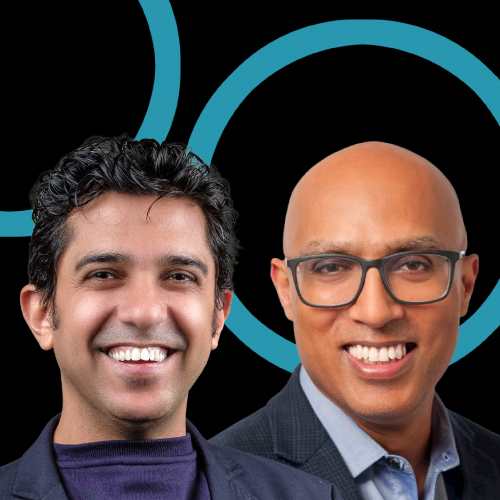
Cloud platforms scale through ecosystems. Tune in as Pallab Deb of Google Cloud discusses partner roles and growth.
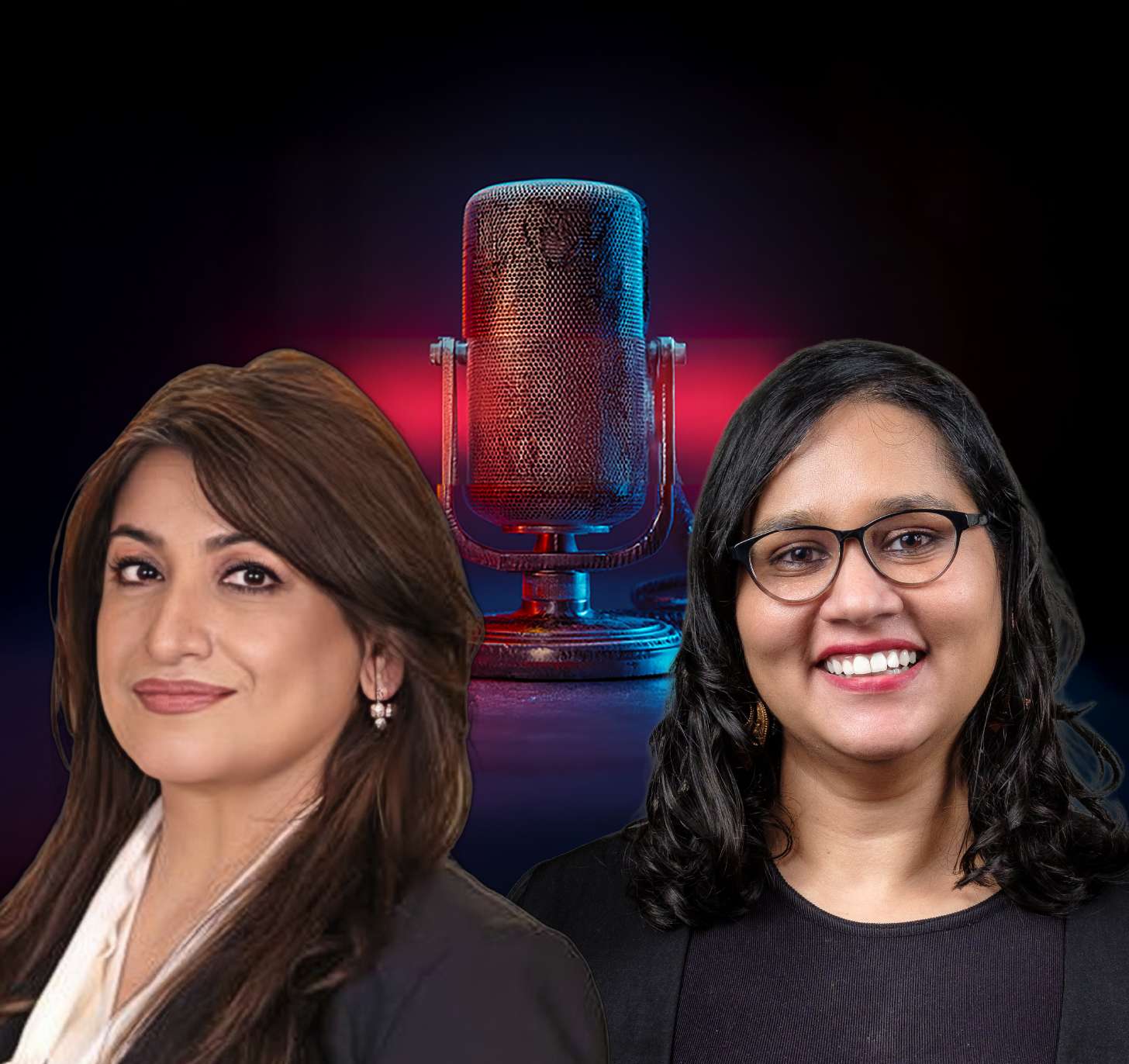
NatWest’s Ruchika Panesar with Nitika Goel on Zinnov podcast - GCCs Unfiltered, on leadership, systems thinking & judgment. Tune in now.
Don’t miss any of our future episodes!
Also subscribe to the Zinnov Podcast on these platforms





Cloud platforms scale through ecosystems. Tune in as Pallab Deb of Google Cloud discusses partner roles and growth.
NatWest’s Ruchika Panesar with Nitika Goel on Zinnov podcast - GCCs Unfiltered, on leadership, systems thinking & judgment. Tune in now.
 THANK YOU
FOR YOUR RESPONSE
THANK YOU
FOR YOUR RESPONSE