







India does not face a challenge in start-up formation; the challenge lies in improving scale conversion.
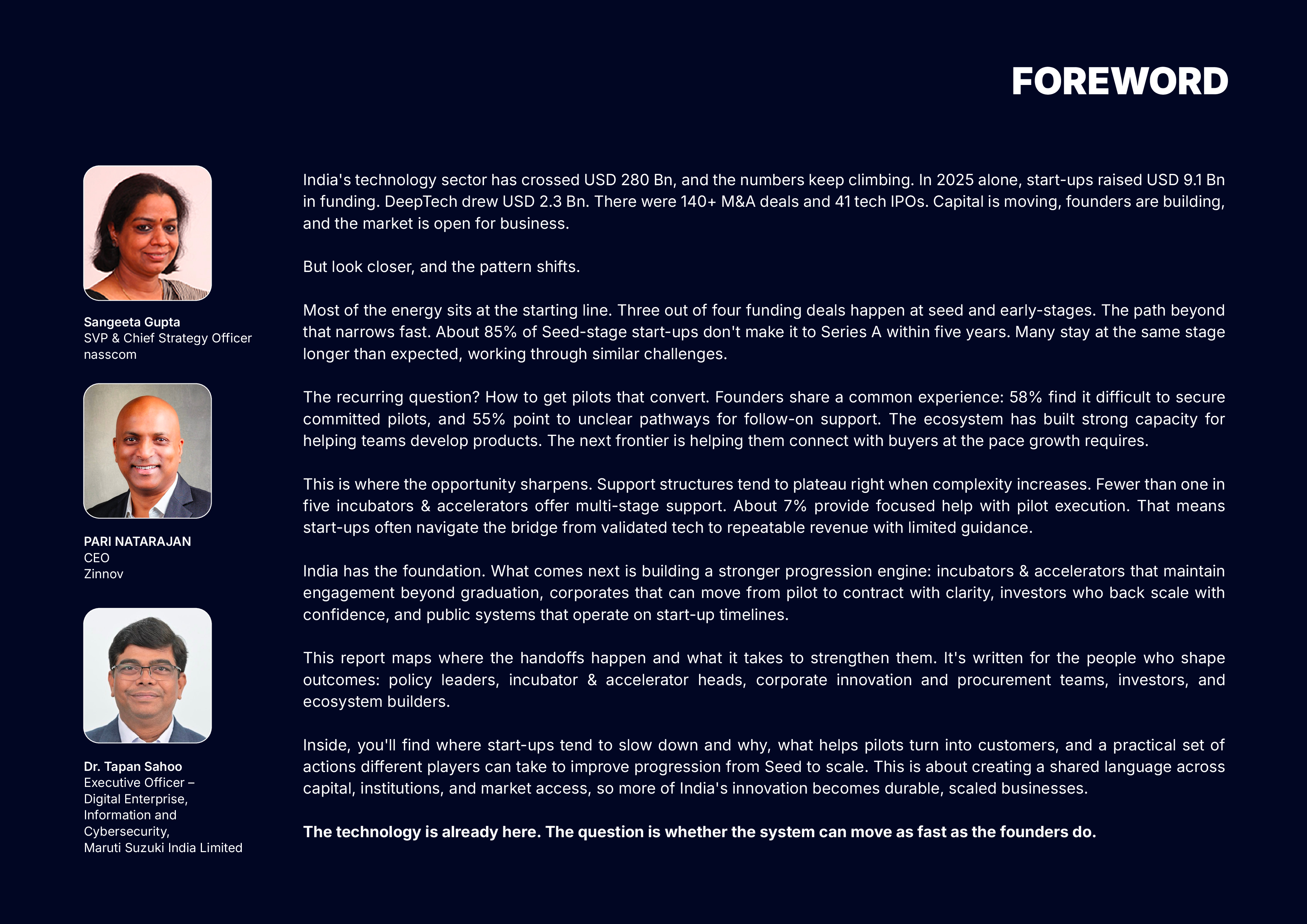
Over the last decade, the ecosystem proved it can generate founders, attract early capital, and build technical capability at speed. Incubation has expanded. DeepTech momentum is visible. Corporate M&A is rising. Funding has stabilized in a more disciplined global capital environment.
Yet a structural friction persists.
A large share of tech start-ups reach technical validation. Far fewer move through commercialization with speed and consistency. The Seed-to–Series A transition remains the most fragile point in the lifecycle. Early customers are hard to secure. Pilot-to-procurement pathways are unclear. Growth capital waits for traction signals that the system is not yet designed to systematically produce.
This is not about ambition. It is about architecture.
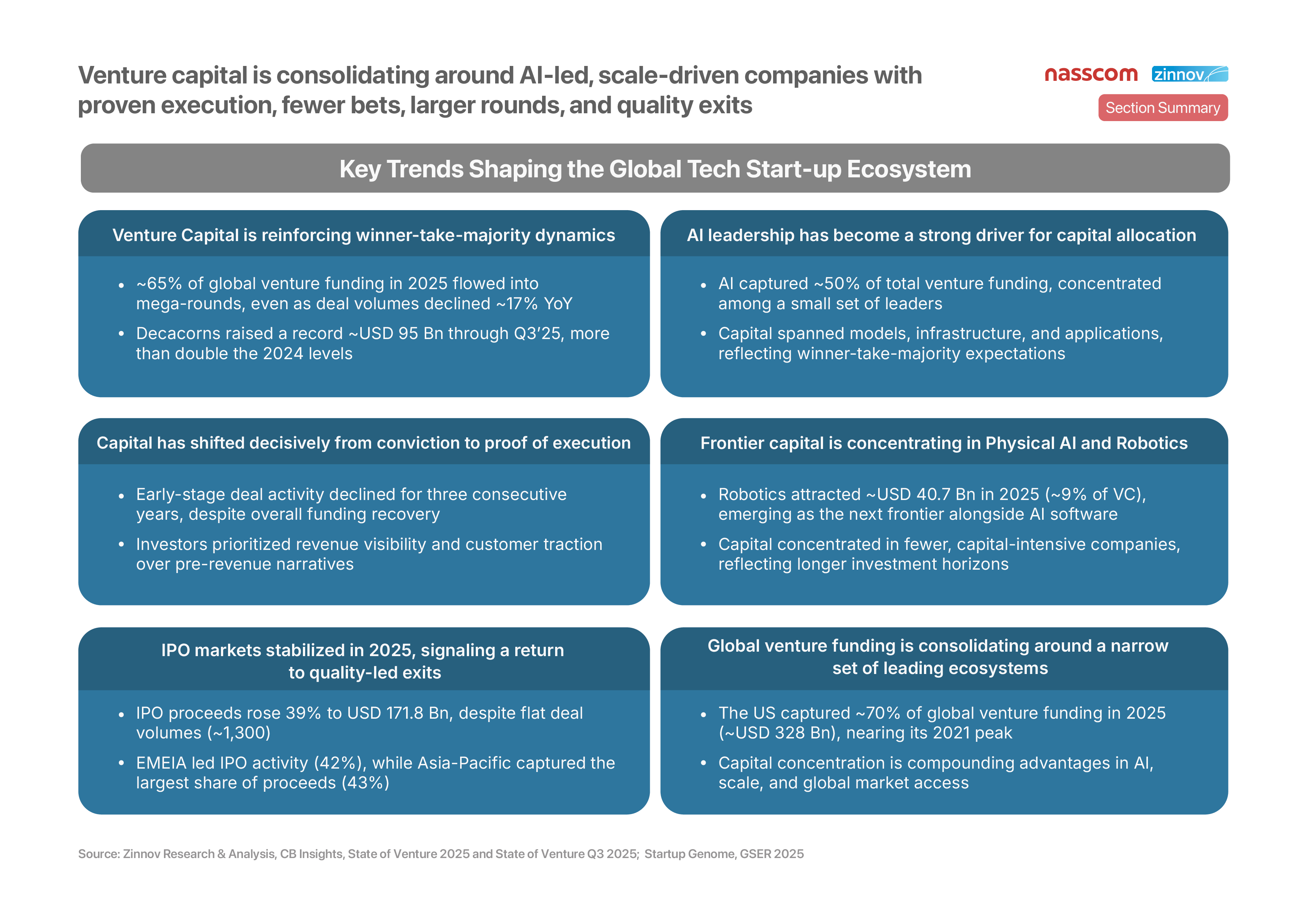
Global venture capital in 2025 rewards ecosystems that convert technology into scalable revenue with discipline. Execution depth matters more than start-up volume. Institutional coordination matters more than isolated programs. Demand integration matters more than demo days.
This report examines where India’s tech start-up progression engine slows down, across commercialization design, capital sequencing, incentive alignment, and post-incubation ownership. It draws on ecosystem data, global benchmarks, and structural analysis to outline what a coordinated scale architecture could look like.
For policymakers, investors, corporates, incubators, and ecosystem architects, this report offers:
India’s tech start-up innovation base is strong. The next chapter depends on how intentionally the path to scale is designed.





 THANK YOU
FOR YOUR RESPONSE
THANK YOU
FOR YOUR RESPONSE

