



BACK TO Business Resilience
ZINNOV PODCAST | Business Resilience


In an AI-led world where workflows are getting commoditized and customer expectations are rising, what truly separates companies that live customer centricity from those that use it as lip service?
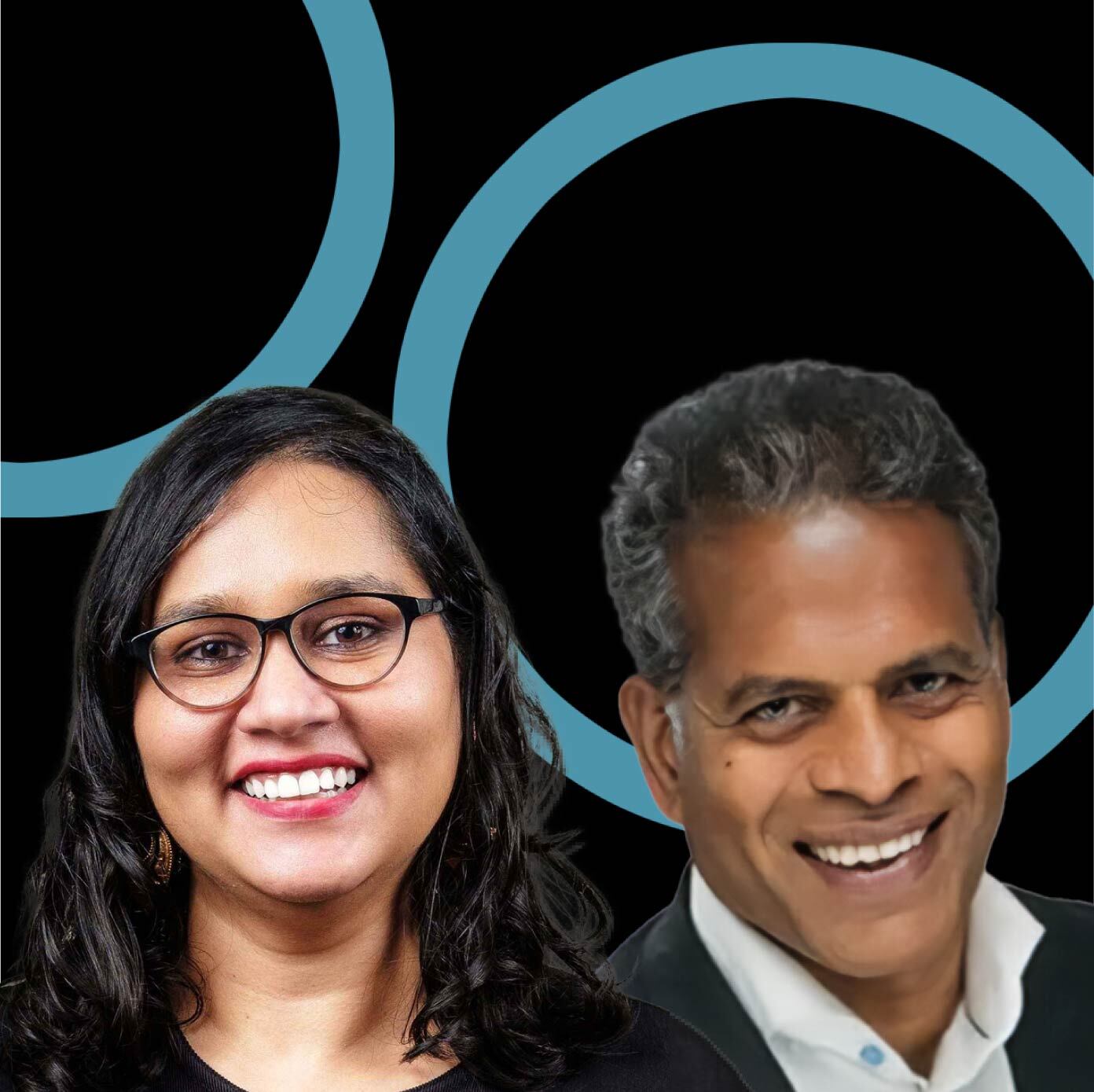
For Sarv Saravanan, Chief Customer Officer at Commvault, the answer lies in designing customer experience as an end-to-end operating model – one that connects product, engineering, partners, AI, and leadership around customer outcomes.
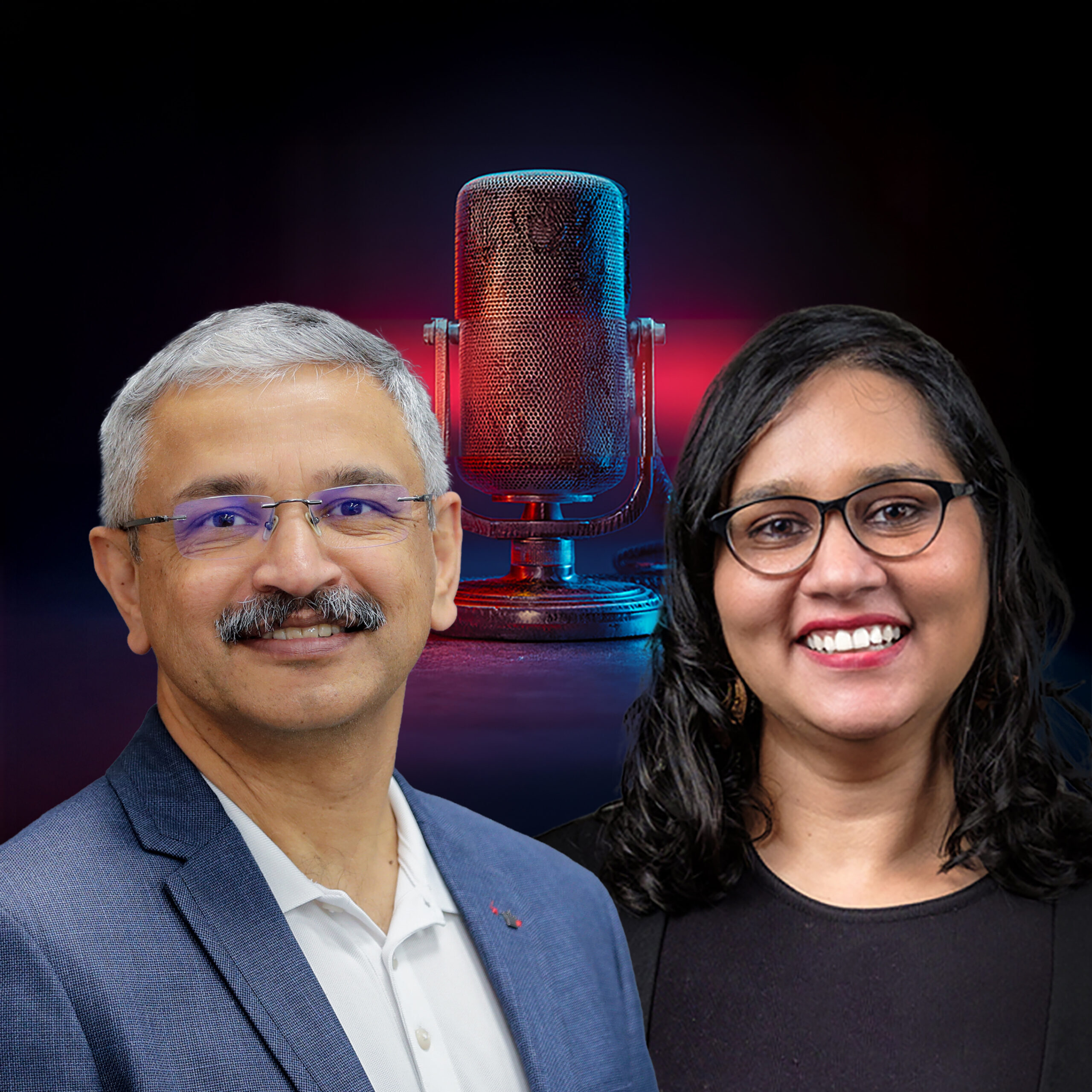
In this episode of the Zinnov Podcast, Sarv joins Nitika Goel, Managing Partner & CMO, Zinnov, to discuss how customer experience is being redefined for speed, trust, and resilience.
He shares why customer centricity cannot sit in isolated functions or rely on bolt-on tools, but must be built into the product, operating model, partner ecosystem, and leadership culture. He also explores how AI is simplifying customer journeys, improving self-service, and empowering teams to focus on higher-value outcomes, while underscoring the need for governance, security, and trust. The conversation also examines how mature GCCs are strengthening customer proximity through faster product feedback, cross-functional collaboration, and outcome delivery.
Tune in for a sharp conversation on what it takes to make customer centricity real in the AI era.
PODCAST TRANSCRIPT
Nitika: Hi, everyone. I’m Nitika Goel, Managing Partner and CMO at Zinnov. Over the years, we’ve had the privilege of shaping the GCC industry alongside some incredible leaders, and today’s conversation is a special one for me. I’m joined by Sarv Saravanan, Chief Customer Officer at Commvault, somebody I’ve worked with closely ever since his EMC days.
I’ve also admired how he challenges thinking, pushes boundaries, and constantly reinvents himself. From building the EMC India COE to taking on global leadership roles at Microsoft, he has done it all. And today, in the age of AI, where processes and workflows are getting commoditized, what stands out is experience.
Today’s conversation is incredibly timely, and I couldn’t be happier to do it with someone like Sarv. Welcome, Sarv, to this episode of Zinnov Podcast. The interesting thing about Sarv is he was also the winner of the GCC Leader of Leaders Award that we gave from Zinnov. Now, I’ll also tell you, Sarv, which is again a true story, one of the things when we were formulating that entire award was the fact that we were looking at leaders in the ecosystem that were constantly pushing that value narrative ahead, right? And you always looked at a blocker and thought of it as a lightning bolt, and that is something we found fascinating.
So again, it’s a privilege to have you here, to have learned from you, to call you a friend, and to have you on the hot seat today as a podcast.
Sarv: I’m humbled and honored.
Nitika: Great, Sarv. So diving right in, right? If you could give our audience a 30-second overview of what Commvault does and why customer experience is such a critical part of what you’re doing today.
Sarv: Commvault is a cyber resilience platform company. What does it mean? With ransomware happening more and more, the threat landscape broadening more and more, with AI now, agents are a threat as well, so it has only been further complicated and broadened. And our platform’s role is to help customers after the incident, if there is an incident, come back up and run their business again faster.
More specifically, what we do is protect their workloads.
Nitika: Got it. So why did the organization, before you joined them, create this role of customer experience?
Sarv: Given the critical role our platform plays for our customers, we want to make it easier for them to see the outcome faster.
Nitika: Got it.
Sarv: Building resilience in their company, and that’s our purpose, helping them become a resilient company and business. And our roles have to be aligned, talk the same language, and be in front of the customer with one face to deliver the outcome faster for them.
Nitika: Got it.
Sarv: And therefore, we want to switch it all together seamlessly to tell the story, not only the story, put together the right solution, propose the right solution through our pre-sales process, and make sure that promise is delivered through the post-sales activities.
Nitika: That’s as simple as that. No, it’s a very interesting thing because I see a lot of companies doing customer success roles, which is always the post-sales, but I do not see them thinking of it as an integrated value chain as what you have done with Commvault today. So that’s an amazing thing.
Customer centricity is one of the words that we’ve heard touted for eons. Every keynote has it. Every annual report has it. Probably every company’s value statement has it. But in your experience, what truly separates companies that live by it and use it as lip service?
Sarv: My remit as Chief Customer Officer, which is a little unusual compared to other companies, I literally own the end-to-end journey from pre-sales, field CTO to all the post-sales functions, success, support, services leading up to renewal.
So, just not leading these functions, but also defining the journey and removing frictions and seeing it end to end. As part of it, I had the ringside view of what culture means if you’re truly a customer-centric organization. The test of culture is really, to me, simple.
Is the entire leadership working in unison when it comes to customers? Are they pointing fingers at each other? It’s not untypical in large technology organizations. Product will finger-point, “Oh, support, you don’t know. You don’t have enough skills on the product to be able to deliver the right services to customers.”
And support folks would blame product folks and those sort of things. I have not seen that in my company. In fact, me and our CPO, Chief Product Officer, meet every week on how can we improve. We work together so closely, looking at all the challenges that we have, whatever we can learn from the support calls that come in, where we can improve on the product side to make it easier to deliver better experience for our customers.
And for example, even to the extent that when I wanted to really work on AI to simplify the customer journey, I was evaluating tools outside in the market. But it dawned on me that a modern technology platform company cannot deliver better experience by bolt-on tools, but by building that experience within the product.
And I went to him, “Hey, can you help build a customer experience-focused engineering team focused on just the customer journey?” And he put up his hand and worked very closely with me to build the AI capability to simplify our customer journey within the product. So that to me is the underpinning of culture, how leaders come together to really give the right focus on customers and lead from the front.
Nitika: Now, coming back to Commvault specifically, because Commvault operates through a large partner ecosystem as well, the customer often is not even directly yours. Is this an accurate way to think of it?
Sarv: Indeed, channels and partners play a huge role in helping us with reach and also delivering the solution on our platform.
Nitika: Correct. So in that case, how do you make sure that the ethos or that deep customer centricity you have is also embodied by the partners that you bring on? And because they’re delivering in your stead in many cases, how do you make sure that customer centricity goes across the board and embeds itself deeply even in your partner ecosystem?
Sarv: To begin with, we do have an alliance channels team that maintains deep relationships with those partners in different geographies and at global levels as well. And then we have an enablement function, a strong technical training function, which is again part of my remit, and they create great content, training content, certifications, different levels of certifications. And the first thing is to make sure that our partners are well equipped with our platform technologies.
And then the second layer of a strong integration is through customer success. We do have partner success focus as well, a team as part of our customer success. And they handhold them and coach them.
And then also from support, we see the kind of tickets partners raise on behalf of the customer. That is one signal. There’s a lot of signals coming from that. We see, are they the right level of tickets? Are they basic tickets? Are they deeply technical tickets? And based on that, we intervene with the training. If there is an opportunity for us to upgrade the partners with skills, the latest skills they need and deserve to have to deliver better outcomes for the customers, we go back to the partner success and our training team, and layer more training for them.
So, that kind of different levels of engagement, integration, some reactive, some more proactive, some long-range planning-oriented dialogue, that’s what is helping us keep them aligned and deliver the outcome our joint customers deserve.
Nitika: So I’m going to throw the one question that everybody brings into the mix, which is AI, right? So obviously, the types of threats that one sees today are evolving at a very rapid clip. So even your product, your business is going through a lot of change, just because of the market that you serve. How do you ensure that your partners, the customer experience keeps abreast of this super rapid or hyper change, if you will?
Sarv: So for us, AI is a serious business. AI in how we run our business, and AI and protecting AI as well, that is also part of our business. AI for customers, AI for Commvault.
When it comes to AI for Commvault, one, the foundation is important for us. Do we have the right security foundation to be able to apply and scale AI within the company? And is it governed well so we have all the right foundations? With that, in fact, our AI customer-focused AI journey to deliver better experience started a year and a half ago, working closely, as I said, with our engineering and product leader.
It’s all about how responsible we are, how well it is governed that creates trust, and we focused on that. And that helped us deliver very high-end support services, self-service capability for our customers in product as well as through our normal support portal access mechanism. And customers love it because it’s very deep. It solves real problems for them, helps reduce turnaround time, and it’s proactive in some cases.
And with that experience that we gained in the last one and a half years, now we are looking across the entire customer journey, right? And how we understand discover, how we understand our customers’ challenges, the goals that they want to achieve with our kind of platform, and going back with the right solution architected for them, to how quickly we onboard them and how we monitor the pulse in terms of, are they consuming? Are there any blockers? Are there any health issues in their deployment?
And jumping right in to make sure that there’s no drift there, and they are continuing to see value, and they are healthy. They’re protecting themselves with our product. So across the entire journey now, we are looking deeply at how AI can enhance their experience.
Also, the effectiveness of our team. It’s about empowering our team as well.
Nitika: To deliver better outcomes for our customers.
Sarv: And that’s how we look at AI. AI is not just an efficiency thing for them; it’s about empowering our people to deliver our promise that we made to the customer.
Nitika: Love it. I love how you said it is to empower your people to deliver on a promise, and I think that’s a beautiful way to look at it.
I want to come back to something which you have known, built, and probably a little away from at this moment, but it’s obviously the proximity question. When we talk about customer experience, one of the biggest things right from the time we’ve been setting up GCCs over 22 years ago, now maybe even 25, close to 25 years ago, is that you have to be close to the customer to understand what customers require, and it’s a proximity game, right?
Many times, product management functions would not exist in the GCCs because they say you’re not close to customers. How do you think, now that you have seen both sides of the lens, right? Now you’re playing that global role. You’re at headquarters playing this out. Is there some merit in it, and is proximity to customer a physical proximity or a geographic proximity, if you will?
Sarv: I think the proximity issue is really collapsing now with the proliferation of GCCs. In the last couple of years, I’m increasingly seeing customers demanding, our global customers demanding connection locally here.
Nitika: Oh, wow. Okay.
Sarv: Large banks, for example, large technology companies themselves that are our customers, they’re asking, “Hey, let’s our teams in Bangalore work together or Hyderabad work together, and our teams that are using our products are in Bangalore in our GCC, and let’s make that connection.”
And that’s happening more and more now. I’m talking about across industries, financial services, manufacturing, every industry now has—
Nitika: A GCC.
Sarv: A GCC. Growing number of GCCs here, right? Retail, and so the proximity issue is no longer an issue.
And from what I’ve witnessed in my current role, some of the things that I wanted to do for Commvault to improve experience, I was able to accelerate more because our engineering team, actually the one that is the AI customer engineering team, is here.
Nitika: Oh, wow.
Sarv: My customer support team is here. Customer success team is here. Our services team is here. They’re all working together to really accelerate some of the development that I wanted, and the turnaround time is pretty fast.
I think that’s something that GCCs have a unique position to be able to deliver for any company that they’re part of. And I think the turnaround time, breaking silos, closing the loop faster, getting things faster, seeing the outcome in real time through the cross-functional effort, I think that’s something that is a unique strength of GCCs as I see, not just for me, but also in the ecosystem. Any scaled, mature GCC would have that.
Nitika: So it’s a very interesting thing, right? You talked about breaking silos, and you talked about working together and working at a certain amount of speed. One of the things that we’re hearing as a contrarian point of view also here is many of these teams are still reporting globally, right? Maybe sometimes the global leaders are here, but as a result of that, the degree of collaboration that should exist does not exist.
So what is your point of view? Is it a leadership function or a structural function?
Sarv: I think one is mandate and also some awareness at the top leadership level, and how to unlock the value of such a presence, right? The cross-functional presence. Yes, we do have distributed reporting.
Nitika: Mm-hmm.
Sarv: Functional reporting, right? But me and my product officer, we encourage these teams to come together here because we clearly know that when they talk to—
Nitika: Each other, the value unlock will be—
Sarv: Compounded, and our problems solved faster for both of us.
So, we do encourage. I think the reporting line will always be distributed, but the culture you build here, the support you provide as a corporate leader, and we need to have, at corporate level, a clear agenda of the unique presence of the GCCs and what it means to us to solve our bigger problems.
Nitika: Got it.
Sarv: And how do we enable them, empower them to do that?
Nitika: I think that’s a great point. Now I’m again going to start going down that path of physical proximity. Like you said today, that no longer exists, and a very good flip of the script is people are saying let the teams collaborate locally, right?
One more thing in terms of how does that impact customer understanding? One is obviously proximity to customer. You may be speaking to your colleagues, you may be speaking to teams that are implementing on your customer side as well to get a certain sense of it. But is this happening physically first, or is it still virtual?
Second, if it’s happening physically as well, what are the other signals or some positive outcomes that come to bear as a function of it being co-located?
Sarv: I think one thing the pandemic helped us with was being okay with being virtual. And I think that has really enhanced the role GCCs can play.
Today, we have functions in my company entirely only in, let’s say, India, but focused on global customers, and that works just fine. And when they want such a thing on behalf of Commvault and the customer, they also drive the agenda, for example, on the product side, in giving input, influencing the roadmap based on—
Just to give an example, we do have resilience as a managed service, cyber resilience as a managed service. Some key customers ask us, “Why don’t you take it and deliver it for us?” So we do that entirely. The team that delivers that entirely is here.
Nitika: Based out here.
Sarv: And that team is a customer of Commvault product, right? And they have great insights and views on what the product can do better, how a product can be improved, and how certain capabilities can help achieve better resilience, for example, for customers. And they give the product or engineering team right here, and they collaborate. You’re talking about many customers within the same building.
Nitika: Correct.
Sarv: Kind of a—
Nitika: Model, yeah. That’s fantastic.
Nitika: I’m also going to come back to something I think we’ve all discussed and put on paper at some point, which is even the metrics, like traditionally what were customer success metrics. And even through this conversation, I see you have your customer success teams actually doing some forward deployments for customers and then figuring out and giving feedback to the product itself, right?
Have the metrics of customer-focused organization or customer service organizations changed in the recent past? Or do you measure it differently, more importantly?
Sarv: I think the top uber metrics for any customer-centric organization is really the top business metrics and NPS.
Nitika: Yeah.
Sarv: Net Promoter Score. If you are doing the right thing by the customer, they should renew the business with you.
Nitika: That’s correct.
Sarv: So gross revenue retention, DRR. And if they love your product, if your engagement is good, they have to continue to buy more, so NRR becomes—
Nitika: Ah, yes.
Sarv: Right? So those are the top metrics. But how do you achieve it? It breaks down based on the function, what phase of the customer journey the customer is in. You have more granular metrics to measure the effectiveness of a function or a role at a given point in time in the customer journey.
We do have, to make sure the customers see the return on their investment faster, onboarding metrics.
Nitika: Got it. Okay.
Sarv: How quickly they’re onboarded, how quickly they see the value, or certain activities that have to happen on the product, is it happening in a given timeframe? So we do have those kinds of metrics.
Nitika: Metrics.
Sarv: And similarly, the mid-journey, where is their consumption on our product? Is it where it should be?
Nitika: Got it.
Sarv: So that’s how our customer success is measured. How is their health? Are they able to achieve their goals in terms of SLAs? Is there any drift? So, is it at the right threshold at a given point in time? So that’s how our customer success team is measured on.
And through the journey, there are different metrics, and at my level with our engineering leaders, I do have joint metrics.
Nitika: That’s where I wanted to get to.
Sarv: Yeah. I do have joint metrics. For example, what should be our AI-led self-service deflection?
Nitika: Got it.
Sarv: Right? So to continue our focus on the self-service and experience aspect for the customer, what should be the deflection rate? What more training should we do on our AI engine?
And then similarly, looking at current levels of tickets, what can we do to reduce through the engineering effort, simplifying things on the product? What percentage of ticket reduction given today’s baseline?
Nitika: Through product enhancement.
Sarv: Through product enhancements. You know, for example, in the last one year, because of this joint efforts and goals, though we have added thousands of customers, we reduced the number of tickets by 15%.
Nitika: That’s a crazily good metric.
Sarv: And similarly, we are just talking about for this fiscal year, what should be our reduction rate in the next 12 months?
So it’s a joint goal. That’s really about making sure that our engineering leaders are goaled appropriately and rewarded suitably to make sure our product experience gets better and better.
Nitika: I think I like it. I’m going to say goaled appropriately and rewarded appropriately as well.
Nitika: So great. I’m going to now come back to a point that sort of fits in as an extension to what you said, is also AI in the loop, right? So for example, right now, you obviously have AI agents who may be playing customer-facing roles today, and you’re working very closely with the product team. Do you have AI managing the first layer of conversation?
And you talked about a very stark and important metric where you’re saying the product itself is performing better, so the number of tickets coming in have reduced. But on the other side, on the delivery side, have you also started adopting AI, bringing in AI agents where customers first interact with an agent and then come to your call center? And how has that changed for you in the entire value chain?
Sarv: Well, that’s… I mean, yeah, customers love it. We have 30% deflection due to AI-led self-service by customers.
Nitika: Mm-hmm.
Sarv: And that agent is very, very rich in knowledge, and the customer is live. That’s why the deflection is high. And if they’re not happy with the response or the resolution that they get, they have the option of asking the agent to log support tickets to speak to a live engineer.
And as the support engineer picks up the ticket, the context is maintained, and they pick it up from where the agent left and close the loop. So it’s working out very well.
And now with that experience, for the long-tail customers, we have an in-product onboarding agent going live soon to make sure they are guided through the deployment phase and see the value of their investment faster.
And also, it’s not just… I call it double agent. That’s an in-product agent, but there is a CSM agent that monitors the performance of those agents and the journey customer is going through in their onboarding process. If there are any blockers, if they’re not achieving what they should be achieving at a given point in time, that agent advises or prompts the CSM to go intervene.
Nitika: Fantastic.
Sarv: It’s getting more and more interesting in terms of the possibilities it creates: deliver better experience, achieve more productivity, getting our people to do more meaningful jobs and focus on the bigger things.
Nitika: I love it. By the way, has the name been formally coined, double agent, or is it just something that you have—
Sarv: We just use those. It’s an internal joke.
Nitika: Now, so Sarv, you talked about the fact that obviously the human in the loop can wind up doing better work, more meaningful work. Lots of times initially, like any new thing, which is a shiny new ball, having an agent solve it for you is great because you get the answers where it’s self-serve.
But at some point, do you believe there will also be a flip and a premium where a human being, where there’s a customized call, just some interaction will become more coveted than what is happening today?
Sarv: It’ll always be important. It depends on what the intervention is, right? For example, the way I see the value our teams can deliver better is there’s a purpose behind why customer buys Commvault.
Nitika: Mm-hmm.
Sarv: Which is becoming a resilient organization in the event of disruption, digital or AI-led disruption now. Can they come back and are they able to maintain that posture well? Monitoring through signals the posture the customer is maintaining, and advising them more proactively.
Nitika: Mm-hmm.
Sarv: You know, “Hey, you can improve the posture by doing these activities or improving your processes, or by enhancing the use of this capability on our platform.”
Nitika: Mm-hmm.
Sarv: These are more valuable interventions by our teams with the customer, and the customers would love it.
Nitika: Absolutely. Now, I’m also going to go down a very different path, maybe slightly dystopian.
There’s a lot of views on AGI, right? Do you think at some point your agents will become so smart that they may overshoot themselves and overcommit and overstate to customers that things… Is that even in the realm of possibility? Especially because, as you think of security as a firm, resilience as a firm, do you think that is even a possibility and a fear, or is that something that you defend against as an organization?
Sarv: Drifts do happen even now. Forget about AGI. It happens even now, right? With the current models and technologies and platforms that we see. And I think governance, training, monitoring for drift is really important. How well the data access is governed becomes important.
You know, recklessly swarming with agents is not a good idea. These practices are evolving. I think being cautious is the right thing to do at this time as the technology evolves.
Nitika: I’m definitely thinking about, as we talk through it, you have AI agents on one hand, you have your partners on the other, you have your GCC teams, you have your global teams. All of this comes together. How do you make sure that there is a strong orchestration layer and systems thinking that is baked in?
Especially because today, there are even hypotheses that the moats that organizations used to build, when traditionally we used to think of what is your organizational moat for customers, that doesn’t even exist. The cost of switching for a customer is very easy, so one experience can shift a lot.
So in that case, how do you manage or think through that entire orchestration layer so things are moving forward, but at the same time, things are moving, it is systems thinking and not being done in a fragmented manner?
Sarv: Let me start with how we work. We are not a very huge organization. It’s a very cohesive team, right? And the silos are less for us. The CEO team, the leadership team work very closely together. We jump in when there is an issue, in any part of our business, we all jump in to solve it, right?
And size really helps us bring an end-to-end view in a small team setting and go solve the gaps, right? In our case, for example, the way we chose to build the customer-focused teams under one function, that helps us create that end-to-end system view, right? And then with that system view, the only person that I’d work on the engineering side is our CPO and the engineering team, right?
That brings better alignment and identifies gaps and goes for solving those gaps, right? I think this question is too broad for me.
Nitika: No, that’s fine. So I think you answered it, so it gives you both. Let’s look at, if in a hypothetical situation, a lot of customers, more and more customers get comfortable with self-serve, right? In that case, do you think that the customer service function will wind up going through a massive change and the kind of roles that we know today will cease to exist? And what kind of new roles will emerge?
Sarv: I think the way I see it is, what they do may change from the customer success kind of function role in my mind. The function evolves to deliver better outcomes. It doesn’t go away.
Nitika: Got it. Okay.
Sarv: It helps those functions become more proactive, more preventive, with AI helping them with the right signals, insights, to go after the actions faster, as opposed to them doing the research and figuring out what actions, and that’s where AI helps.
So the function’s role doesn’t change, but what they get to do, and that becomes more meaningful, not only for themselves, but also for the end customers.
Nitika: So do you think you would have call centers at the same scale that we did in the past?
Sarv: That’s anybody’s guess, right? I think what they get to solve becomes much deeper with AI helping them solve mundane issues. Will they go away? Don’t think so. People need people at the end of the day.
Nitika: Absolutely. Even today, I think about it, if it’s a significant crisis, you want a person at the other end to either vent, to share, or to have somebody else to blame.
Sarv: Yeah, and we certainly don’t see that through our business lens. We see that as more empowering to our teams to deliver bigger, better outcomes for our customers.
Nitika: The last big one, right? Where is customer centricity actually going from here, and what do you think that most companies are dangerously under-prepared for?
Sarv: I think the security and governance is the one that we should be mindful of, and having the right foundation and be prepared to help our teams adopt AI.
Nitika: Great. Thank you. It’s really been a pleasure to have you here, and I’m pretty sure that the whole ecosystem has learned in terms of how they should be thinking of customer centricity, and I think more importantly, how do you design the process, how do you create shared and measured goals, and how do you ensure that you’re empowering your teams to be able to deliver on more meaningful outcomes that benefit the customer themselves and the overall business.
So thank you again for your time.
Sarv: Thanks for having me.
Nitika: Yeah.
Sarv: Wonderful coming to Zinnov’s office.
Nitika: Always.
Sarv: Always.

In this episode of Zinnov Podcast, Chuck Schneider, CEO of Amtech Software, shares how AI is transforming packaging manufacturing and what it takes to lead a company through constant change.
The future of GCCs is a reinvention. Jitendra Pandey, BMC Helix, on moving past headcount to customer value leaders can actually measure.
Don’t miss any of our future episodes!
Also subscribe to the Zinnov Podcast on these platforms






In this episode of Zinnov Podcast, Chuck Schneider, CEO of Amtech Software, shares how AI is transforming packaging manufacturing and what it takes to lead a company through constant change.
The future of GCCs is a reinvention. Jitendra Pandey, BMC Helix, on moving past headcount to customer value leaders can actually measure.
 THANK YOU
FOR YOUR RESPONSE
THANK YOU
FOR YOUR RESPONSE