



BACK TO GCCs Unfiltered
ZINNOV PODCAST | GCCs Unfiltered


|
|
For years, GCCs grew by adding people. That playbook is broken.
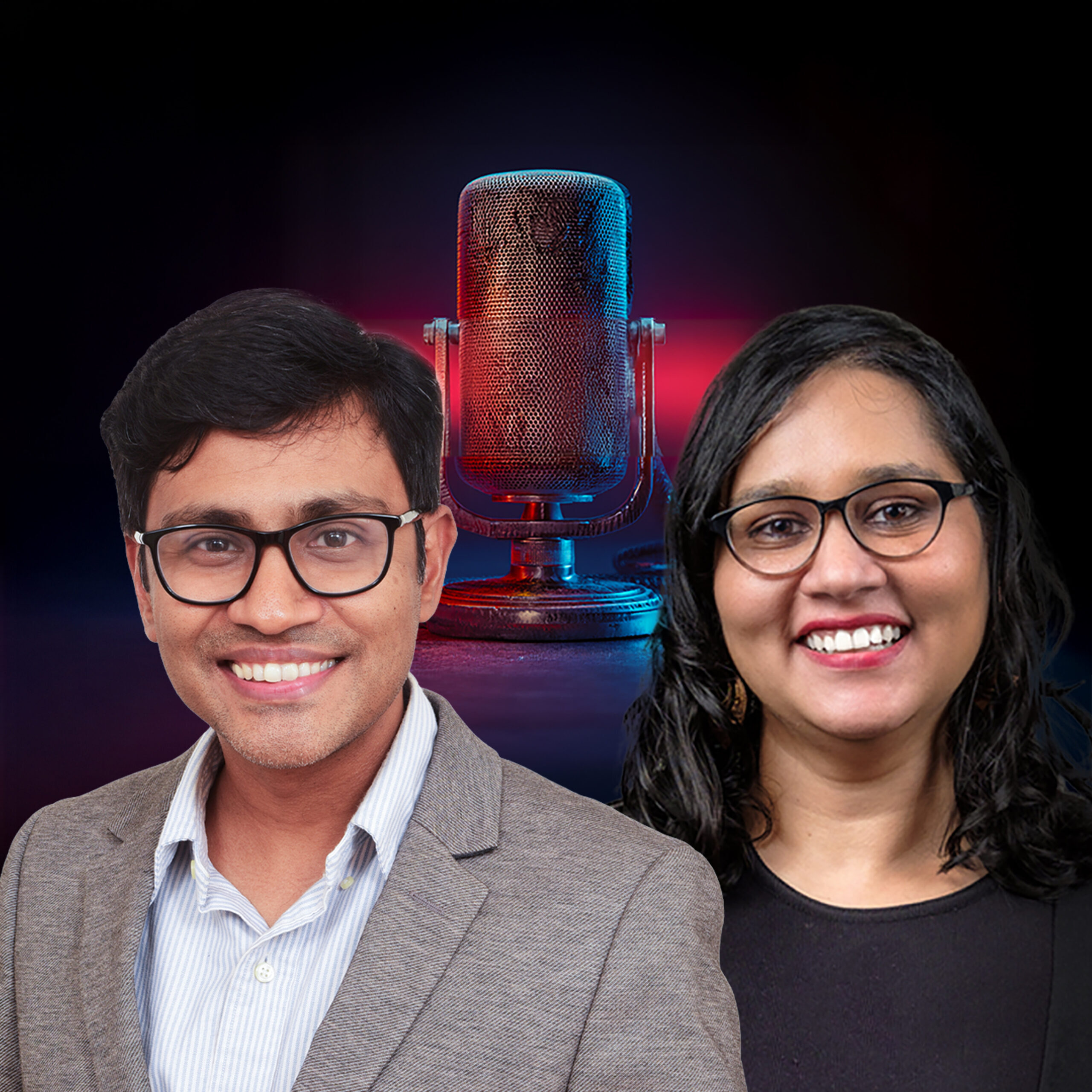
In this episode of GCCs Unfiltered, Pratik Nath, Managing Director, Epsilon India, is in conversation with Nitika Goel, Managing Partner and CMO, Zinnov, about what actually drives relevance in today’s Global Capability Centers, and what quietly holds most of them back.
Pratik has seen GCCs from the inside: as an engineer, a product leader, and now as a managing director with global accountability. His view is simple: ownership matters more than scale, and leaders who confuse activity with impact are already falling behind.
This conversation examines the uncomfortable questions:
If you lead a GCC or influence one, this episode of GCCs Unfiltered cuts through buzzwords to explore the mindset shifts, tough calls, and cultural changes required to move GCCs from operations to ownership, in an AI-driven world.
Listen to the episode now.
PODCAST TRANSCRIPT
Nitika: Welcome to this episode of Zinnov’s GCCs Unfiltered. Whether you are leading a GCC, building one, or just plain curious, we are here to bring you real insights that matter. This isn’t about buzzwords or trends. It’s about trade-offs, the pivotal moments, and the strategies that drive long-lasting value as we dive into the challenges leaders face, the mindset shifts they make, and the tough calls that shape the future of their organizations.
Hi everyone, I’m Nitika Goel, CMO and Managing Partner at Zinnov, and today I have the privilege of being joined by Pratik Nath, Managing Director from Epsilon India. Pratik’s journey spans over two decades across the industry, and I just had the opportunity to speak to him. He mentioned a fascinating fact — he has written products that we still get to see every day at Oracle. He has moved from IT to healthcare to marketing and now to data platforms. He has led teams through change, scale, and reinvention. And he’s one of the leaders who talks about change management as a key message in everything he does.
So looking forward to this, Pratik, and welcome to GCCs Unfiltered. It’s great to have you here today.
Pratik: Thank you. It’s my privilege to be here and share my experience over the last two and a half decades in this GCC evolution journey.
Nitika: So, Pratik, I’m going to come back to the most basic thing. I mean, I know what Epsilon is. We’ve had the privilege of working with you. It would be good if you could give our audience a quick two-minute overview of what Epsilon does and then a little bit about what Epsilon India does.
Pratik: Sure. For those who do not know, Epsilon is a global technology, data, and services company in the AdTech and MarTech domains. In simple words, we connect our customers — who are brands — with their consumers. We do so by providing different products, solutions, and services. The core of it is data. So data management capabilities like CDP solutions, loyalty offerings, and different services like analytics, creative, digital experience, and so on. We are part of the Publicis Group and completely focused on outcome-based marketing.
Nitika: That is a fantastic way to explain it. I think for the Indian audience, maybe InMobi would be a good comparison for the kind of work you do. But you do this at a global scale and much larger, right?
Pratik: Yes.
Nitika: Now, you mentioned a very interesting thing — that you’ve been in the GCC space for 20 years. You started as a software engineer, wrote every single line of code, worked in a very hardcore space like Oracle, and now moved to Epsilon in a leadership role where you are straddling both product and leadership. So, in this entire period and gamut, it would be lovely to understand how your lens of GCCs has changed.
Pratik: Yes. There has been a huge transformation over the last 25 years that I’ve been part of. I was part of Siemens, Cerner, and Oracle before joining Epsilon. If you go back in the past, Global Capability Centers were started with back-office work in mind — very well explained by Zinnov’s maturity phases of outpost going to satellite, portfolio, and transformation. Most GCCs started in that way.
Fast forward to today, in the last two or three years, there has been a significant increase in the number of GCCs being set up. If you look at the same maturity chart, most of the concentration is in the portfolio hub stage. That itself explains how the industry has evolved. Today, if you’re starting up a new center, you won’t start with an outpost mindset. You will start with global remit accountability in mind and try to move toward transformation.
Nitika: So I think that’s a great point. Let me come down to the psychology of an engineer today. Because of this shift, how do you think the psychology of an engineer — putting yourself in your engineering hat then — compares to today?
Pratik: Yes. It’s constantly changing, and it will change even more in the coming years. When I started back in 1999–2000, when I coded, I didn’t have systems thinking in mind. Most of us were set up as centers offering services to headquarters. That system or product mindset didn’t come easily.
Now, when you look at a software engineer, there’s a complete change. You are building and owning end-to-end for your customers. You work backward from the client.
Fast forward further — when I started coding, I would check my code, then a senior developer would review it, then it would go to production. I’ve seen the shift from waterfall to agile. Today, you have coding agents. You provide requirements, the agent builds the code, and you become the reviewer. The agent fixes it based on feedback.
Earlier, I was a strong C++ developer. I could look at code and identify memory leakage. Now, strong systems can do that. You are growing into an architect. That’s the evolution — mindset, ownership, and AI-driven transformation.
Nitika: That’s a great segue. We’ve talked about young engineers. Let me ask about leaders. How does the psychology of a leader change today?
Pratik: There is a huge transformation there as well. Five or ten years ago, if I were a GCC leader, my focus would have been on how to grow the center — increasing headcount, building capabilities, delivering more functions out of India.
Today, growth is based on impact and value your center brings to headquarters. It’s not about org size; it’s about doing more with less. In fact, growth accelerates when you embrace AI capabilities and build higher productivity systems.
At Oracle, I was responsible for around 3,000 engineers. Then we moved to a global remit model. My org size reduced significantly. It was challenging but rewarding because I dealt directly with clients and owned accountability end-to-end. That was an inflection point in my career.
Nitika: You said mediocrity won’t have a place. What should organizations do to shed mediocrity and measure differently?
Pratik: At Epsilon, we built a GCC dashboard to evaluate strategic milestones — global remits, AI fluency, AI Center of Excellence, AI champions, engagement metrics. We ensure no one is left behind in the AI journey. We measure engagement because when you do high-value work with ownership, people are more empowered. We’ve been recognized as a Great Place to Work and by Zinnov for unlocking center value.
Nitika: A big challenge is knowing what to let go of. Is there anything in your evolution that you’ve let go of?
Pratik: Many times. When I moved from managing 3,000 people to a global accountability model, I let go of scale for ownership. If you take too much and don’t make progress, it’s better to hand it over. It’s part of the evolution journey. What’s important is breaking silos and aligning on core principles rather than structure.
Nitika: Is there a mental framework you use?
Pratik: I follow four pillars — OPEX:
O stands for Ownership.
P stands for Partnership.
E stands for Excellence.
X stands for Transformation.
Ownership is about global accountability. Partnership is about breaking silos and deciding what to build versus buy. Excellence is building core competencies. Transformation is moving from now to next.
Nitika: What is the most controversial opinion you hold about the GCC model?
Pratik: Any global leader must have at least one global remit or accountability. Operations-only leaders are not relevant.
Nitika: If you had an acronym other than OPEX to live by?
Pratik: Optimism.
Nitika: What is your leadership philosophy in one line?
Pratik: Lead from the front. If you take care of your client, the rest of the system takes care of itself.
Nitika: What’s the one leadership habit a GCC head must unlearn?
Pratik: It’s not about the size; it’s about impact and high-order value work.
Nitika: If I gave you a magic wand?
Pratik: I would modernize the entire organization and build AI fluency so AI becomes our identity for differentiated innovation and delivery.
Nitika: What advice would you give a new GCC leader?
Pratik: Learn, learn, and learn. Change is constant. Stay relevant.
Nitika: In one word, what does unfiltered success look like?
Pratik: Tejas. Designed, built, and scaled in India to make a global impact. I’d love to see world-class innovation built in India and scaled globally.
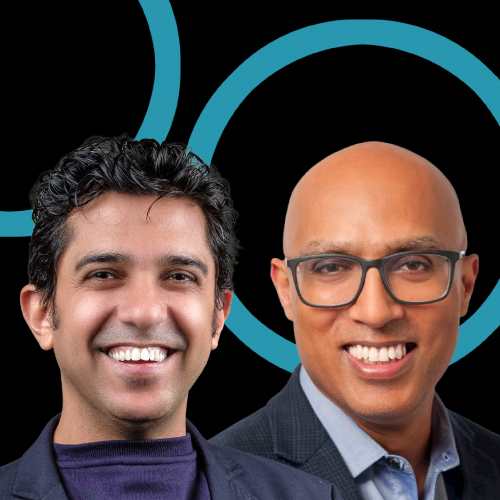
Cloud platforms scale through ecosystems. Tune in as Pallab Deb of Google Cloud discusses partner roles and growth.
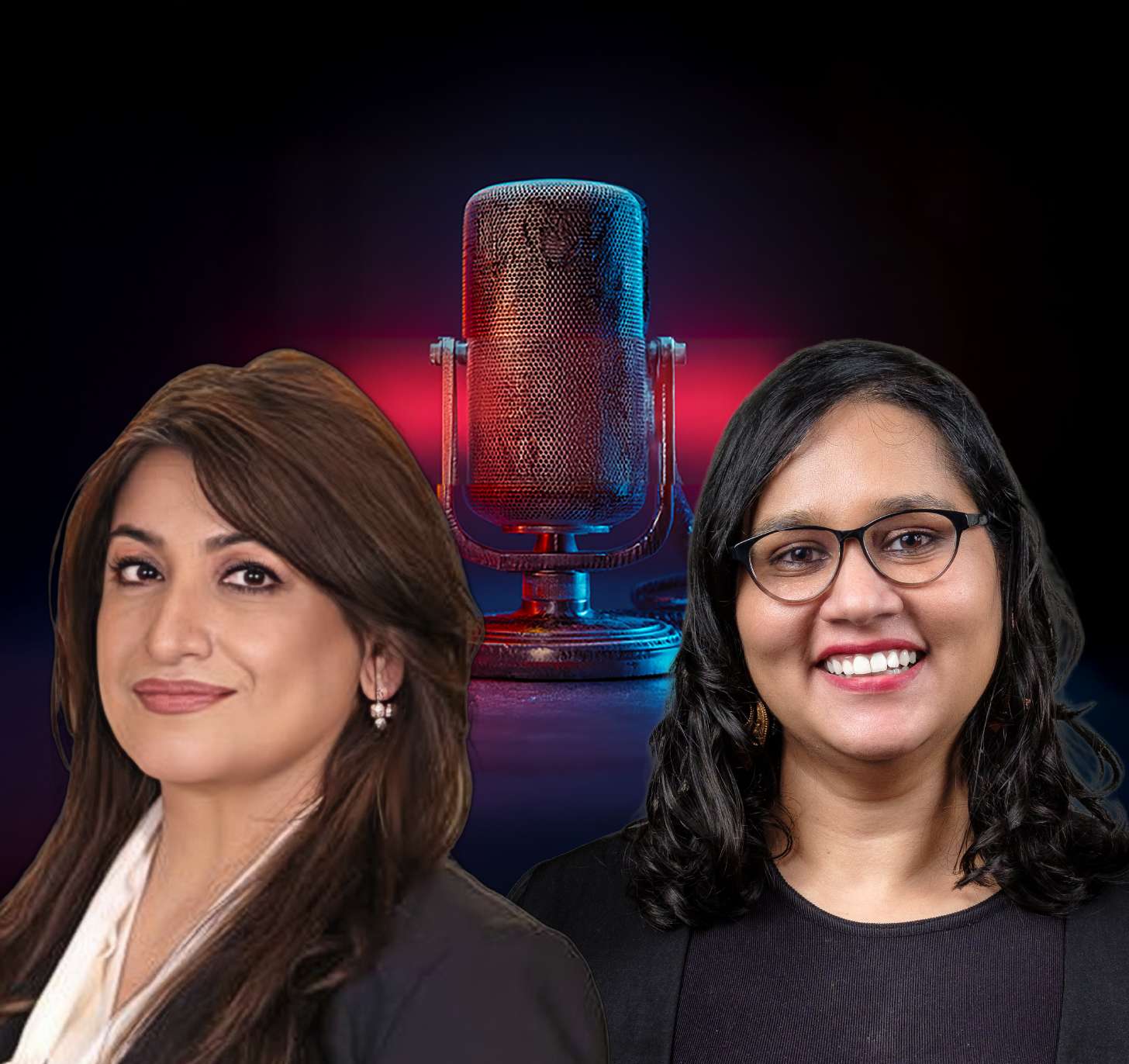
NatWest’s Ruchika Panesar with Nitika Goel on Zinnov podcast - GCCs Unfiltered, on leadership, systems thinking & judgment. Tune in now.
Don’t miss any of our future episodes!
Also subscribe to the Zinnov Podcast on these platforms





Cloud platforms scale through ecosystems. Tune in as Pallab Deb of Google Cloud discusses partner roles and growth.
NatWest’s Ruchika Panesar with Nitika Goel on Zinnov podcast - GCCs Unfiltered, on leadership, systems thinking & judgment. Tune in now.
 THANK YOU
FOR YOUR RESPONSE
THANK YOU
FOR YOUR RESPONSE