



BACK TO Business Resilience
ZINNOV PODCAST | Business Resilience


|
|
Imagine operating in a system where decisions are public, consequences are immediate, and mistakes are rarely forgiven.
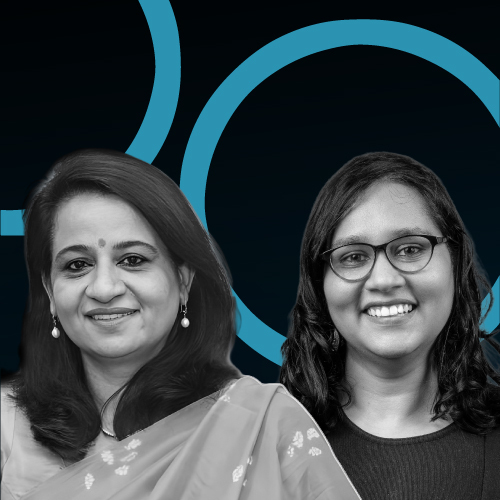
That is the everyday reality of Dr. Ekroop Caur, IAS. In this episode of Women in the Mirror, she reflects on what it takes to lead in public service at scale — shaping technology and innovation policy, making high-stakes calls under constant scrutiny, and carrying the weight of decisions that affect millions.
What gives this conversation its edge is how plainly she talks about the personal cost of such leadership. Dr. Caur challenges the idea that women must “be everything to everyone” — at work, at home, all the time. She speaks about drawing boundaries, delegating without guilt, and letting go of the myth of perfection. Not as advice, but as lived reality. The result is a portrait of leadership that is demanding, deeply human, and quietly empowering for anyone trying to lead well without burning out.
Listen to the episode.
PODCAST TRANSCRIPT
Nitika: You know that some leaders don’t just work within the system, but they actually redesign it. My guest today has done that across finance, transport, and now information technology.
Hi everyone, I’m Nitika Goel, CMO at Zinnov, and your host for this episode of Women in the Mirror, a series from the Zinnov podcast table where we sit down with trailblazing women leaders to talk about the tough calls, the quiet grit, and the defining moments that shape them.
I’m thrilled to welcome our guest today, Dr. Ekroop Caur, IAS officer. She’s the driving force behind bold policies shaping the future, from fueling Karnataka’s startup growth to building biotechnology and GCC ecosystems that are putting the state on the global map.
Today, we’re going to dive into her journey, the wins, the tough calls, and the vision driving it all.
Dr. Caur, welcome to Women in the Mirror.
Dr. Caur: We are so excited to have you here. So am I. Thanks for having me.
Nitika: So I’m going to start with the absolute basics. The IAS officer role is no mean feat. It’s one of the hardest exams in the world. So why did you choose to go down that path?
Dr. Caur: I come from that age when most decisions were taken by your parents. So while I was still growing up, before I even realized what I was getting into, the decision had already been taken, and I just went with the flow.
Nitika: The exam is really hard to crack. What did it take from a preparation perspective and a mindset perspective? Someone else may make the decision, but the effort is yours. So I would love to understand what it took to get there.
Dr. Caur: Yes, it is certainly a very difficult exam. More than anything, it’s because so many people take the exam, and the percentage of people who actually get through is very small. It takes a concerted effort of about two years to prepare and go through the process.
The exam itself is a one-year process. But I would say that besides hard work, there is also a bit of luck that has to be on your side. Thankfully, things worked out well for me.
Nitika: That’s fantastic. You are a woman in the IAS. Do you think it’s different, or do you think it’s equally hard for everybody?
Dr. Caur: Gender does play a role because it’s a very demanding job. It’s almost like a 24/7 role. You keep changing positions very frequently, so you always have to be at it.
You’re expected to keep learning and keep performing. Even on your first day, you may be asked to take decisions that are very critical.
As a woman, it becomes even more challenging. Besides dealing with general bias, there are also expectations at home. You’re always playing that balancing role, and it’s not easy.
Nitika: You mentioned balance. You are a daughter, a mother, a wife, and an IAS officer with so many titles. How do you create that balance? Do you have a formulaic approach, or do you just go with the flow? What would your advice be to women juggling as much as you are?
Dr. Caur: One thing I strongly believe is that you can’t be a superwoman. You’re not a superwoman, and you can’t be one.
You have to learn to draw a line and have realistic expectations of yourself. You can’t do everything. You can’t be perfect at work, perfect at home, a great cook, a great host, and everything else.
You need to learn to delegate. You need to co-opt everyone around you to make things easier—especially at home. Family plays a very big role in your success.
Everyone needs to chip in. For example, I really enjoy cooking, but I don’t cook regularly at home. I do it only occasionally because I would rather spend that time sitting and talking with my kids.
There are many things you have to take in stride. You can’t be perfect at everything because, at the end of the day, you’re just a human being.
Nitika: You mentioned co-opting people. Sometimes people have supportive families, spouses, children, or even mothers-in-law. But sometimes they don’t. How do you make people who are steeped in patriarchy buy into your vision and your journey?
Dr. Caur: I don’t know if it’s sudden or gradual, but you have to make it happen.
Beyond patriarchy, when you’re living together with your spouse, children, parents, or in-laws, if they are empathetic people, they will rise to the occasion.
When they see the demanding nature of your job and your pressures, it becomes natural for them to support you.
In my case, my kids are also very supportive. They know that their mom is busy, so they don’t have unreasonable expectations. For children to have that maturity at such a young age is admirable.
Nitika: You’ve built influence in spaces that are highly political and deeply people-driven. How do you balance empathy and accountability?
Dr. Caur: Empathy keeps you grounded. Unless you can empathize, you won’t be able to make the right decisions.
Most decisions in government affect a large number of people. Every file you sign and every decision you take impacts many lives.
At the same time, the government is also about accountability because you are dealing with public money and public trust.
So while you empathize and understand situations, you also have to ground your decisions in data and propriety. You cannot let sentiment sway your decisions.
Nitika: Your life seems to be about balance.
Dr. Caur: Yes, it’s all about balance.
Nitika: When there is so much pressure and public scrutiny, how do you maintain mental balance?
Dr. Caur: At the end of the day, you have to cut off and spend some time with yourself. Even a little time every day to reconnect with yourself helps maintain sanity.
Nitika: Many women talk about having sounding boards—friends, mentors, or what someone once called a “board of directors.” Do you have that?
Dr. Caur: Yes, I do. Some senior colleagues, batchmates, and friends from the beginning of my career. Government today is very participatory, and citizens and society also play a role.
In my current role, I also consult people outside the government to get balanced perspectives.
At home, my spouse is my biggest sounding board. You don’t want to burden too many people, so naturally, your spouse becomes the first person you lean on.
Nitika: Both you and your husband are in powerful government roles. How do you manage that mobility and change?
Dr. Caur: It’s difficult because I work for the state government while he works for the central government.
Usually, our transitions have a lag—one of us follows the other after six months to a year. It’s more challenging when children are young because both parents need to be present.
We always ensured that at least one parent was in town. As children grow up, they also learn to accommodate.
Nitika: You’ve achieved a lot. How do you define success today? And what legacy do you want to leave behind?
Dr. Caur: I feel fortunate that wherever I have been posted, I have thoroughly enjoyed my role. I immerse myself completely in my work.
Success comes from putting your heart and soul into what you do.
In government, you’re part of a large system. You are not there to leave a personal legacy. A good officer’s legacy is creating systems that outlive you and continue to make a positive impact.
Reducing dependence on individuals and strengthening systems—that, to me, is a better legacy.
Nitika: That’s a beautiful perspective.
If you imagine life beyond government, what would you want your legacy to be?
Dr. Caur: I would like to be remembered as a good person.
Nitika: What advice would you give young women aspiring to become IAS officers?
Dr. Caur: Government today is not just a regulator or controller. It’s collaborative.
You need to understand the expectations of the people you serve.
For example, when I came from the north to work in Karnataka, learning Kannada was essential. Language helps you connect with people and break barriers.
Listen more than you speak. Don’t assume you know everything just because you’re in the IAS.
Work with stakeholders, build teams, and stay grounded.
Nitika: If you could look at your 20-year-old self, what advice would you give?
Dr. Caur: I would tell myself to do exactly what I’m doing today.
Nitika: If you could tell yourself something today?
Dr. Caur: Keep doing what you’re doing.
Nitika: Advice for your future self?
Dr. Caur: Invest more in learning.
Nitika: Who always makes you laugh?
Dr. Caur: Some of my friends. Good humor.
Nitika: Best advice you’ve received?
Dr. Caur: Believe in yourself.
Nitika: If you had one extra hour every day?
Dr. Caur: I would spend it with my children.
Nitika: One value you would never compromise on?
Dr. Caur:
Being honest and fair to myself.
Nitika: Is happiness a choice or a byproduct?
Dr. Caur: Largely a choice. Every day, something will try to pull you down, but you have to consciously choose to stay positive.
Nitika: What matters most—talent, intellect, hard work, or luck?
Dr. Caur: Hard work.
Nitika: Thank you so much for being on this episode of Women in the Mirror. I learned so much—about balance, staying grounded, and leading with purpose.
Dr. Caur: Thank you.

Cloud platforms scale through ecosystems. Tune in as Pallab Deb of Google Cloud discusses partner roles and growth.

NatWest’s Ruchika Panesar with Nitika Goel on Zinnov podcast - GCCs Unfiltered, on leadership, systems thinking & judgment. Tune in now.
Don’t miss any of our future episodes!
Also subscribe to the Zinnov Podcast on these platforms






Cloud platforms scale through ecosystems. Tune in as Pallab Deb of Google Cloud discusses partner roles and growth.
NatWest’s Ruchika Panesar with Nitika Goel on Zinnov podcast - GCCs Unfiltered, on leadership, systems thinking & judgment. Tune in now.
 THANK YOU
FOR YOUR RESPONSE
THANK YOU
FOR YOUR RESPONSE