



BACK TO Business Resilience
ZINNOV PODCAST | Business Resilience


|
|
As AI rapidly collapses product development cycles and accelerates decision-making, the margin for getting things wrong has never been smaller. Product leaders today are navigating faster launches, heightened customer expectations, rising concerns around trust and bias, and an increasing reliance on automated intelligence, while still being accountable for outcomes, accuracy, and long-term value creation.
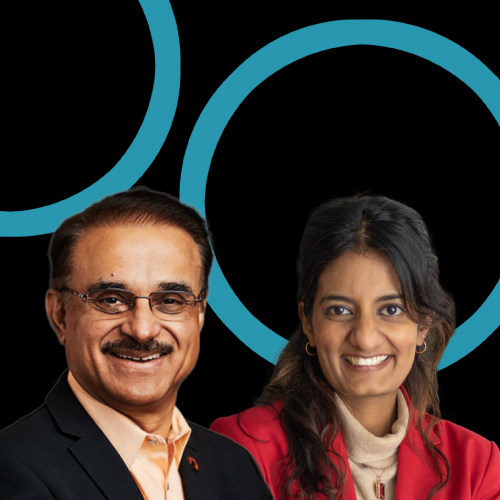
In this episode, Ajay Singh, Chief Product Officer at Pure Storage, joins Namita Adavi, Partner at Zinnov, for a candid conversation on what it truly takes to lead products in an AI-accelerated world, where speed is abundant, but judgment remains scarce.
Ajay brings over 25 years of experience spanning Silicon Valley startups and global enterprises, having led technology and product teams through multiple waves of disruption, from the PC era and cloud revolution to today’s AI inflection point. Drawing from his journey across Sun Microsystems, VMware, Hewlett Packard, and as a founder whose companies were acquired by BMC Software and Intuit, Ajay offers a grounded operator’s perspective on how innovation actually scales.
The conversation explores how AI is reshaping product management and customer experience, why biased outcomes often originate in data rather than models, and how product teams must move from feature-centric execution to outcome-driven design. Ajay also shares why the venture-driven startup model continues to be the most effective engine for innovation, even inside large enterprises, and why, despite all the technological change, leaders must continue to place their biggest bets on people.
This episode offers a pragmatic view of AI as an enabler, not a replacement, where success is defined not by adopting the latest tools, but by building resilient teams, trustworthy systems, and products that deliver real customer outcomes.
Tune in to hear the full episode.
PODCAST TRANSCRIPT
Namita Adavi:
The age of AI has shortened every product development lifecycle. Products launch faster, customers react sooner, and the distance between idea and impact has almost disappeared in this world, product managers don’t just build features. They interpret data, they sense behavior, and make calls that could reshape an entire business.
I’m Namita Adavi, Partner at Zinnov, and this is the latest episode of Zinnov’s podcast. Joining me today is Ajay Singh, Chief Product Officer at Pure Storage. Ajay brings over 25 years of experience in software and services industry. He’s held leadership roles at VMware, Hewlett Packard, founded Proactive Net, which was later acquired by BMC Software and led Elastic Intelligence, which was then acquired by Intuit.
He’s seen technology revolutions. Up close and has led three teams through each of them. In this conversation, we talk about how AI is quietly rewriting the playbook on product management and customer experience, and why today the margin for getting it wrong is shorter and smaller than ever. Ajay, welcome to the episode. It’s so great to have you here.
Ajay Singh:
Thank you. Super glad to be here.
Namita Adavi:
So Ajay, for our listeners today, could you give us a quick 30 second snapshot of what Pure Storage does?
Ajay Singh:
Yeah, so Pure Storage is actually a leader in the. A storage and data management space. The big focus for us is what we call the enterprise data Cloud, where essentially we can, rather than have individuals silo the storage, we can have all our storage connected in a cloud of data and you can then build on that data for AI, cyber resilience, all these great sort of use cases. That’s what’s unique about us and different, so that’s what we do.
Namita Adavi:
Okay. Awesome. I wanted to hear about you, you know, what your journey has been like. So if you could just quickly give us a brief overview what your journey’s been like as a leader?
Ajay Singh:
I’ve been lucky that, you know, I got into Silicon Valley at the very early 80s at the ground floor when a lot of technology evolutions were happening, so saw the PC and workstation era, open systems, the cloud revolution, and now AI.
So have been through all of these, been in big companies like Sun Microsystems, Booz Allen Hamilton, and HP, and also founded startups, sold those startups, and now work in public companies.
You know, currently a Chief Product Officer at Pure Storage.
Namita Adavi:
AI isn’t just changing product development or employee experience, it’s changing how customers react and respond. What shifts have you seen in expectations and trust, and how should product teams adapt?
Ajay Singh:
Most customers today are swamped with data in both their personal and work lives. They’re very busy, so the natural tendency is to assume that if AI says something, it’s probably okay.
That means it’s incumbent upon us as product leaders to ensure the AI isn’t hallucinating, to understand how accurate the responses are, and to build guardrails and mitigation strategies.
Ultimately, we live and die by outcomes. And the outcome has to be close to 100% accurate, you can’t base critical decisions on 96% accuracy.
Namita Adavi:
There’s a general sense that AI will disrupt everything. It’s interesting to hear you say it’s more enabling.
Ajay Singh:
I personally believe it’s enabling. It will make people more productive. Some of the hype is a bit self-serving — companies positioning themselves as socially responsible by amplifying AI’s risks. Fundamentally, I see AI as an enabler more than anything else.
Namita Adavi:
So human judgment still plays a major role. What does good leadership look like in this context?
Ajay Singh:
Rather than just trusting a model, it’s critical to understand the data feeding the model. It’s garbage in, garbage out.
I’d be shocked if anyone claimed a model is 100% accurate. The real leadership question is: where are the errors, and how are you mitigating them?
Namita Adavi:
What’s your recommendation for how product teams should steer away from biases that could shape customer experience?
Ajay Singh:
It comes down to data quality. If you train on historical data that includes discrimination — for example, in housing the AI will reproduce those biases.
You have to constantly inspect what data is feeding the model.
At Pure Storage, we curate data very carefully before feeding it into our copilots so we can deliver meaningful outcomes without bias.
Namita Adavi:
What is your recommendation in terms of how product teams should steer away from these biases that could potentially shape customer experience?
Ajay Singh:
Again, it comes down to the quality of the data, right? And so one has to be aware — there were examples, for instance, in the housing market.
Early on, there was discrimination before equal opportunity laws were enacted. And so if you just train on that old data that has discrimination built into it, then the AI will start to produce a discriminatory type of output.
Someone has to be aware of that. You have to be constantly looking at the data and see what’s feeding the model, rather than just trusting the model — to be aware of any biases that may or may not be there.
For example, we do copilots. As a case in point, at our company we have a product called Pure1. It collects data on all our customers and how they’re using storage.
We curate that data very carefully before feeding it into our copilot, so that we can deliver the outcome we want — which is the benefit of learning from our 12,000 customers and offering that insight to a single customer in their unique situation.
So curating the data and making sure it’s good is a super important part of it.
Namita Adavi:
Yeah, so that’s a very interesting example. If I could just double-click a little bit — it ties back to how you think AI has been enabling product teams, right?
Have you seen impact in terms of making teams faster, more effective, quicker time to market? Where have you seen the most impact?
Ajay Singh:
Absolutely. The speed of innovation has gone up tremendously — certainly in product management in a big way.
Instead of doing feature-by-feature work, you can now frame outcomes and have AI help draft PRDs and design specs, and also iterate on UI.
UI is becoming less important because interaction is becoming more conversational. The focus shifts to behavior patterns — how customers are actually using the product.
Even in traditional UI, you want to analyze patterns, but that often fell by the wayside because teams were focused on workflows. With conversational interfaces, everyone has a unique pattern, and the opportunity is to identify clusters and drive hyper-personalization.
That’s where product management is headed. There are a lot of changes.
Namita Adavi:
Yeah, I’m not envious of product managers right now — but that’s exciting.
Ajay Singh:
I think it’s exciting. Change is always good. Product managers are getting help, and they can be more impactful.
Namita Adavi:
Absolutely. Timelines are collapsing so fast. A lot of tactical work — drafting PRDs, for example — is being taken care of by AI, which means product managers now have to elevate their contribution.
Ajay Singh:
I’ll give an example. Our copilot went from being a glimmer in someone’s eye to shipping in a matter of months. That included data analysis, training, and everything else. We got it out the door very quickly.
Namita Adavi:
That’s amazing. We should discuss how you managed to do that. We’re still in exploratory stages, but we can come back to that later.
Namita Adavi:
You’ve worked across startups and large global enterprises. Do you think there are lessons on agility and decision-making that larger organizations can learn from startups, especially in the context of AI and customer experience?
Ajay Singh:
I’m a strong believer — having done multiple startups and worked at companies like Sun Microsystems, HP, BMC, VMware, and now Pure Storage — that the venture-driven startup model is the winning model for innovation.
It’s like education. You graduate, then do a PhD, then postdoc. That model works. There’s no reason it can’t be applied inside large companies.
At Pure, we still have a founder who’s deeply passionate and engaged, and we follow a similar model. We might have ten irons in the fire at any time.
Some products are mature, post-IPO products. Others are just ideas — a glimmer in someone’s eye. The question is how you fund them.
If you look at how VCs fund companies, the first bet is on people — founders with passion, deep technical understanding, and a vision.You fund them in stages: seed, design partners, paying customers, go-to-market. That same discipline is how we manage innovation at Pure Storage and how we did it at VMware.
Namita Adavi:
I think what’s very interesting is that even in the age of AI and all of this technology disruption, you’re still saying we’re taking bets on people.
People — at the end of it. Which is a great lesson to take away.
One aspect of this, whether it’s about leaders you bring on board or mentor — what’s one principle you believe is non-negotiable and has stood the test of time? A leadership principle you operate by and wish our listeners would adopt.
Ajay Singh:
A leader needs to be hungry and competitive to win in the marketplace. Ultimately, you’re winning by serving a customer need — so it’s always in the context of the customer.
But you want to serve them better than anyone else and beat the competition in the process. A leader with a strong strategic mindset understands who the customer is, why they buy, what their pain points are, how the market is segmented, who the competition is, and what their strengths and weaknesses are.
You also have to be very sensitive to your own strengths and weaknesses. Then it becomes a game of chess — how do you play on the chessboard to win at the other end? How do you neutralize competitors’ strengths, flank them, and create a winning play?
Namita Adavi:
Yes — and like chess, it’s also about having the right people in the right roles.
Ajay Singh:
Absolutely. Ultimately, it all comes down to great people.
Namita Adavi:
Building on that analogy — in chess, it’s people in the right roles making the right moves. That’s a great takeaway.
How do you personally stay curious? Transformation waves are coming faster than we can catch up. What’s your mantra for staying curious and continuously learning?
Ajay Singh:
I’m very fortunate to be surrounded by some amazing people who are specialists in their areas. While I do read and learn externally — there are great YouTube videos that simplify new topics — I also learn a lot from conversations.
For example, we have a security expert in our company who’s done multiple startups. I’ve learned a lot about security just through one-on-one conversations with him, in addition to resources he recommends.
That’s what’s beautiful about Silicon Valley — so much is happening, and so much has happened. I feel fortunate to be here at this time and place.
Namita Adavi:
Absolutely. We feel the same way about Bangalore — with the density of companies and innovation happening there.
By the way, you have a strong Bangalore presence.
Ajay Singh:
We do. We have an amazing Bangalore team, led by a great leader. There’s a lot of passion and innovation coming out of that group, and we’re very proud of it.
Namita Adavi:
That’s great to hear. Unfortunately, this is an occupational hazard — but we have to do a rapid-fire round.
Namita Adavi:
What’s a product you wish you had built?
Ajay Singh:
The founder of Juniper Networks is a close personal friend. We went to Carnegie Mellon together and worked on the same project. When he was founding Juniper, he asked me to be a co-founder — but I had already committed to starting another company. I wish I’d built that product.
Namita Adavi:
What’s one mistake early in your career that shaped how you build today?
Ajay Singh:
After my master’s in computer engineering, I went to business school and then joined Booz Allen Hamilton. You don’t realize how spoiled you get there — everyone is incredibly smart, from places like Stanford, Harvard, MIT, Carnegie Mellon.
It’s an up-or-out culture, and you give very direct feedback because the stakes are high. When I later moved to a company like Sun Microsystems, I kept my bar extremely high.
While it’s good to have high standards, I learned that managing a diverse team requires helping people grow — not expecting everyone to be a 10 out of 10. If someone is a 7, how do you help them get to an 8 or 9?
Earlier, I saw churn because people felt they’d never meet the bar. That taught me how to be a coach — helping people become stars and feel that you’re rooting for their success.
Namita Adavi:
If your team could inherit one quality from you, what would you want it to be?
Ajay Singh:
It’s all about people — hiring great people. And if someone doesn’t work out, that’s okay. You may be helping them find a place where they can thrive. When people are in the right roles, doing what they’re good at, they’re having fun and thriving. Most of the time, leadership becomes cheering the team on.
Namita Adavi:
What’s one simple question you always ask before greenlighting a product idea?
Ajay Singh:
There are standard questions about market and opportunity, but for me the most important question is about people. Who is the team we’re betting on?
If it’s the right team, that’s what you greenlight. Environments change, ideas pivot — but the right team can adapt and find the opportunity.
Namita Adavi:
What’s one lesson you wish someone had told you when you were starting out in tech?
Ajay Singh:
We spend so much time on engineering and math, but I wish we had more education in psychology and people management — how to lead and motivate teams.
Learning how to manage large teams so they operate like an Olympic rowing team — not just motion without progress — would have been invaluable earlier.
Namita Adavi:
This has been an extremely insightful conversation. What we keep coming back to is that people remain at the core of technology strategy — even in an AI-driven world.
Ajay, thank you so much for joining us. And to our listeners, thank you for tuning in. Stay tuned for more conversations on shaping the future of technology, leadership, and innovation.

Jason Day and David Neely, StarRez, on why culture is what makes Global Capability Centers (GCCs) grow and stay relevant in an AI-driven world.
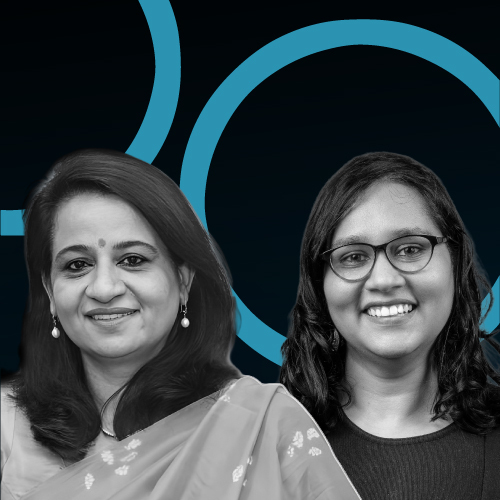
Dr. Ekroop Caur, IAS, speaks with Nitika Goel on Woman in the Mirror about ambition, balance, and the quiet resilience behind a life in public service.
Don’t miss any of our future episodes!
Also subscribe to the Zinnov Podcast on these platforms






Jason Day and David Neely, StarRez, on why culture is what makes Global Capability Centers (GCCs) grow and stay relevant in an AI-driven world.
Dr. Ekroop Caur, IAS, speaks with Nitika Goel on Woman in the Mirror about ambition, balance, and the quiet resilience behind a life in public service.
 THANK YOU
FOR YOUR RESPONSE
THANK YOU
FOR YOUR RESPONSE