



BACK TO Business Resilience
ZINNOV PODCAST | Business Resilience


Cloud platforms do not scale in isolation; they scale through the strength of their ecosystems.
Over the past decade, hyperscalers have grown at extraordinary speed. But behind that growth sits a quieter transformation: the evolution of the partner ecosystems that enable it. Building an ecosystem is not a one-time strategy. It is a continuous process of adaptation as technology shifts, customer expectations evolve, and entirely new categories of partners emerge.
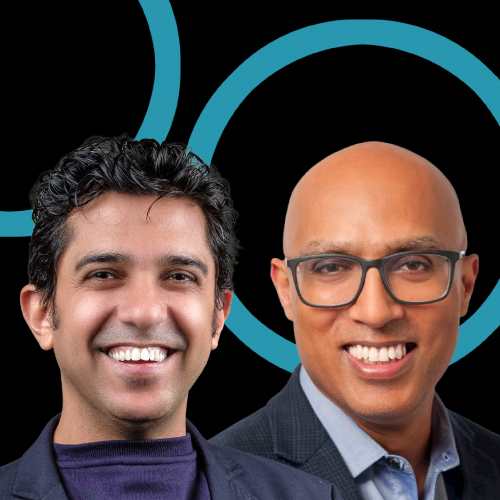
In this episode of the Zinnov Podcast, Pallab Deb, Managing Director, SI & Industry GTM Partnerships at Google Cloud, joins Rajat Kohli, Partner at Zinnov, to unpack what it takes to build and scale a partner-led platform business.
Pallab brings experience from both sides of the ecosystem. After nearly two decades in the system integrator world, he joined Google Cloud and witnessed how partner models evolve as platforms reach enterprise scale. At Google Cloud, that journey has been shaped by a deliberate partner-first approach.
The conversation explores how hyperscalers think about ecosystem strategy, the friction points that emerge as partner networks scale, and the new types of partners beginning to shape the next phase of enterprise transformation.
Tune in to hear the full conversation.
PODCAST TRANSCRIPT
There are five Google products that have 2 billion users every day. 15 products have a billion users every day. There’s like significant transformation.
And let’s agree that it’s a partner-led transformation. The partner, the ecosystem, and the channel played a very important role.
In this journey, what were the friction points and how Google Cloud solved them?
In the ISV world, there were friction points. When we first started the marketplace, Google was the merchant on record for every ISV product that was sold. The friction is now no longer relevant because we have created the framework to let ISVs become the merchant on record.
Cloud procurement is complicated, and we would rather have partners that can not just resell, but also deploy.
Co-sell is the name of the game.
We have a data stack, but we also have Snowflake and Databricks that run on our stack, and we have clear principles of cooperation. So we compete at the same time we collaborate.
The coopetition.
The coopetition, right? And that’s real.
Rajat Kohli: Hello everyone. Myself, Rajat Kohli, working in the capacity of partner with Zinnov Strategy Consulting. Today, as part of the Business Resilience Podcast series, I have with me a close friend, who’s working with Google Cloud. The Managing Director, Ecosystem Channels, Pallab Deb. Good to have you Pallab today, with us.
Pallab Deb: Glad to be here. Thank you for having me.
Rajat Kohli: This is great. Today’s topic is more focused on the cloud scale to the ecosystem scale, and how the partner led transformation is supporting that journey. So, we’re going to discuss the same with Pallab, but before we get into the topic, Pallab, it would be good to get your experience, your industry experience. It would be good to get some thoughts on that.
Pallab Deb: I am super excited to be here, Rajat. Thanks for having me. I’ve spent almost about 25 years here in the industry. Roughly, 19 years of those spent in the shoes of a system integrator in a variety of different roles. The last role I was playing at Wipro was running their global data and AI business. And prior to that, their digital business. And prior to that, I traversed the country. I was on a plane 32 weeks a year, either selling SAP services or our application services, but always been close to tech, and in front of customers. The last six years have been a very different part of my journey. I joined Google in January of 2019, and I guess we are going to spend a lot of time talking Google today, so I’ll save the rest of it for our conversation.
Rajat Kohli: Sure. No, that’s interesting. Like 19 years with Wipro. And you mentioned about the data and analytics. What of this brings you to the Google? Is it the data analytics or the SI experience?
Pallab Deb: I think, part of it was luck. But, when I was running the data analysis business at Wipro, it was clearly a area that was growing really fast. We were the fastest growing service line in Wipro, by the time I left. it was an area which is highly, it was very exciting to me in that area. Think of those days when data lakes were a thing.
What brought me over to Google was the fact that hey, you know, this was a great, innovative company, great tech that gets produced. I mean, I don’t need to sell Google to anybody. And they were just about really getting serious about going into the enterprise. There was always a B2C, a consumer focused company. Everybody in the world uses Google in some way or the other. I mean, everybody may be an exaggeration, but guess what? There are five Google products that have 2 billion users every day. 2 billion on five products. 15 products have a billion users every day. So, I’m guessing if you just add them up, they’re probably more than the population of the planet. But the fact is, Gmail, YouTube, Google Maps, those have 2 billion users in them every, every day. So, when this opportunity came up, I figured that, well, this is not one that I’m going to let pass because this is taking that data and AI game to a different level altogether. How do you bring that Planet scale infrastructure and make it relevant and useful for enterprises that had never been explored until then. And so that’s really piqued my interest and the rest of it was just super easy then.
Rajat Kohli: Wow. So, when you started in 2019, January, what were you focused at that time?
Pallab Deb: In 2019 when I joined, it’s funny, Google was a USD 6 billion company, one and a half billion every quarter. Today it’s USD 60 billion. So, we’ve grown from six to 60. 10 times, in the last six years. That’s crazy growth. But yes, let’s go back to your question. When I joined in 2019, Kevin Ichhpurani, my boss and who is the president of Ecosystems and Channels at Google Cloud. He and I knew each other because, when he was running ecosystems at SAP, I was running Wipro’s SAP business in North America, and I’ve always found that, hey, if I were to partner with the principle, the in tech principle in a particular area, at that point of time it was SAP, and really collaborate closely, there was goodness all around. I mean, there’s no reason for not to partner. Somehow, I guess the industry hadn’t woken up to that fact. So, in that environment, Kevin bought me in to help Google build its engagement model with GSIs. GSIs as in the global system integrators, Accenture, TCS, Deloitte, KPMG, etc. So, when I came in here, Kevin said, you know what, Pallab, go and talk to all these GSIs. Explain to them about the tech. About the fact that we are serious about building an enterprise business out here, and what we really need to see as success is them building practices on GCP. That was a pretty interesting conversation because a lot of that time, people are blown me away. It’s a matter of time Google’s going to kill this product. You are not an enterprise company. You’ll never under understand enterprise or for that matter. You want me to build a practice? Happy to do that. Where is the demand? I’m not going to train people, put them on bench and have them fly off the bench doing something else. So, Google get serious about it and then let’s talk. That was kind of like what I got. But it was interesting to sit down with them, say, okay, got it. Feedback taken. Let’s sit and talk. Let me explain to you why BigQuery and Google’s data offerings is literally poised to bring transformational change to the enterprise. And the fact remains, Google’s going to do that. They are going to go and build that technology out. So, you might be good to get in on the ground floor as opposed to coming in when this technology’s already taken off. It took a lot of conversations, a lot of real, just looking in the eye, showing them the product, bringing technical people in, and then people started waking up to the fact, oh my God, you are showing me a product. And if it’s true what you just showed me, that it can handle structured, unstructured data in a completely distributed computing environment at planet scale, at this particular price point. I mean, there’s no reason why customers wouldn’t adopt it. And so once that sank in, people said, okay, this sounds real. So, let’s talk about how do we build a business? How do we build a practice? How are you guys going to build a pipeline? Because we as SIs, don’t build pipeline. I mean, we don’t create a market. The SI are good at servicing a market or serving a market, but the market’s got to get created by us. And we were super subscale at that January, 2019. We were one 10th the size of our nearest competitor in terms of number of people on the field in quota carrying roles. And as far as the other competitor is concerned, I can’t do the math here, but we are probably one 15th or one 20th at their size. So, we were so small, but then, we were very serious about building out that capability, putting people feet on the ground, a sales team, a sales engineering team, customer success team. So, all of that happened in rapid pace. And then these SIs saw that Google was serious. This was the real money being put in over there. And there are a lot of other anecdotal stuff about people saying, oh, customers will never buy Google because you’re going to look at my data. Thankfully, we don’t hear that nowadays. Now, it’s super clear because what we do there is we tell customer, you bring your data, you lock it up, you take the keys. I don’t even have the keys. I can’t, there’s no way I can look into your data.
Rajat Kohli: But if you look at 2019 and today, there’s significant transformation, the evolution. And let’s agree that it’s a partner led transformation. That the partner, the ecosystem, and the channel played a very important role. How do you see that journey over the last seven years?
Pallab Deb: That’s a great point, Rajat. So, remember what I just said 30 seconds ago, we were super subscale in terms of market presence back in 2019. So, Thomas, Kevin, and the leadership team took a very smart decision and they’ve stuck to it till date, which is that, look, if I have to catch up with the other two, there’s no way we are going to do it alone. We’ve got the tech, it’s a great tech. We don’t have to tell customers about how we innovate, everybody gets it. But the point is you need people to carry that message around, and it takes too long for us to build a sales team and get to the size of our competition. So, we decided back in that January that we are going to be a partner first company.
What that means is, we have not built a professional services organization of any size and scale, even to this day. So today we are a USD 60 billion company. The number of people that we have in our professional services side of the house, produces less than 1% of our revenue. It’s really, really subscale. It’s really built out to help deploy our early-stage products, help our partners get better at deploying, but it’s not meant to deliver projects at scale for customers.
What it means is, that USD 60 billion of revenue is being deployed by partners or by customers, granted, a big part of that is where the customer is a digital native. Let’s say Uber, let’s say, snap or somebody like that, who’s born in the cloud, has really deep engineering capabilities built, born in Silicon Valley, they probably don’t need a partner. But every other dollar has been deployed by a partner or a customer. So, that conscious decision of not building a professional services organization, of being very open to all types of partners at every layer of the stack. And I’ll explain that in a bit. For example, we have a data stack, but we also have Snowflake and Databricks that run on our stack and we have clear principles of cooperation. So, we compete, at the same time, we collaborate. The coopetition. And that’s real. And how do you make it real? Our comp structures. Allow a Google seller to be equally comped, whether they’re selling a first party or a 3 P. We allow customers to decrement their commit, equally, effectively, whether they’re buying a first party or a third party. So, you get the nuance right. It’s all about openness at every layer of the stack. At every function of our engagement with the customer, which kind of brings the partner first thing to life, which is why today I think we have a really strong partnered ecosystem. I think in quite a few of these SIs, Google Cloud was their fastest billion-dollar practice. And in some of them, they’re actually 2 billion or so.
But it happened because there was intentional engagement, and a muscle that was built that inherently taught, no matter when you join Google, that, hey, we are a partner first company, you work with partners, you don’t try to do it all yourselves.
Rajat Kohli: So, all these are very beautiful numbers. A billion-dollar practice. The 10x growth, from a 6 billion and like a partner led motion. I’m sure in this journey there are many friction points, like how we reached to this number or reached that maturity from a partner led business. What was the friction points and how Google Cloud solved those friction?
Pallab Deb: The friction emanates every day because the business is not as static as you can imagine. The technology is changing, customer buying patterns are changing. So, if you go back to the early days of our foray into the marketplace, because we said we are not going to be, we calculated, we are not going to be able to build a services team or a sales team, as quickly as needed, we had a very resell oriented model. It was rewarding then for partners to go and resell Google Cloud. That means their feet were on the ground selling Google, and that’s exactly what we wanted. But at some point of time, you realize, resell is not the best way to go once you have achieved scale, because this is a very complex buying process.
Cloud procurement is not like buying, your email server or your co-collaboration documents. This is complicated and we would rather have partners that can, not just resell, but also deploy. Once we took that lens and started looking at our partners that were the heroes of reselling era, we realized 90% of them are not going to make it. They didn’t have the muscle to not just to deploy after selling. There was a friction point. There was a hard decision to be taken that, look, you’re great partners, but we are pivoting. We need you to not just sell but also deploy. Because that’s when value man gets generated, and that’s when I recognize revenue. I don’t recognize revenue when you sell something. So, there were multiple such friction points. In the ISV world, there were friction points.
When we first started the marketplace, people took time to understand the marketplace because we didn’t have an agency model. Google was the merchant on record for every ISV product that was sold. Not every ISV was open to that idea. They wanted to control their destiny and be the merchant on record. Again, the friction is now no longer relevant because we have created the framework to let ISVs become the merchant on record. So, there are multiple such things. The good thing is, every time there’s a friction in an area of our business, whether it’s in, like I said, in the engagement model, in a commercial model, there’s enormous amount of attention from the leadership to get it out of the way because partners are literally central to our expansion in the marketplace.
Rajat Kohli: Got it. That’s an interesting story. As you mentioned, the partners move from the resell to the deploy. And it’s not an easy journey. Now, if you look at from a technology transformation, from a BigQuery to the agentic AI, how do you see the partner maturity, the reaction of the partners in that journey? That’ll be good to know.
Pallab Deb: You’re setting me up. I’ll tell you this. It is going to be a hard one. Okay. So, we’ve got great partners that are good at tech. I can call them in, and I can close my eyes and go to bed. I know they’ll do a really good job of setting up the Google Cloud Foundation, setting up the security infrastructure, taking the data out of a legacy data warehouse, moving it into BigQuery, optimizing it, putting in the insights related that the business needs. They’ll do this day in and day out. I’ve got great partners there, and by the way, very successful. They’ll make a lot of money out of that. In an agentic AI world, the qualities that are needed to be successful in a world where you’re going to promise a customer not about lifting and shifting, but you’re going to promise him or her, that we are going to help you transform your business, or change the way you do.
Let’s take a functional area, accounts payable. Your conversation is big, or at least the promise of agentic AI in the industry is that AI will help transform business processes, which means you’re going to have to talk a completely different language. You got to go and talk to the head of finance or the head of FP&A, or procurement and say, I, can come in and using technology agents data, predictive analytics, whatever the case may be, and transform your accounts payable process and extract 50% efficiency in the way you run it today. That’s a conversation not every partner is going to be able to have, because number one, they don’t understand accounts payable. That’s the biggest, they don’t understand the business process, number one. Number two, they don’t have any relationships in the line of business. This is a decision not taken by the CIO. It’s by the head of procurement, is the head of finance, it’s somebody else. Where are those relationships? Not all SIs even call on those personas. Then you need to come in and compete against people with your IP because nobody’s going to come at it and say, I’m going to change your accounts payable process.
Let me get started and one year from now you’ll have a new process. No. Your competition is coming in with intellectual property already built out because they understand the process. They have access to data that’s at the bedrock of that particular process. They’re fine tuned models that can actually look at invoices and extract and reason and decide whether invoice needs to get paid or needs to be sent to a human in the loop. That’s a transformational journey for any SI, who’s not dabbled in that area and has always been busy lifting and shifting.
Rajat Kohli: So, what I understood, Pallab, it’s an interesting thought that you mentioned, that in today’s world the characteristics of the partner, is like threefold. One, you have to look at the industry and order at only at the industry, but at a use case and a sub use case that you should have understanding, are you talking to the right decision makers?
Because as you mentioned that the money or the investments is moving from the IT team to the line of businesses. That’s a very important angle. That’s the second one that you mentioned, and the third one that is more of bringing your IP on the platform. Are these three the most important aspect in today’s world, the AI world, that is needed by the partners? And the next question would be, are you referring only to the system integrators and the GSIs, or this is like cutting across all the partner personas, including the reseller or the or the tech partners?
Pallab Deb: This is actually a very interesting question, because I’m seeing new genre of partners emerge. So, first one, it applies to the SIs, applies to, whether it’s a company that does resell and service, but nevertheless, for the system integration part of the business, it 100% applies. It applies to BPOs, who are really good in operations, but may not have that technical depth, but they’re really good in operations in one of these, and they have great client relationships in the lines of business. It applies and it’s actually encouraging a third type of partners that are coming out of the woodwork as I see now, and I’m very encouraged by what I see there. These are companies that are born in the era of agentic AI. That means they’re all two years, three years old at max. They are not by any way showing up as companies with hundreds of people. These are actually small in terms of headcount, but you look at the revenue, you’ll be shocked. They’re coming to the table with an IP led approach, very narrow and focused on the business area, where they can clearly produce that with their IP. You’re going to get 95% accuracy or 97% close rate or whatever it is. But they will price it as an annuity-based service, which is composed of that IP plus people, delivering that process for the next five years. And they even charge your commercial models are also not, obviously not by the number of people because it’s completely, it’s a managed service model. Highly driven by intellectual property, less by people, and commercialized through very intelligent, commercial models, like number of claims process, number of permits issued.
Rajat Kohli: But, as you define the persona, these are small ones, but these are interesting in the boutique ones, focus on very specific domains and all that, and they have the IPs which can show the accuracy and help in the business outcomes. Are customers really buying that story from these small partners?
Pallab Deb: You would be surprised. I think they are progressive customers who are fundamentally, they’re doing two things. A typical customer today out there, is challenging the incumbent. Look, we may have signed on this paper five years ago. The world changed three years ago. We need to open this up. We need to have a conversation. I need 30% efficiency compared to what was agreed to. I think not everybody’s able to meet that expectation. Well, they are bringing these boutiques in as challengers and I am pleasantly surprised in many cases, these challenges are actually winning the business because the customer realizes as they do the due diligence, this is no longer a functional number of people on the job if you care about the output and the quality of it and the outcome that it deserves. It’s supposed to serve the progressive customers who are bringing in these boutiques and are really doing a thorough due diligence, are finding that, this just makes sense to go with these guys, with the boutiques. And by the way, these boutiques are no longer your boutiques out of a garage. They’re all funded well by VCs and PEs, so there’s real money behind them. So, you’re not like companies that are going to fold up or something of that sort. I see a lot more acceptance of that, which honestly surprised me as well.
Rajat Kohli: It’s very interesting, like, the emergence of these boutique, small partner ecosystem, call it specialized, partner community. The challenge that we are hearing from the Hyperscaler world, including the Google Cloud or even the large ISVs, it’s very difficult for them to manage all these hundred and the thousands of the partners. And the ask from the partners is, we need help. We need help on the enablement. We need help on the pipeline. We need help on building that capabilities. How do you marry this?
Pallab Deb: I think we are going to move to a point where, see, let’s get real. I don’t see a Fortune 500 company, writing their underwriting on hundreds of boutiques. That’s just too complex to manage. But I definitely see them bringing in these specialized companies for certain areas where the ROI makes sense. Let’s think about it from our perspective. We are a catalyst in this game; we have a vested interest. We want people to use our products, which hopefully are the best. And we know they’re doing better than most of our competition today. So, there’s a vested interest, but as a catalyst, what we intend to do is, first, offer the bedrock of the technology itself. So, offer you the platform where as an innovator, you don’t have to worry too much about the plumbing, you actually focus on what you do best, which is use the Gemini stuff, solve the business problem. Don’t worry about identity and access control, evals, model provisioning. I cannot automate that for you to a huge extent. The second thing is, as you think about business processes, the fact of the matter is, this is going to be solved through like the transformation of the accounts payable conversation. It’s not going to be solved through one agent or a basket of agents from one provider. This will be a multi-agent world. There’ll be agents from SAP if the underlying stuff is SAP, Oracle or whatever. There’ll be Ariba, there’ll be this, that, and the other systems of record because I don’t think you can wish those systems of record away. Much like some people have said, SaaS is dead, but let’s not go there. We’ll come to that in a bit. But my view is at least for the near term, those systems of record are very familiar to users. They are deterministic. They cannot hallucinate, they themselves are innovating. I was pleasantly surprised seeing some of these companies, how they are bringing an agentic or a chat based interface in front of old school proven things like, let’s say journal entries or into your financial systems. So, they themselves are innovating. So, you’d be hard pressed to ask, why should I get out of the ERP if they are innovating as well? But the fact of the matter remains, we want to think of the future as a place where we are the catalyst in helping people or promoting people that are looking at the business process orientation.
Rajat Kohli: So, people means the partners?
Pallab Deb: Partners. Solving them with agents that emanate from all the different places, but as a catalyst, they’re available in our marketplace, like an offering where customers can come and buy and we make the buying experience very real. So, to your question as to, how do you manage this. I think we are going to create a platform where these are going to be available. Strung together as solution sets, not as discrete, one-off agents, because then you have an agent sprawl. And then the customers decide who they want to pick.
Rajat Kohli: What happens Pallab, is that there’s a long list of the partners that is available or published on the marketplace. How do these partners should play, that their solution should be visible to the customer because there are big giants which are sitting and they’re providing their solutions. How do an entity like a Google Cloud or a hyperscaler Enable that?
Pallab Deb: I think it goes back to, let’s just take a step back, and think about the world of ISVs. You have ISVs that are like the behemoths of their genre, and then you have upstarts that are challenges. To be honest, if I go and look at the marketplace, momentum data tells me that both have succeeded well. Because the one that’s an upstart and a challenger succeeds because they come with a completely new approach. They’re hungry. They do better co-selling with us. Co-sell is the name of the game. We see our role as a catalyst in terms of bringing their products to bear and making them visible. So visibility, is one, driving demand gen, etc., So there’s visibility plus creating traffic. Number two, our sellers are going through a huge process of transformation as well. No longer in this world will it be great for a Google seller to just come and talk about the price of compute and the features of BigQuery. They have to start talking this language as well. And so, you would foresee a world, where a Google seller would be very motivated to have that business conversation or to at least skim that conversation to be able to pull the right partners in. So a partner that will engage with us well, first of all, should appreciate this model as to how it’s going to happen. So, you don’t just make your stuff available in marketplace, your string of agents that solves a problem, but you back it up with a co-selling muscle. People that are engaging your target accounts where you think it is a best place to land. Talk to the seller. Make them aware of what your product is, and then jointly go and hit the customer.
Rajat Kohli: Sure. I think so you touched upon the word, the co-selling. In today’s world, and as we are seeing so much transformation and going back to the point that it’s moving from the cloud scale to the ecosystem scale, is there a new definition of co-sell?
Pallab Deb: Let’s think about co-selling in the yesteryear. That means, you know, maybe a few years ago it was more about the policies and incentives being aligned, so you are not going after each other’s throat. You’re showing up, behaving well and showing up well in front of a customer. I think that was literally what co-selling was about and people said, hoorah, we nailed it. I think in this, going forward, it’s going to be very different.
Co-selling will happen with a purposeful single view of what is that solution you’re trying to sell and what is the role of each party. It may not just be two parties; it will multi-party co-sell. But each one has a role to play. Each link is as important as the other one of these links break, the entire thing falls apart. When you think about that orientation, I think, there’s a different connotation to co-selling the policies and all of that will stay, but there has to be catalysts in each of these roles, in each of the co-sell pursuits. In some cases, the hyperscaler can be the catalyst.
In some cases, the SIs will be the catalyst, but somebody’s got to string together these different constituents and bring them to the table to solve that whole agentic transformation promise that you’re going and selling to customers.
Rajat Kohli: In today’s world, the market is moving so fast, customers are asking for the business outcomes. Hyperscalers are asking for more and more visibility and the growth. At this journey, what are the demands coming from partners? What help would they need from you?
Pallab Deb: Partners are SIs. SIs are fundamentally asking for number one, the wisdom of Google on two dimensions, on the tech dimension, under the demand patterns dimension. Because you know what, they are going through a change. They also have to prioritize whether they want to boil the ocean or go to a certain part of the pond and fish there. They want to know where most of the fish is available? So, they’re looking at demand signals. They have to transform on their own. Their business is under attack by the upstarts and the new type of SIs. They want to get masses of their people, ingrained in the AI technology and they’re looking to ask for help on that. For example, we are telling people, hey look, starting next year, we are never ever going to show up in a sales conversation with a deck. We want to show up with a demo because everybody can literally, not everybody, but if you have the specs well, you can code a demo easily. Why wouldn’t you want to show up with that?
Rajat Kohli: The demo and the business outcomes is a move forward.
Pallab Deb: Exactly. So that’s a transformation for everybody. But the established SIs are really looking for direction in terms of both tech. They want to be earlier on at the table to get an early view into the tech. They want to understand what sort of demand patterns we are seeing. They want to engage with us in helping them transform. They want to also understand where the gaps are. For example, we are telling most of our SIs today, one of the things, and that is essential besides the three vectors we talked about understanding the industry, the relationships, and having the tech skills is also the change management skills.
Rajat Kohli: Oh, so these are the skills that are needed in, I would say 2026 and the way forward.
Pallab Deb: A hundred percent.
Rajat Kohli: So, this is interesting Pallab. I think this is a fantastic conversation. A lot to learn and I’m sure there’s a playbook for the partners also that what needs to be done. To make it a success for the partners going forward. I truly appreciate, thank you for a wonderful discussion today. Thank you.
Pallab Deb: Well, your questions were clever, and well done. Thank you very much.
Rajat Kohli: Thank you so much.
Pallab Deb: Thank you.

NatWest’s Ruchika Panesar with Nitika Goel on Zinnov podcast - GCCs Unfiltered, on leadership, systems thinking & judgment. Tune in now.

Jason Day and David Neely, StarRez, on why culture is what makes Global Capability Centers (GCCs) grow and stay relevant in an AI-driven world.
Don’t miss any of our future episodes!
Also subscribe to the Zinnov Podcast on these platforms






NatWest’s Ruchika Panesar with Nitika Goel on Zinnov podcast - GCCs Unfiltered, on leadership, systems thinking & judgment. Tune in now.
Jason Day and David Neely, StarRez, on why culture is what makes Global Capability Centers (GCCs) grow and stay relevant in an AI-driven world.
 THANK YOU
FOR YOUR RESPONSE
THANK YOU
FOR YOUR RESPONSE