




BACK TO Business Resilience
ZINNOV PODCAST | Business Resilience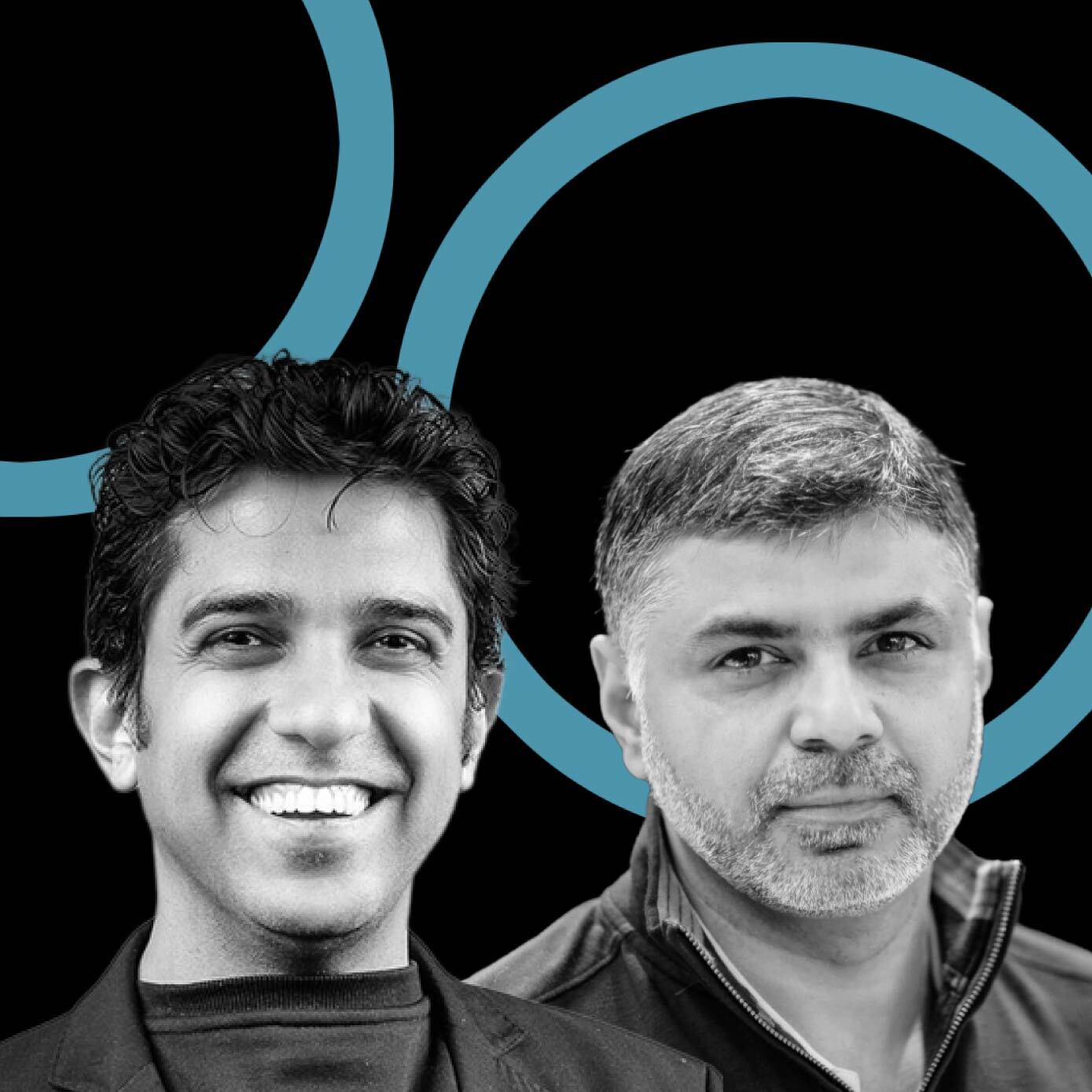



Having spent over two decades working with technology and cloud partners, Sachin Vora has seen the industry go through several major transformations. But the pace of change brought by Agentic AI is unlike anything he has seen before.
As customers increasingly expect measurable business outcomes, the way technology companies and their partners work together is changing. Traditional co-sell models, partner economics, and even the definition of customer value are being reconsidered.
In this episode of Zinnov Podcast, Sachin Vora, General Manager, Global Director, AWS Partner Programs, AWS, joins Rajat Kohli, Partner, Zinnov, to discuss how Agentic AI is transforming the partner ecosystem. From outcome-based pricing and the evolving role of AWS Marketplace to the challenges of scaling AI pilots into production, the conversation explores what these changes mean for technology partners and their future growth.
Tune in now.
PODCAST TRANSCRIPT
Rajat Kohli: Hi. Welcome to another episode of Zinnov Podcast series. I’m Rajat Kohli, partner with Zinnov, and today with me I have Sachin Vora, General Manager with Amazon Web Services, and we’re gonna have interesting discussion, especially in the world of the agentic AI, the new multiplier, how the customers and the partners are looking at this emerging opportunity.
Today’s discussion is something which industry is shy to talk about. If you look at the partner model motion, which includes co-sell, incentives, the pipeline acceleration, it’s ending somewhere. The agentic AI is not just replacing, but it’s changing the model that how the partner model should work around.
And I think with whom I’m doing this interaction today is the best person to talk about what is the current model and how the future will look like. Welcome me, Sachin Vora, General Manager with AWS.
Sachin Vora: Thank you to be here, Rajat. Really a pleasure to talk about this, and seems like agentic AI is everywhere in the air, so it’s a perfect time and great topic to converse on.
Rajat Kohli: It is. Sachin, before we get into this, and then we’ll name it as a new multiplier in the agentic AI world, how do you want to define your role and the experience that you bring to the table? I’ll leave the floor to you to talk about that. Who are you? What is the experience? And what excites you in today’s world where we are focused on the agentic AI?
Sachin Vora: I’ve been at AWS for just under five years now, but I come from having spent almost entire career of mine of 20-plus years working with partners across the different technology and cloud transformations, and now agentic transformation side. I think partners that have been already an exciting part and a key accelerator and force multiplier for the tech business, and generally delivering the value to our customers in a ways that only a partner can bring in, which is they are sitting at the focal point of integration of various technologies, various providers, and they really understand the customer well.
And so for me, the exciting part is that when we think through and we look at the change that is really coursing through the industry right now, which is an unprecedented change, that is exciting because we have the right ingredients, both in terms of the technology and the leaps and possibilities that it’s creating.
But more importantly, we have a partner network and a community that is really entrenched, that understand the customer and their needs really well, but they also understand the technology and where the technology is headed really well. So I think that that combination is the right place where the acceleration that we are seeing is at a pace that is unprecedented for the industry, and we are really excited about that change.
Rajat Kohli: Wow, that’s interesting to know. Sachin, what I’m hearing in the ecosystem is that everyone is calling it as a shift. I think it’s too gentle to call it a shift. It’s like completely a full reset of the model. Do you agree with that or do you have a different viewpoint?
Sachin Vora: So I’ll say that the change that we are seeing is unprecedented, right?
We have seen different transformations happen. We went from infrastructure that was sitting on-premise to the cloud. Now we are coming into the place where it is automation, and automation then gave rise to agentic automation or AI-led automation and AI-led process transformation. I think the change is unprecedented.
Every time a new change comes in, this industry finds a way to kind of accelerate than they have done it in the past. So I would say that yes, the change is definitely of a tectonic kind of scope. But what I would also say is that this is not something that we are now not used to. We are used to change as an industry.
Rajat Kohli: Interesting. Recently we did a study where we interviewed the partners, and many of the partners mentioned that they have agentic narrative, but they’re still struggling. It’s with the messaging, with the readiness or the economic model value. How do you see that happening?
Sachin Vora: So I think I talk to partners on a regular basis, almost on a weekly, daily basis.
And one of the things that I’m hearing partners and customers talk about is that the way in which value realization happens and the way in which the metrics of what success looks like, that definitely have changed and are shifting. So we are every day seeing that customers are looking now more at outcomes it is creating.
So they are moving from saying, “Where’s my IT? Where’s my productivity?” to “What am I delivering for my customers? What am I delivering for my business? How I’m changing the way in which I approach a problem.” And all of that are changing the economics, but also the dynamics of how value is created.
So couple of things which I would probably focus on is that where does the economic value exchange sit? And I think that earlier, from a partner perspective, the value was in bringing in a new technology, kind of putting it into the right place within the organization, really modernizing and transforming the IT stack.
Now that is not sufficient enough. I think what we are seeing is that you have to actually go reach to the end of where the value is being generated, which is how is the business operating? What are the business metrics that are important? So we are seeing the business decision makers and the line of business buyers really become the focal point of where value is created and who the value consumer is.
And now we are seeing that customers are looking at saying, “I’m going to… We are going to all combine our energy together to deliver outcomes, and I’m going to pay on outcomes. I want the outcomes, and I’m going to price on outcomes as a partner.” Right? So you are seeing that new models are emerging, outcome-based, risk-based models are emerging.
So overall, the setup is definitely going through a transformation in terms of how economic value is dispersed.
Rajat Kohli: Interesting. You touched upon outcome-based models, right? And definitely everyone would agree that is the future. But an important aspect is that when the outcome is not delivered as the customers expect, the partners carry the risk as of today.
It’s not the hyperscaler, it’s not the customer which is carrying the risk. Is it really fair, and is it sustainable going forward?
Sachin Vora: Look, I think, like any transformations, there are different maturity models. Even in the economic value exchange, the maturity model does exist, which means that some customers want to do this risk-based approach.
They want partners and customers and the value chain to really partake in that risk measurement. But obviously, as you said, the risk has to be distributed. Somebody has to carry the risk of it and somebody has to only account for it. So I think various different models are emerging out of it.
Sachin Vora: There’s no one set thing which has coalesced, but we are definitely seeing, even from a cloud provider like ourselves at AWS, we are seeing now new models emerge of how we want to invest, where do we want to invest, and can we now start taking the overall investment and spread it across the build, market, sell, and then customer success.
And if you now start looking at the economic model in that broader sense and not just give effort-based or activity-based investment, but also pay on outcomes, now we are changing the game. And it doesn’t have to be all or nothing. We understand that there is risk in things that are moving if you invest in building some product, and that is still very early-stage before the outcome is realized.
There’s some risk that somebody has to carry that and the investment somebody has to carry that. And we are trying to kind of figure out at each dimension what does success look like and how do we invest in that success, and then how do we connect the success eventually to the outcome, right? The feedback loop is super important.
Going back to your question, whether it’s fair or not, I think we are figuring out what is the right fair exchange at every sense of that value chain, and new models are definitely taking root. I would say it’s still early days, though.
Rajat Kohli: And as you touched upon, these are the early days, and let’s agree that everyone is trying to build that outcome-based models along with the customers, and you touched upon the feedback loops also.
What are the other ways which is helping you to define how the outcome will look like? Because in the Amazon principles world, first look at the customer, and in the agentic AI world, the customer themselves are unclear what that outcome will look like. Now, when you as a, from a Amazon principle perspective, you go to the customer and look at that we’ll solve your problem, but the customer is saying, “I don’t have a clarity,” how does that principle apply in such kind of a scenario and how it ties to the outcome-based models?
Sachin Vora: Yeah. So look, I think that’s a good question. I think I’d say it’s a complex area that I think everybody’s trying to figure out what success looks like. But I think the results are very, very clear now. In the agentic world, the transformation is such dramatically different that, and the value is so dramatically different.
That’s easy for us to kind of look at it and say, “Is this valuable or is it not?” I’ll give you an example. If you look at something like a sports enterprise, could be an F1 race, could be similar kind of outfits where there are a lot of streaming consumers, people who are consuming the event through a streaming experience.
Earlier, it used to take three weeks of planning, three weeks of, if anything went wrong, the cycle times were really large. Now, what used to take weeks can be done during the event. Now you are real time. You can do things in days in terms of planning and scoping. You can do triaging in matter of seconds, and you can do responses in matter of minutes.
And now you can see that some of these experiences and the value of experiences are dramatically different. So when you look at it from a sports entertainment company that is going out and streaming there and having an audience which is millions of people watching at the same time, are they able to now respond faster and create a better customer experience that becomes more of a retention play for the subscribers?
That economic value is very clear in the metrics that the business is working with. So one of the things that we are discovering through talking to customers and partners as well has been that the businesses already knew, always knew what success looks like for them from a customer perspective. But for instance, this F1…
Rajat Kohli: Sure.
Sachin Vora: Entertainment would know that if I have a downtime of five minutes, I am losing X number of subscribers when that happens, and that then impacts my advertising revenues, and so on and so forth. So now they can put a price on that. The question is, earlier the price was not tied to the technology and the capability of what you can do with that.
Rajat Kohli: So you talk about the Formula One and to define these outcome-based models, who’s the driver? Who’s ideating that, how that outcome will look like? Is it majorly coming from a cloud provider or the partners or the customers, or it’s a joint thought process that what the outcome will look like in today’s environment?
Sachin Vora: Yeah, look, I think it’s an evolving thing. I think we are moving definitely to a place where our partners and ourselves as we get engaged, we are losing the separation of who starts where, right? So it’s what I call an era of co-X. We are co-building, we are co-innovating, we are co-building, we are co-marketing, we are co-selling, and then we are co-delivering, right? So all of this becomes like a shared model where we have a role to play, our partners have a role to play, our customers have a role to play.
And when we talk about partners itself, it’s no longer partner one or partner. There are multiple partners who can now add value to it, right?
So now you are changing the way to say, “I’m not here to go deliver my work and walk away. I’m here in a way in which I can now be your partner in ensuring that the outcomes or the value is continuously being received.” And the model is morphing, so that paradigm has definitely shifted. Sure.
Rajat Kohli: And you touch upon the partner and the co-sell, and if you look back, the co-sell, how it was defined, the motion, the incentives, the pipeline mechanics, it was a world of software licenses.
That world has gone. How do you see the co-sell in today’s world, especially when everything is outcome-based and the unit of economics is agent and not an SKU?
Sachin Vora: Yeah, it’s a very interesting time. We are definitely transforming the way the partner experience itself works as well.
Rajat Kohli: Right.
Sachin Vora: But really what we are looking at now is that because agents are going to be doing a lot of the undifferentiated work, the separation still is that there is still a lot of expertise out there. So agentic processes and they are being reimagined. As we are looking at that, we are definitely seeing the role of the flow, if you will, of how these outcomes are being connected through agents and through co-sell.
So co-sell itself has shifted now to become more about, are we providing the right insights at the right time? Are we integrated into that so that we are not doing what I call partial handoffs? You can see now the partner has integrated their sales motions with how an AWS seller is looking at it.
And what we are seeing is that because the day-to-day minutiae of me picking up a phone and saying, calling a seller on AWS as a partner, I’m calling them and saying, “Hey, have you seen this opportunity? What do I need to know about it? I am looking at it from this perspective. What are you looking at?”
And spending that time, what I call educating each other, that’s happening now seamlessly. So I think that dynamics is changing. It is creating value faster.
Rajat Kohli: Right.
Sachin Vora: And obviously compression is happening on everything, right? Compression is happening in terms of cost. Compression is happening around time to value for the customer.
And all of this is leading to the dynamics becoming much faster. The train has gone off the platform. We are moving in one direction, which is agentic is going to make things faster. It’s going to make things better. It’s going to make things more relevant. And that to me is how we create value for customers, both from a partner perspective but also from AWS.
Rajat Kohli: Wow, that’s interesting. And the next question I want you to honest answer. There was a lot of discussion around the POC to the production.
Sachin Vora: Yes.
Rajat Kohli: Right? And you would agree, it’s across the ecosystem, the percentage is very low even today. What are the key reasons and how we can overcome those?
Sachin Vora: So, absolutely true that experimentation.
So two things before I even say that it’s low or not. There’s something which has shifted dramatically.
Sachin Vora: So first of all, in the world previous to now, the experimentation itself was a very costly affair, so not many experimentations were happening. The cost of experimentation was substantially high.
Now the costs have come down, so experimentation has gone up. I think we have all now heard of this, that cost of coding is tending to zero, right?
Rajat Kohli: Very.
Sachin Vora: True. So as we see these things, the cost of doing things and failing and failing fast, all of that is possible now. So the scale and scope of experimentation has just gone out.
This is tremendous. It’s unprecedented. So we are definitely seeing ton and ton of POCs happening because the cost is now low. We are definitely seeing conversion of POC to production, but we are also kind of seeing that there are definite places where things can be done in a better way so that it can be accelerated.
Rajat Kohli: Okay.
Sachin Vora: And the acceleration is different when it comes to different kinds of customers. When we see a different trend in SMB versus what we see in enterprise. So in enterprise, there is a much more deeper technology stack. There is much more layered processes. The workflows are complex, and there is a huge, rightly so, a focus on security and compliance and governance.
Those three things are where work needs to be done or is getting done, and that is making our enterprises look at that and say, “Can I do security fast, in a reliable way? Is there trust in the system? Can I depend on this? Can I put this in front of my customers? And how fast can I go through legal compliance, governance, and security protocols that will give me an enterprise-grade experience for me and my customers?”
That to me is where work is being done. This is where the partners are tremendously helpful because they have the expertise, they have the domain knowledge, and they have the depth.
Rajat Kohli: That’s very interesting, Sachin. And this is our conversations in the past. You touched upon very interesting angle, like the future of X.
Like how, if you look at from the customer angle that the future of X will look like. And now just you mentioned that cost is coming down. The infrastructure layer, the technology layer, where you talk about the security and the governance is playing an important role, which builds the trust at the customer end.
But the other aspect is who’s buying? Who are the customers who are really buying the story? And is it moving more towards the line of businesses, the boardrooms that are excited about the story?
Sachin Vora: No doubt. I think the line of business buyers are in a place where they now can envision the next product they need or the next outcome they need. And they are very much into the game of saying, “Here’s what I need.” And the stack has also continued to move up with agentic and AI, we are now being able to talk in the vernacular of that line of business buyer.
So you can be a manufacturing general manager on the floor who requires to get great reporting so that they can make inventory decisions, they can make production planning decisions.
And those things are now what is driving it. It’s not that I need a laptop or a computer system that takes my database of my parts and puts it there so I can query it when I need it. That use case has moved into like, how am I changing my plan? How am I being more nimble? So you can see that this line of business buyers are now able to kind of go in and say, “What is the business problem I want to solve today?
And do I have the capability in my tech stack to be able to go solve it without asking five engineers to show up and help me build something that will work for my last idea, and then not for my next idea?” So I think that versatility is something that the business buyers are looking for to say, “I want to wake up every day and solve a problem.
Can I do that?”
Sachin Vora: And that to me is the kind of buyer that is going to get into the cycle of saying, “I need X from agentic.” And to use my previous phrase, the future of what I do today is that, and that’s what I want to kind of go unlock. And the future of X conversation is pervasive in all our conversations with.
It’s all a transformation. It’s all about what we could not do yesterday that we can do tomorrow, right? And everybody is dreaming right now. It’s a great time to be a dreamer, because your dreams might come true. So a super exciting time for it, but definitely the buyer spectrum is everybody. The builder spectrum is everybody.
So now everybody can build, everybody can innovate, everybody can dream, everybody can realize their dream, right? That’s the spectrum we are living in. Everybody’s a buyer. You are a buyer, I’m a buyer, and we can decide now what we want, and there is something that will fulfill what we need. And that to me is the promise we are going towards.
Rajat Kohli: Wow, that’s very interesting. And to fulfill that dream, a leader like you, what are the top three priorities that you’re focused on?
Sachin Vora: Look, I think the key areas that I am right now focusing on is to enable these motions to work friction free, which means that I need to take and reimagine my processes, the way I operate, the way I invest as a leader in the partner business.
But more importantly, am I giving them the investments that will unlock their capabilities and accelerate their ability to deliver value? Those are the broad themes that we are looking at. But if you kind of break it down into day to day, I think the agentic transformation is number one. Anything that we are doing today, we are asking the question: Can this be done differently?
And do we want to shift even the… reimagine what we are doing here? The selling with AWS is going to transform. It’s going to be you create an opportunity, you know exactly what that opportunity means in terms of the funding and investments you will get. You don’t have to go understand what programs you are.
Your salesperson who is creating the opportunity will get the recommendation to say, “Here’s what’s available to you.” They will be able to kindly move that forward. As soon as the opportunity is created, it will get enriched by the data which can sit in clean rooms and get enriched by the data that are available for different entities that touch it, and it can progress without human intervention to a place where it can say, “Okay, I know what this opportunity looks like.
I’ve matched it to the problem statement. I’ve matched it to the solutions. There are two partners who can come and get that solution done.” My seller knows that these two partners have done this before, and they have been successful, and this is how much time they have taken to get this done. They can set expectations with their customers.
And this now moves. It has not touched a human at all until this time. And in the process, what is going to happen is that while this is happening, the throughput of a seller or a throughput of a partner, that changes substantially. That the economics and the work they need to do, they don’t need five people to be PhDs in how AWS works or AWS programs works.
So for me, it’s about simplifying that and making sure that the costs of working with us, cost of getting co-sell or co-fund or co-invest from AWS, that cost is taken away, and we are focusing more on how fast can we deliver value to the customer. Because when the customer gets value, everyone gets paid.
Rajat Kohli: That’s interesting.
Sachin Vora: Including me.
Rajat Kohli: But if you look at from a partner perspective, and then you mentioned as one of the priorities to support your partners on the enablement, is there any valid ask that is coming from the partner which we are not able to solve today, but yes, it is in the priority?
Sachin Vora: Yeah, I think partly it is the complexity of having to understand what I can do and cannot do.
It’s also about enabling our partners to know which technology can be used where. What are the new features coming in? Where should they use the features? So like right now, there’s a lot of cost and what I call time baked into us innovating as a service, delivering that service, launching that service, everybody getting trained on it, the training then translating into process changes so that we can deliver to that change, those cycles are going to get condensed.
Okay. So today, we are looking at enablement differently. We are looking at engagement with our partners differently. Our partner experience is going to be very different going forward. These are all in nascent stages today, a lot of work being done today, but tomorrow is going to come very, very quickly, and that transformation is going to compress for the partners, both the cost of doing business with us, but the speed at which they do business.
Rajat Kohli: Is the Marketplace also one of the thing that you are solving for the partners?
Sachin Vora: So Marketplace is one of the biggest bets we have made in terms of how partners can really accelerate their time to market and their time to value. By the way, it’s proven right now with all the data we see that Marketplace equals higher deal sizes, faster deal closures, more conversions, and so it’s bigger, faster, better in terms of the output it is creating.
The reason why it’s happening is not because Marketplace is somehow a magic box. It is actually what we have built into the Marketplace from a feature perspective. So we have things what we call express private offers that allows you to quickly kind of use the private offer mechanism and quickly create direct-to-customer outcomes, right?
We are also looking at features where the information that is being available to, in terms of insights to our ISVs or partners like SIs and who are building their services off of it, it’s getting faster. It’s also integrated. So I think Marketplace is really redefining the way distribution of solution happens and consumption of solution happens.
It is not just a place where you go to transact. Okay. It’s a place where you discover, transact, implement, integrate, and then so it’s completely game changing the way we are delivering and distributing software.
Rajat Kohli: Interesting. And as a team is the new multiplier, and what I’ve realized, we have realized that the partners can do one of those three things really well.
Either it’s a human led or the agentic led or the product led. Realistically, in this world where we are, at the moment, what we are seeing, they’re not able to do all the three. What is the advice to the partners when we look at from these three lenses for the future business?
Sachin Vora: So I think the advice is pretty simple, right?
So first of all, we have to do all three. We are all marching towards that. I think that’s where the multiplier effect comes into play. I think for our partners, I think the biggest thing is to kindly make sure that they are themselves transformed. Because when they transform, they create efficiencies and speed.
And so transforming that partner is important. So we are asking partners to kind of say, “Make your process work really, really fast and seamlessly. Take the cost out. That will give you flexibility and speed to market.” That’s a differentiator that you can take to market and really grow on. But then as we look at it and say your agentic led, your human led and your product led, all of these things work in combination.
If you start with agentic, you take the friction out of the process.
Rajat Kohli: Right.
Sachin Vora: Human, I think they already have the capabilities. It’s about connecting them together to create a seamless… Right now they are very replaceable. A lot of partners are still in the maturity model where they are predominantly human led, but they’re not integrating agentic led capabilities into human led capabilities, and then able to attract customers through the product led growth that they are able to deliver, right?
So I think it’s a combination. That’s why Marketplace is a great consolidator of all of these pieces, because in Marketplace, all of these things come together. They have to do all of it, but we are here to help you. Wherever you are in the journey, I think we have a way to connect from there and go from there.
I think that’s what the beauty of current processes are that doesn’t penalize you for where you are in the journey.
Rajat Kohli: And the last question, and I want an answer from Sachin, not from Sachin from AWS. If a partner leader is listening to this conversation, what he or she should be worried about and what they should do once they go back to their team or in front of the machine?
Sachin Vora: Look, I’ll give you a little bit of a longer answer, but it’ll be something that I want all partners to kindly take, pay attention to.
Rajat Kohli: Partner leaders.
Sachin Vora: Partner leaders will definitely take this as something that I’ve seen it work and I’m giving them a problem to solve, which is that, look, the opportunity is there.
There’s no doubt about it. We all know it. The opportunity is staring us right in the face. The opportunity is not just that it will come to us. There’s a whole help and differentiation that the partner has to create. So expertise is not something that you should kind of take lightly.
Expertise is important.
You need to harden your expertise, but get yourself expert not in the tooling or the system or the technology. That is a given. That’s table stakes. Be an expert at the outcomes that the customer looks to drive. What is the customer’s business? That expertise is irreplaceable, and that’s what is needed to succeed.
That’s what agentic is demanding from our partner leaders. So they need to think about are they having that expertise of understanding the customer pain points better than anybody else, and that’s one dimension. The second dimension is that they need to be agentic themselves. They need to be the future of the industry.
They cannot be lagging behind because if they are lagging behind and not transforming themselves, they’re going to get disintermediated. Somebody else already is doing that. So if you’re not doing it already with that aggressive mindset to it, wake up, right? That’s definitely a call for the partner leaders to say, “Agentic is not coming tomorrow, it is here today.”
And act on it and make it as your agent first kind of approach that you take. And lastly, take advantage and invest in connecting into all the agentic capabilities that are available in cloud providers like AWS and others. There is a lot of investment that we have put in that if you are not engaging that and taking advantage of that, you are going to fall behind and not being able to take advantage of where we are going.
If you’re not doing that, I think you are going to wake up on the wrong side of the industry.
Rajat Kohli: And what is your advice to the chief partner officer of the platform companies?
Sachin Vora: I think for the platform companies, the answer is that our partners are still the single biggest catalyst of this transformation.
We can’t do it without them. We know that they are the biggest drivers of this change. They are the ones who will actually make the change happen. And the maturity of the industry demands partner engagement, so lean into that and make sure that you take away the friction from them. Make partners a real extension of you as a platform or a cloud platform or a cloud provider, because without that partner glue, your pace and your ability to reach the innovation that is needed and deliver the innovation is going to be handicapped.
Rajat Kohli: Wow, this is wonderful, Sachin. I think so it was a great conversation, and it’s a very strategic and a clear playbook for the platform companies as well as the partners. As you mentioned, the simplicity, the use of the tech tools and the technologies will definitely accelerate in the coming times, and the future is for sure the agentic AI, whether we talk it from opportunities or even from a customer perspective.
Before we thank you, we would like to do a rapid fire with you. Hope you are excited for that.
Sachin Vora: Yes, surprised. I was not ready.
Rajat Kohli: No, there are like four or five questions I will put to you. Feel free to think over it, that I have thought about. Are you ready?
Sachin Vora: Always.
Rajat Kohli: Sure. So I start here. The Super Bowl or the World Cup Cricket finals?
Sachin Vora: Ooh, tough one. World Cup Cricket finals coming up. I’ll stick with that. Yes.
Rajat Kohli: What is the funniest conversation you ever had with a partner?
Sachin Vora: Well, it was always about what are we going to break next for them so that they don’t have to again come back to us and say, “What did you do next?” So we are constantly having this, who innovates faster, them or us?
And seems like we keep winning back and forth. So that’s our partners keep us on their toes.
Rajat Kohli: Sure. Let’s assume that you have 10 meetings in a day, out of that how many in those meetings you discuss agentic AI?
Sachin Vora: Oh, 100%. Right now it’s 100% rate, and I’m super excited and proud of it, and it’s a game changer.
Rajat Kohli: Wow. And what keeps you awake in the night?
Sachin Vora: The pace of change that we need to deliver for our partners. I think I want to wake up every day and make sure that their lives have gotten better, their experiences have gotten better, and this change is happening so fast. We want to be agile, but we want to be predictable, and we want to be profitable for the partner.
Rajat Kohli: Wow. How will you tell your role to an 8-year-old kid?
Sachin Vora: My role is to solve problems for our partners to make them go faster. It’s like for an eight-year-old kid, I’ll say that if you get a bike and your bike is going at a pace, but you need a little bit of a push, that’s my role. I am here to push you, and I’m here to get you go to your destination faster.
Rajat Kohli: Awesome. This is wonderful, Sachin. Thank you so much for your time today. Appreciate it. Thank you so much for this wonderful conversation. More to come. Thank you.
Sachin Vora: With that, I’d like to end this podcast. Thank you for tuning in. I’m sure you would have enjoyed the conversation as much I have enjoyed the conversation with Sachin.
Rajat Kohli: Thank you.

CAI Software CEO Brent Pietrzak shares how to build an enterprise AI strategy, improve engineering productivity, and drive business results.
Mohan Rao on how Samsung’s Bangalore R&D center went from delivering to spec to 14,000 patents, and why he’s now redesigning every process in it for AI.
Don’t miss any of our future episodes!
Also subscribe to the Zinnov Podcast on these platforms






CAI Software CEO Brent Pietrzak shares how to build an enterprise AI strategy, improve engineering productivity, and drive business results.
Mohan Rao on how Samsung’s Bangalore R&D center went from delivering to spec to 14,000 patents, and why he’s now redesigning every process in it for AI.
 THANK YOU
FOR YOUR RESPONSE
