



BACK TO Business Resilience
ZINNOV PODCAST | Business Resilience


|
|
What does it take for Managed Service Providers to stay relevant as enterprise growth slows and AI complexity accelerates?
For much of the last decade, MSPs were primarily associated with delivery, outsourcing, and operational efficiency. Today, customer expectations are shifting. Fragmented data environments, proliferating AI use cases, and growing pressure to simplify technology stacks are pulling MSPs into more strategic roles across advisory, co-engineering, and ecosystem-led value creation.
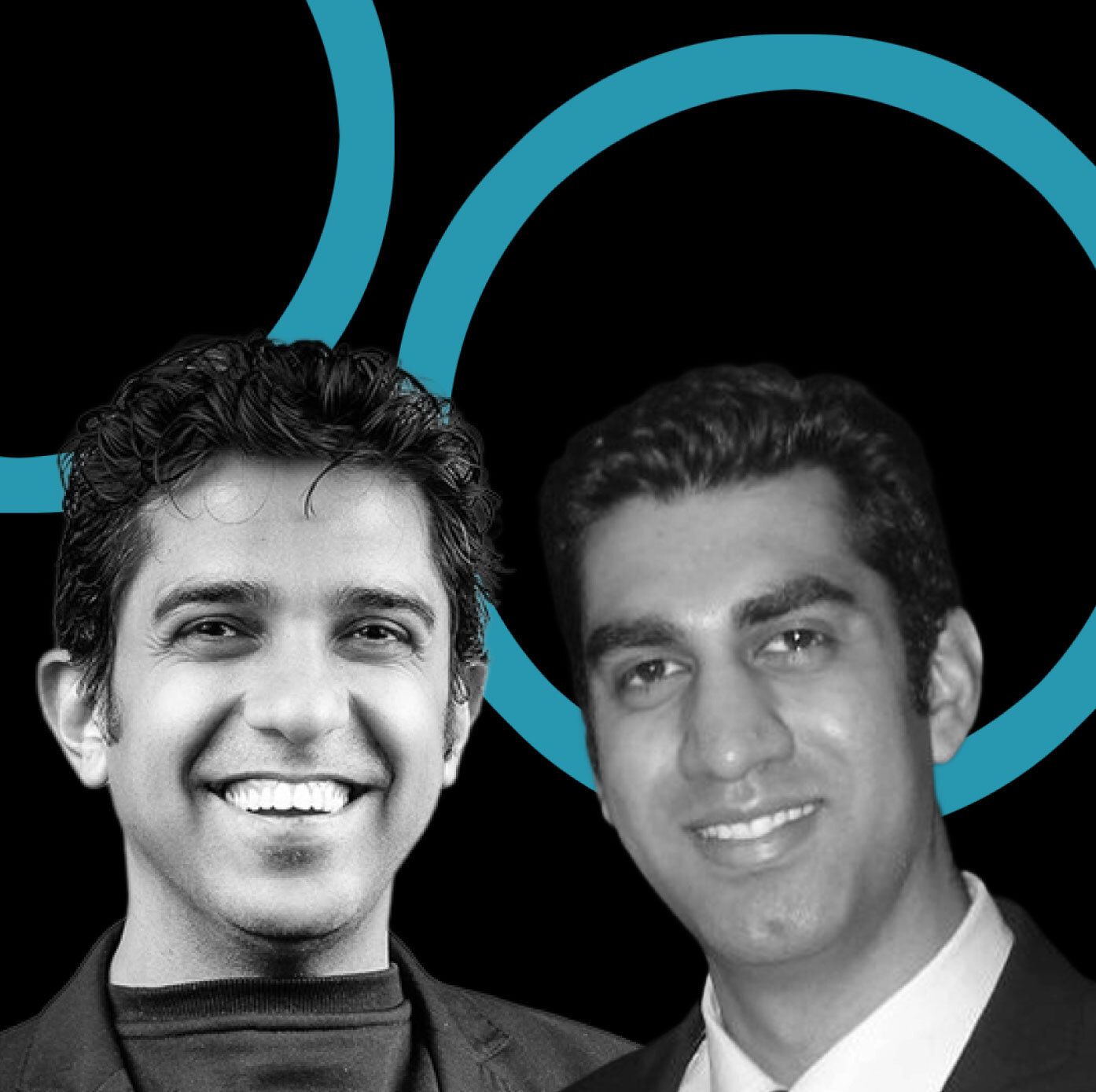
In this episode of the Zinnov Podcast, Aly Shivji, Group Vice President – Global Partner Sales and Engineering (GSI | Advisory | MSP | Hyperscaler) at Cisco, joins Rajat Kohli, Partner at Zinnov, for a grounded conversation on how the MSP model has evolved over the past 12 to 18 months. Drawing from his experience working closely with partners across global ecosystems, Aly shares why MSPs are increasingly moving upstream and how that shift is playing out in practice.
The discussion explores how leading MSPs are differentiating through business consulting upfront, hyperspecialization in high-demand capabilities, and building durable, long-term presence within customer organizations. It also examines the growing importance of security services, AI management, tool rationalization, and simplification, areas that customers increasingly value as complexity grows.
For technology leaders and partner ecosystem owners, this episode offers a clear view into what is changing within the MSP landscape, how platform companies and partners are adapting, and what it takes to remain relevant as ecosystems become more interconnected.
Tune in to hear the full conversation.
PODCAST TRANSCRIPT
Aly Shivji: The MSPs that I speak to are looking at how they can provide value to their customers, not just in outsourcing or resale capability, but how do we provide them strategy consulting upfront so that they are making decisions that make sense. MSP is an interesting space because it’s kind of a continuum of different capabilities so everything from providing managed staffing to being a full managed services provider. The opportunity for MSPs to really shine is to provide business consulting upfront, be hyperspecialized in a capability that is in demand, and then provide a durable presence in the account. So, it’s really an interesting space right now because even though we classify them as MSPs, managed service providers, they’re really moving into professional services, SI spaces, and advisory capabilities. That’s, I think, the best way to scale, to create ecosystem channels and build co-engineering partnerships where there is profitability on both sides.
Rajat Kohli: How would you characterize the best of the best MSPs in today’s world?
Aly Shivji: Trusted advisors. Know your customer well and be able to provide services that are hyper-focused and best-in-class.
Rajat Kohli: A lot of investments are taking place in the ecosystem. What has changed over the last 12 or 18 months, and suddenly a big focus on the MSP world?
Aly Shivji: Growth in enterprise has sort of stalled out, and MSP is a great way, at a low cost of sale, to activate customers that are in the commercial enterprise type space.
Rajat Kohli: Hi everyone. I’m Rajat Kohli, working in the capacity of Partner with Zinnov, a boutique strategy consulting firm. We are running the next series of the Business Resilience Podcast Series, and today we have Aly Shivji, Group Vice President with Cisco, but more than that, a close friend and into the tech industry veteran of more than 20 years. Aly, welcome to the podcast series.
Aly Shivji: Thanks, Rajat. Great to be here.
Rajat Kohli: It’ll be good for the audience to hear about you and all the experience you bring to the table from your day one.
Aly Shivji: Absolutely. My name is Aly Shivji. I lead global partner sales and tech teams at Cisco and Splunk. Before that, I spent 18 years at Microsoft. I’ve been a supporter of partners for as long as I can remember, and it’s exciting to be here.
Rajat Kohli: That’s great. I think this is a good moment where everyone is heavily focused on partnerships, especially MSPs, managed service provider, as an ecosystem that’s growing fast. It would be good to hear from you about the key changes you’re seeing in this ecosystem and the new trends emerging. To start with, for our audience, what exactly is an MSP and how has it changed over the years?
Aly Shivji: MSP is an interesting space. It’s a continuum of different capabilities, so everything from managed staffing providers to managed services providers, and everything in between. Some folks provide staffing; some folks provide more strategy-focused capabilities. The industry has seen a consolidation of those functions. I think the interesting thing is that the MSPs I speak to are looking for how to provide value to our customers beyond outsourcing and resale, bringing strategy consulting upfront, so that they’re making the decisions that make sense, rationalizing tools across IT infrastructure, and then building on top of that and creating some new IP. So, it’s an interesting space right now because even though you classify them as MSPs, managed service providers, they’re really moving into professional services, SI spaces, the advisory capabilities.
Rajat Kohli: Interesting. What I have seen, as part of Zinnov, is that there’s been a significant shift in the MSP ecosystem. Suddenly, there’s a lot of focus on the MSP partner ecosystem, a lot of investments are taking place in the ecosystem. What changed over the last 12 to 18 months?
Aly Shivji: I think it’s been happening for a while. A lot of the growth in enterprise stalled, and ecosystems are looking for value down-market. MSP is a low cost-of-sale way to activate commercial enterprise customers. So, I think that’s been happening for maybe five or six years now, but now we’re seeing a focus on software platforms, multi-tenancy, even like licensing capabilities to allow those MSPs to continue to provide value even now up the stack into enterprise. I think that’s something that has been happening for a while, but it’s growing up the stack.
Rajat Kohli: Interesting. And you touched upon the word ‘the enterprise’ and that the enterprise are looking for the low-costs, but if you look at an example of the Fortune 500 or Fortune 1000 companies, are they also keen to work and collaborate with MSPs, or is the next layer, which is like, large to the midsize enterprises or the SMBs, where is the maximum play of the MSP ecosystem?
Aly Shivji: It’s a point in time right now, And the point in time right now, I think is in that middle layer. But we do see a lot of these enterprises looking at capabilities that MSPs can provide at a low cost and a low research and development entry point. for instance, in our space, we see a lot of MSPs getting into the AI defence side of the house. How do we provide these capabilities to secure LLMs or to make our models more secure, that we’re developing, building that capability in house, really costly, potentially something that we don’t know what to do with a poison Dell alum, and having a managed service provider provide that capability is a great way to sort of enter into that market without actually investing a lot of that research and development.
Rajat Kohli: Interesting. You touched upon the IT infrastructure management, the security layer. Are these some of the key workloads that MSPs now are focused on? or are we missing on any other workloads?
Aly Shivji: Security. In our space, we talk to a lot of managed security service providers, and traditional MSPs, and the interesting thing is a lot of them are looking for what’s their differentiator. Security is such a ubiquitous term now, so is it security of the network as well or are they providing some network operations capabilities in addition to security operations capabilities we’re bringing those two capabilities together? Or is it them providing not just the IT service management, but also the application development, the transformation, the ability to sort of look at the tool set that a customer uses and say, Hey, you can consolidate those, you can optimize those, and in fact, you can innovate on some of the things that you already have value.
Rajat Kohli: Interesting. Is it more like a co-innovation, the powerhouse which is catering to all the different layers that a customer needs as you highlighted the IT infrastructure, all the security, all the application development. Is it catering to all the requirements that either the IT team or the CISO would have in their end?
Aly Shivji: Yeah, I think there’s still maturity that’s happening in the ecosystem so not all those requirements are being met, and I think that’s the opportunity for MSPs to really shine. Provide some business consulting upfront, really hyper specialize into a capability that is in demand, and then provide sort of that durable presence right in the account. Those three aspects, the best MSPs today, are taking advantage of all three, but there’s still some maturity that needs to be developed.
Rajat Kohli: Got it. If you look at from a partner ecosystem side, and you highlighted the word ‘the best MSPs’. How do you characterize the best of the best MSPs in today’s world. What is the playbook to be the best in the ecosystem?
Aly Shivji: Trusted advisors. Know your customer really, well and be able to provide services that are hyper-focused and best in class to those customers. I was talking to several MSPs at Cisco Partner Summit, I just came from there, and some of them are telcos and they’ve had these same customers for decades. How do you continue to provide value to a customer that you’ve had for decades? You know them well. They know you well. They know your capabilities, and it’s co-innovating together. It’s really looking at their business model and providing them guidance on where that business model should go. That’s not an area I’ve seen MSPs play in before, but a lot more of them are looking at their anchor tenants, their customers that they’ve had for years and moving into more of the business model transformation space and providing those capabilities to them. It’s more than just body shop.
Rajat Kohli: I understand. You’ve mentioned the Cisco partner offsite, so, in the last 48 hours, you’ve spoken to so many partner ecosystems. What are they saying? What are they demanding from the players? What are the key aspects they’re asking from the platform players?
Aly Shivji: I think we hear it loud and clear. Simplify it so that we can offer the best services to our customers and make it easier for us to manage your solutions, your software, then help us consolidate best of suite. That’s a conversation around the tool consolidation. We’re launching the new Cisco 360 partner program as a point-based system, and it’s something that we’ve seen, MSPs provide us some feedback on. Instead of having just like a route to market for specifically MSP, MSP is incorporated into all our Cisco 360 motions, And there’s aspects of MSP in every single one of the architectures. We’re trying to simplify it by making it so that the managed service providers can really focus on the value creation rather than understanding the program, understanding sort of aspects of how to leverage that program.
Rajat Kohli: In today’s role, in this tech ecosystem, when we speak to the partners, we see that there’s a heavy focus on the verticalization story as well. How we can build and position the right industry solutions aligned to those each sub uses cases. Do you see that in the MSP world also, when we say the simplification along with that, how we can tell that industry story or the use case story, do you see that as well?
Aly Shivji: I don’t see it in the simplification; I see it in the differentiation. Every bank is going to ask you, where have you have done this before in banking? And so, an MSP that focuses on that banking aspect is really going to hyperfocus on their customer base, their sort of what they’ve done to run the bank, what they’ve done to change the bank, and how they’ve provided value across that. I do think that industries are changing as well, and we don’t know where that’s going to land in the space of things that may be relevant in pharmaceutical manufacturing are also relevant on the shop floor, in other manufacturing spaces. Especially with the advent of generative ai, you can take those same models. I mean, it’s the same sort of math, associated with those models and apply it to different training data, different inferencing, and come up with a completely different use case using the same sort of skillset.
Rajat Kohli: And in today’s conversation, if you don’t speak about the agent AI and the generative ai, the story is incomplete. How do you see the MSPs reacting to the new and new developments happening every day I would say that are coming up? What are your takeaways on that?
Aly Shivji: It comes up every time. Every conversation as generative AI and regular AI associated with it. And in certain cases, it’s just the ML conversation that’s just been sort of rebranded. The way that we look at it, and I think it’s really interesting that a sort of a reflection on how MSPs can leverage ai as they need to help their customers be ready for a world where the AI use cases are proliferating and they’re not sure where they’re going to go. Provide that security and management for that AI, but then also how do you optimize your service? As we talked about tool rationalization, there’s also service rationalization. How can they offer the same value or even more value to their customers by leveraging AI. Both those are interesting conversations and we want to be able to address both of those so that the MSP can cover the gamut for a customer.
Rajat Kohli: Interesting. That’s very interesting. But if you look at a benchmark, like there’s MSP, and now we are seeing the sis are also becoming the MSPs. Why is that shift happening? What is the reason they are moving. Is it because of the recurring revenue, having more customer acquisition, what do you think? What are the key aspects behind that?
Aly Shivji: I call it different colours of money. Your system integration is your professional services and advisor colour of money, and then you have your managed services, which is another one, and then your sort of IP solution development. And I think, traditional SI firms are starting to see, hey, if I offer a managed service to my customer, I can have a durable presence in that account, and then I can continue to be a trusted advisor. I have data on some of the challenges and the problems, it’s really an easier sort of next gen sale, You can take a look at some of the things that are coming through your MSP platform, find the issues that the customer’s really experiencing, and then address those with some professional services. And then similarly on the managed services side, they’re not even getting the conversation without having sort of that business consulting conversation first, and so, there’s a little bit of that consolidation of those two models. And then the third one, which you didn’t ask about, but I think is important, is the building IP and the co-building solutions with customers. And I see a lot of both MSPs and sis moving in that direction, just so that they can provide a differentiated value.
Rajat Kohli: Okay. That’s interesting. So, it’s more on the co-build, that’s the focus. I’ll take an example, we’re seeing that there’s a heavy focus on the tri-party agreements, bringing the hyperscale, the platform companies or the ISVs, as well as the MSP ecosystem or the SI, how are you seeing that shaping the triparty collaboration or kind of the agreements?
Aly Shivji: That’s interesting. I think I read a statistic around like 85 billions of revenues are going to go through marketplaces in the next couple of years. So, you’re starting to see a lot of those marketplace type activities, customers wanting to buy on marketplace, and partners, sort of doing multi-party offers, and that’s where I think the trend is going towards. Building those multi-party offers so that the transaction’s easy for the customer, and the value is sort of stitched together already from the start.
Rajat Kohli: Interesting. And do you see any geo colours as well? Customers in North America versus Asia, versus Europe, do you see a different trend? The expectations of the customers from you and MSPs?
Aly Shivji: It’s interesting. What we’ve seen is like maybe a bifurcation of like how MSPs are selling to their customers, between America’s and EMEA. In America, we’ve seen a trend of managed service providers, basically managing the customer’s environment. The customer owns the license of the ISP solution, whereas in EMEA, we’re seeing MSPs doing more of the deal registration and selling the licenses directly to customers. And I think, there’s probably a secular trend to that as well as maybe an aspect of the types of customers that might be in the EMEA space.
Rajat Kohli: Interesting. If you look at the marketplace as one of the channels to win the customer versus the direct selling, and you touched upon the on-premises, that many of the customers are still on the on-premises. How do you see the future coming along? What are the key shifts that are going to take place over the next two years in this world?
Aly Shivji: I think it’s really a conversation around where is the data, and we really understand this from our Splunk perspective, which is for years we’ve been trying to bring the data into Splunk. And now we want to bring Splunk to the data where it is. 55% of the data out there is machine data, and it’s accelerating faster than we can analyses it. It’s really a physics problem of how much of that data are you going to ingest into a cloud-based service? How much are you going to keep on premise? How much are you going to keep in sort of the edge? There’s going to be solutions that data Lakehouse’s are serving hybrid approaches and that means that MSPs are going to have to deal with situations and customers that have everything, every aspect of that. All this type of data in the cloud, all of this type of data on premise, all this type of data in their own sort of data centres.
Rajat Kohli: Interesting. The last one that you mentioned, it’s more about the growth that you’re looking at, and as a leader, you must balance the growth with the nurturing of the partner ecosystem also. How do you ensure that?
Aly Shivji: That’s one of the hardest problems. I’ve been part of the development of two different partner programs now, both at Microsoft and at Cisco. There’s Neo Cloud and there’s new partners that you want to recruit and build the tent around. But there’s also partners that are strong partners for years. So, as we started to bring the Splunk and Cisco partner ecosystems together, for instance, we thought long and hard about how we make sure we really do right by the Splunk partners that have been building their whole business model on our product, and bring them to the Cisco ecosystem. You may have seen some of the announcements where at Cisco Partner Summit, a lot of the Cisco partners are now building Splunk practices, and so, there’s a merger of those, ideas and capabilities. And I think partnerships is a network, so the more partners we have in the ecosystem, the more value we’re creating for our customers. It’s a difficult balance to do, but we want to make sure that we do that balance thoughtfully.
Rajat Kohli: Interesting. If I ask you, what keeps you awake in the night?
Aly Shivji: I think, what I mentioned around that data is increasing faster than we can process it, and trying to figure out how we value that data from a training perspective or from an inference perspective. An example is network data super chatty? Do you need to bring all that network data in to do a security investigation? and we need to help our customers through that. Our partners are key to that. Providing that capability, that advisory, that approach to where should data live? the fact that we’re creating that data so much, I think that’s a problem that we have as scale. I think scale is our biggest problem as humanity. I mean, you go out to New York City traffic, and you notice that. That’s a problem that we’re going to have to tackle on head on, and I think it’s going to take the entire ecosystem to do that.
Rajat Kohli: When you look at solving this challenge, like ingesting and analysing the data, one is enabling the partners, Are there any other different elements? Other than the enablement, the partner enablement, any other aspect that should be considered?
Aly Shivji: Partner enablement is table stakes. I think our partners are demanding, not just enablement, but co-engineering. Look, I’ve got these adjacent use cases. I’ve got these customers that are demanding these types of things in industry, in horizontal, in solutions. How do we co engineer, how do we co-innovate together so that our partners are able to meet that moment? And that’s providing them with tools, resources, APIs, MCP servers to really take advantage, even just publishing models. To say, okay, here’s where you can build your AI agents on top of, I think that’s where we’re trying to do things more than just the partner enablement. It’s partner co-engineering and partner innovation.
Rajat Kohli: Interesting. As you’re like a partner leader, what is your advice to the other partner leaders? What are the skill sets needed by a partner leader like you? And in today’s world, managing the partner ecosystem, managing the business, defining the go-to market strategy, what are the skill sets needed by leaders like you?
Aly Shivji: I’m a big believer in getting out of your own building. Don’t go to just your own conferences. Things like this where we’re talking about, sort of the ecosystem or the industry as a large, because it allows you to talk to different partners that you don’t talk to on a regular basis, and to access customers that you haven’t had access to. So, get out of your own building, I think is one of them. the second thing is that you mentioned it a little bit earlier, you want to nurture both the new partners and recruit those as well as support your long running partners. And both are evolving, and so, to make sure that you maintain that balance, there’s different ways to do that. But, if you take an active approach to that, I think that’s important. And then third, continue to hire the best talent. Partnerships is a space where people have relationships that they’ve had for years and kind of move out to different companies. That network doesn’t go away. It only continues to expand. And so, bring in people who have those relationships that you don’t have, and continue to hire that talent. I think that’s super important. Those are the things that are important to us.
Rajat Kohli: In this ecosystem, you highlighted the hyperscale’s, you mentioned about the AWS of the world or other players, but there could be any new entrant in this ecosystem, which we are not thinking of as of now. Other than the hyperscale’s or the ISVs or the telcos, do you see any emergence of any new entity in this ecosystem?
Aly Shivji: Absolutely. Some of the AI native companies are that, and I think they’re building some of those ecosystems as we speak. And it’s a novel sort of space. We’re still learning on what partnerships succeed there. It’s exciting to kind of see that. Because again, like I said, partnerships, it’s not a zero-sum game. If they’re able to create value in a differentiated channel, everyone wants access to models. How do we co build those models? That’s a new motion for every company that’s out there, and that’s bringing together, software companies, hardware companies, security companies, MSPs, sis, to really rally around that model. I think those are the types of partnerships that are new.
Rajat Kohli: Awesome. This is wonderful. I think this is a wonderful podcast with Aly so much to learn that a lot of work needs to be done beyond the co-market. It’s more on the co-engineering. We need a lot of specialization in these areas, and we see the advancements of AI is helping in selling that as a solution as well as internally optimizing on this. This is a wonderful discussion. Thank you, Aly, for your time today. Thank you
Aly Shivji: Thank you. Great to be here.
Rajat Kohli: Thank you. We’ll be back soon. Take care.

A candid conversation with Pratik Nath, Managing Director at Epsilon India, on leadership trade-offs, AI fluency, and building GCCs that create real impact.
Ajay Singh, CPO at Pure Storage, shares how AI is reshaping product management, trust, and leadership, without replacing human judgment.
Don’t miss any of our future episodes!
Also subscribe to the Zinnov Podcast on these platforms






A candid conversation with Pratik Nath, Managing Director at Epsilon India, on leadership trade-offs, AI fluency, and building GCCs that create real impact.
Ajay Singh, CPO at Pure Storage, shares how AI is reshaping product management, trust, and leadership, without replacing human judgment.
 THANK YOU
FOR YOUR RESPONSE
THANK YOU
FOR YOUR RESPONSE