




BACK TO Business Resilience
ZINNOV PODCAST | Business Resilience


|
|
“Technology shouldn’t support the business. It should be the business.”
As technology becomes inseparable from how companies operate, the role of the CIO is being fundamentally redefined. Today’s leaders are navigating growing complexity, diverse business models, rapid AI adoption, rising cyber risk, and globally distributed teams, while still being expected to deliver speed, resilience, and measurable outcomes.
In this episode, Andrea Bergamini, CIO, Orbia, joins Karthik Padmanabhan, Managing Partner, Zinnov, for a candid conversation on what it truly takes to lead technology in a purpose-driven, multi-business global enterprise.
Andrea shares his unconventional journey across GE, Heineken, Cargill, and Orbia, and how building cybersecurity from scratch as a Greenfield CISO shaped his philosophy of owning mission-critical capabilities. He explains how Orbia structures technology around a strong core foundation while embedding IT deeply into each business, moving beyond “alignment” toward operating technology as the business itself.
The conversation also explores Orbia’s pragmatic approach to AI, balancing productivity enablement, citizen development, and advanced use cases—along with the role of Global Capability Centers in building long-term innovation and talent strength. Andrea reflects on leading through uncertainty, the growing democratization of technology, and why resilience and adaptability are now defining leadership traits.
This episode offers a grounded perspective on modern technology leadership, where transformation is continuous, experimentation is essential, and success is measured not by tools adopted, but by outcomes delivered.
Tune in to hear:
PODCAST TRANSCRIPT
Karthik Padmanabhan:
Hello and welcome to another episode of the Zinnov Podcast. My name is Karthik Padmanabhan. I’m a Managing Partner at Zinnov, and I’m thrilled to be joined today by Andrea Bergamini, the CIO of Orbia.
Andrea has seen technology unfold across many lenses. He’s had a career spanning GE, Heineken, Cargill, and now Orbia. He plays a complex role shaping technology at Orbia, and beyond that, he’s a lifelong learner with three master’s degrees and a fourth underway.
Great to have you here, Andrea. Orbia is a very complex organization — can you give us a quick 30-second introduction?
Andrea Bergamini:
I’ll try. Orbia is a group of businesses unified by a single purpose — advancing life around the world. You can think of it as a combination of businesses that address sustainability goals or help make cities more resilient.
For example, within Orbia we address water scarcity through precision agriculture. On the urban side, we focus on making cities resilient by offering water management solutions for storms and climate impact.
Karthik Padmanabhan:
That sounds complex. Before we go deeper into Orbia, your journey has been just as diverse. Walk us through the experiences that shaped you.
Andrea Bergamini:
You can’t connect the dots forward — only backward. When I graduated, there was no cybersecurity program. I’m a telecom engineer by training, by degree, and by nature.
The career choices I made were about discovering what I liked — about companies and about technology.
I worked across industries and roles. I started in IT, then moved into audit at GE — that was also my first time in India.
I was part of GE’s third-party risk program and visited many large IT providers across India. Through that journey, I went deep into cybersecurity, which became my core expertise.
When I joined Orbia, it was a greenfield CISO role — no team, no structure. Building that from scratch in a multi-billion-dollar company was intense.
From there, I moved into infrastructure and ultimately took on the CIO role in February.
Karthik Padmanabhan:
Given Orbia’s diversity — agriculture, water, chemicals — how do you prioritize? How do you create a CIO agenda that works across businesses?
Andrea Bergamini:
I think about it in layers. First are what we call the brilliant basics, foundational aspects of IT.
They’re not business-specific. They’re your license to operate: cybersecurity, infrastructure, cost discipline.
Then there’s Business IT. Different businesses have very different needs, so we structure IT to stay intimate with each one while maintaining a scalable core.
The aspiration is to be operators alongside the business, not just aligned partners.
Manufacturing isn’t aligned to the business — it is the business. That’s where we want IT to be.
Karthik Padmanabhan:
How do you convey this vision across global teams?
Andrea Bergamini:
It’s a journey. It starts with clearly articulating the vision and structuring the organization to support it.
We focus more on the “how” than the “what” — behaviors, interactions, and decision-making. That’s a long-term investment.
Karthik Padmanabhan:
Technology keeps changing faster. How do you build strategy in that environment?
Andrea Bergamini:
Technology is more accessible, which means business leaders are more tech-savvy. You have to anchor everything back to business outcomes.
If you chase technology itself, you’ll get paralyzed by constant change.
Karthik Padmanabhan:
Where is Orbia in the AI adoption lifecycle?
Andrea Bergamini:
We look at AI across three pillars: productivity for everyone, advanced power users, and advanced use cases.
Andrea Bergamini:
In IT and cybersecurity, we’re moving fast — deploying AI agents, automating access management, and rethinking security operations.
Karthik Padmanabhan:
That’s it for IT. Perfect. Now, that brings us to building capabilities. It obviously reminds me of a capability center that you’re sitting in right now, which is the Orbia Global Capability Center. Tell us about the Orbia Global Capability Center. What’s your vision for the center? What do you think about it?
Karthik Padmanabhan:
If you were to articulate your goals for the next year or two, what would they be?
Andrea Bergamini:
Yeah, I would think about it in two parts. On one side, if you think about how Orbia grew — it grew organically, and some of it through acquisitions. What that meant was that the IT function also grew that way. So we were a collection of IT teams coming from all these different brands.
One of the things we really wanted to do differently now was to be intentional about what talent we have and where we have it. We never had a location strategy. So think of Orbia Pune as a very clear intent around that location strategy.
We want to have a few key hubs, and this will be the most important one where we harness talent — and that’s a change for Orbia. It used to be that talent was wherever it happened to be. So think of this as an intentional investment in talent, aligned with what I said earlier — that we want to do more with our own talent, instead of relying heavily on outsourcers or partners.
Now, specifically for the Pune center, beyond being a hub for the world — as I said, they are an integral part of Orbia IT. They’re not an island; they’re fully embedded in the rest of the organization.
I specifically want this center to become a hub for innovation around data, AI, and digital technologies. What that means is that we already have, and will continue to build, talent across all aspects of IT and cybersecurity here.
But more importantly, I want this to be a place for experimentation and innovation in a way that we don’t have anywhere else.
Karthik Padmanabhan:
Absolutely. And I’m sure the Pune center will become that, Andrea. It will cut across everything, and I’m sure you’ll see it become a hub of innovation and growth.
That’s great. Let’s now move away from the classic technology story and the GCC discussion. I want to talk about leadership behaviors.
Karthik Padmanabhan:
As a CIO, over your many years of experience, you’ve adapted, changed, and grown. Some things have remained constant. What are the core things that haven’t changed, and what are the things you’ve had to adapt over time?
Andrea Bergamini:
One trait that has changed over time — and more so recently — is resilience. That word stands out to me more than it ever did before.
The reason I say that is because it’s been a challenging time for many companies, and for technology functions in particular. Without getting into geopolitics, it takes a toll on leaders and on people.
The ability to transmit a sense of resilience — whether it’s your own trait or how you help your teams build it — creates a very adaptable and resilient organization. That’s something I believe has grown in importance as uncertainty has increased.
That’s one aspect. Other traits like agility and partnering have evolved over time — you mentioned some of those already. What has shifted again is the fact that today, you’re a technologist in a world of technologists.
That means the way you partner with the business, align with them, and operate with them is changing. There’s more savviness, more curiosity than ever before, and more democratization of technology knowledge.
Karthik Padmanabhan:
Exactly. And coming from a consulting background myself, today everyone has access to research, data, and insights. People know far more than they used to, so consultants are getting challenged as well. I completely resonate with what you just said.
Karthik Padmanabhan:
In terms of where things stand right now, we’re shifting gears. We’re moving into high-speed gear. We’re going to do a rapid-fire round — four or five questions, very fast, quick answers. Whatever comes top of mind, that’s all that matters.
So, a bold decision you took in your career that shaped who you are today?
Andrea Bergamini:
One decision I made when I was at Cargill was driving the insourcing of a very critical operation. It was the first time in my career — more than ten years ago now — that I took an established capability and internalized it. It really planted a seed in my mind.
For things you believe are mission-critical, you want to invest in your own people, your own technology, and your own IP. It was my first attempt at doing that, and I was new to cybersecurity operations at the time. It really built my confidence in tackling challenges like that — something I still apply every day.
Karthik Padmanabhan:
On the same note, a word of advice for aspiring CIOs. What would you ask them to do?
Andrea Bergamini:
Interesting. I would say no matter what path you’ve taken, you have a chance to become one. In the past, there were very traditional paths to becoming a CIO.
If you look at my profile, I’m not a traditional candidate. You wouldn’t have said, “That’s the next CIO of Orbia.” But no matter what career background you have, if your aspiration is to lead an entire technology function, that is within your reach.
There’s richness in every background. I’m very untraditional — and I would argue successful — but that may not have been the case in the past.
Karthik Padmanabhan:
That’s a great lesson for everyone. Multiple paths, and it’s a great time to be a CIO.
Andrea Bergamini:
I think so. And that hasn’t always been the case.
Karthik Padmanabhan:
Do you think AI is going to take jobs?
Andrea Bergamini:
It will change my job — that’s the simple answer. Jobs will be different, just like with any disruptive technology. And it should change every job.
Like anything else, it looks worse before it looks better. From a perception standpoint, this has happened many times before. This is no different. People will reinvent themselves, and new opportunities will emerge.
By the way, the way I do my job today is already different — I’m fully Copilot-enabled.
Karthik Padmanabhan:
A personal ritual that keeps you ticking every day?
Andrea Bergamini:
Can I mention a couple? On one side, ever since I became a CIO, I’ve focused on fitness and health. I run a lot. No matter what, I make time to run.
I solve problems as I run — it’s almost a form of meditation for me. It’s been a real shift that started in February of this year.
Karthik Padmanabhan:
Long distance?
Andrea Bergamini:
Yes, endurance running — marathon-style. We’ll see where it goes.
The second thing is very different — astronomy. I’m an astrophotographer by hobby. I don’t get as much time now, but thankfully the sky doesn’t go anywhere.
It’s a reminder that we’re very small in the grand scheme of things. We should be kind to each other, take things with a grain of salt, and not take ourselves too seriously.
The balance between the suffering of a run and looking at the sky really keeps me grounded.
Karthik Padmanabhan:
Absolutely fascinating. Last one — three words your team would use to describe you.
Andrea Bergamini:
That’s a tough one. Those three words have changed over time.
Historically, I probably came across as high-pace and results-oriented. I take that as a compliment, but also recognize it can be a shortfall. It’s a strength, but it has trade-offs.
What I hope they would say one day is that I’m more people-oriented — focused on the team and their well-being. I think they probably say both.
Karthik Padmanabhan:
People-oriented and results-oriented.
Andrea Bergamini:
Exactly — and I’ve been working very deliberately on that second dimension over the last two years.
Karthik Padmanabhan:
Wonderful. Such a fascinating conversation. Thank you so much, Andrea. I wish we could continue, but we’ve come to the end of this episode.
Thank you to everyone listening. I’m sure you found this valuable — understanding Andrea as a leader, his journey, and the insights he shared.
Thank you once again. Thank you, Andrea.
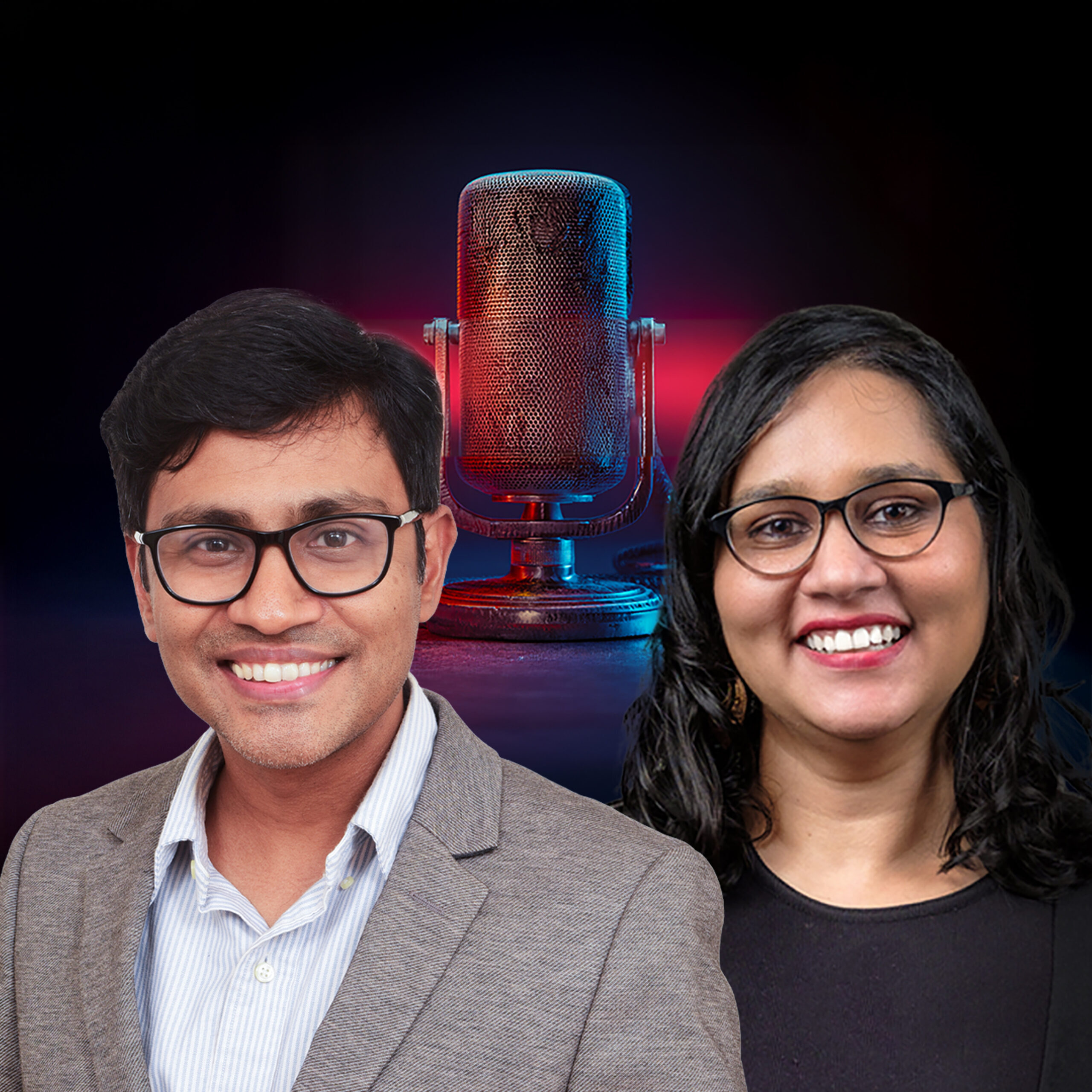
A candid conversation with Pratik Nath, Managing Director at Epsilon India, on leadership trade-offs, AI fluency, and building GCCs that create real impact.
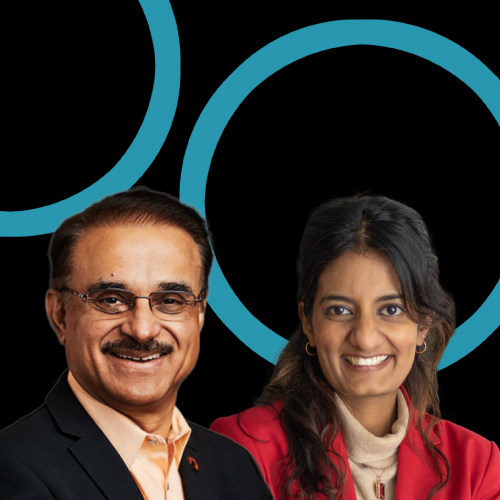
Ajay Singh, CPO at Pure Storage, shares how AI is reshaping product management, trust, and leadership, without replacing human judgment.
Don’t miss any of our future episodes!
Also subscribe to the Zinnov Podcast on these platforms






A candid conversation with Pratik Nath, Managing Director at Epsilon India, on leadership trade-offs, AI fluency, and building GCCs that create real impact.
Ajay Singh, CPO at Pure Storage, shares how AI is reshaping product management, trust, and leadership, without replacing human judgment.
 THANK YOU
FOR YOUR RESPONSE
THANK YOU
FOR YOUR RESPONSE