



BACK TO Business Resilience
ZINNOV PODCAST | Business Resilience


|
|
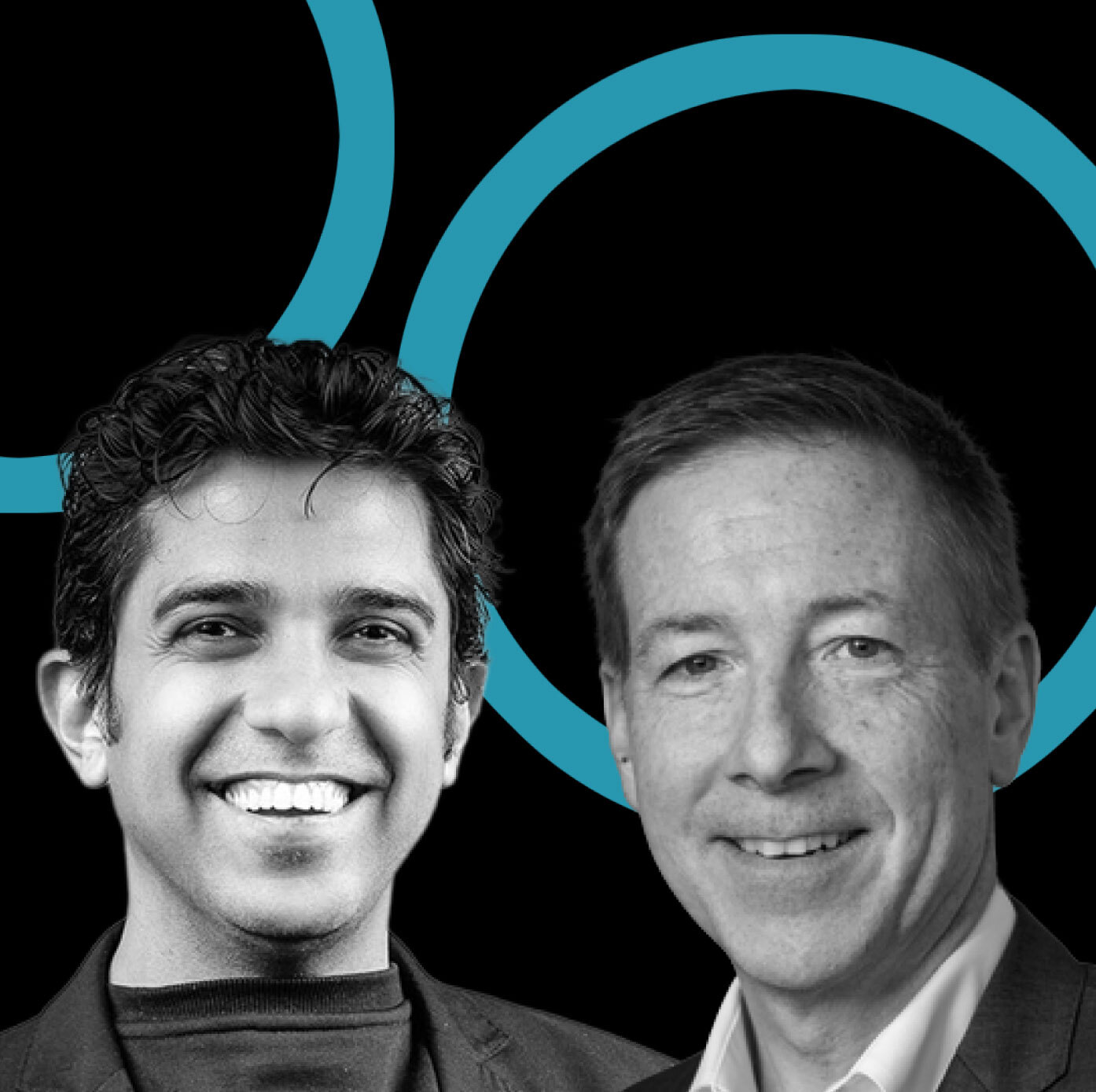
Financial services has long been the benchmark for trust, scale, and regulation. But in an age where innovation moves faster than policy, the sector is rewriting its own rulebook. In this episode of Zinnov Podcast, John Kain, Head of Financial Services Market Development at Amazon Web Services (AWS), joins Rajat Kohli, Partner at Zinnov, to unpack how cloud, data, and AI are reshaping the foundations of modern finance.
From the democratization of innovation through the cloud to the rise of “buy now, pay later,” John reveals how the industry’s biggest disruptors are powered not just by technology, but by the courage to rethink legacy processes. He explores how generative AI is transforming compliance, risk, and customer experience, and why governance, trust, and explainability must evolve alongside innovation.
The conversation dives deep into what’s next: agentic systems that will redefine financial workflows, open ecosystems that demand new forms of partnership, and the strategic shifts enterprises must embrace to turn experimentation into enterprise-grade production.
For anyone navigating the intersection of finance, cloud, and AI, this episode offers a front-row view into how technology leaders are re-architecting the future of financial services, from capital expenditure to continuous innovation.
Tune in now.
PODCAST TRANSCRIPT
John Kain: Financial services has transformed. What fundamentally has changed is that the cost of innovation has gone down dramatically.
Firms have been able to look at technology as part of a, instead of a large capital expenditure, as something operational expense they can build into their business. When I think about something like Buy Now, Pay Later, that’s all driven by large scale machine learning analytics in the background.
Rajat Kohli: Financial services is a factor of trust, risk, and regulation. Are there any specific use cases or specific business groups where you see it’s a big challenge to apply these kind of emerging technologies like Gen AI and it’s going to take many more years?
John Kain: One is the challenge of moving these early applications into production at scale. That’s a real platform challenge, right? And the second one is from a use case perspective. Generative AI is really good at things that have been done before, right? So if you don’t have a strong enterprise data architecture to bring to these generative AI applications, they don’t tend to work well, but the technology is changing so quickly, I do feel for the CTOs at our customers when they think about, okay, what’s the point in time that I want to invest and say, this is the stack that I want to build on because the stack is changing so quickly.
Rajat Kohli: Do you think so the human emotions can be replaced by AI?
John Kain: I think the human judgment becomes even more valuable, and I actually think that judgment becomes more important and the tools enabling the person to make those decisions become more powerful.
The question is how are you going to trust those portals to make those decisions for you. I think that’s actually going to be the real challenge about consumer adoption in the future.
Rajat Kohli: Welcome to another episode of Zinnov Podcast. I’m Rajat Kohli, partner at Zinnov, a boutique strategy consulting firm working largely with the hyperscalers as well as large and mid-size ISVs to define their business acceleration and partnership strategy. I’m excited about the conversation today with John Kain. He is the worldwide head of business development for financial services at Amazon Web Services. In his role, he takes care of the overall strategy and go-to-market to bring financial services business globally.
Welcome to the podcast, John.
John Kain: Thank you very much.
Rajat Kohli: Excited about this conversation.
Rajat Kohli: It is a regulated industry, the financial services and I would say one of the early adopters of technology, not only legacy but advanced technologies like Gen AI, blockchain, and cloud. How do you see the trends shaping up in the last one or two decades? How do you put it in your thoughts?
John Kain: So much of financial services has transformed over the last few decades. If you think back in periods of time, so much of the process was still in person, in paper, kind of driven by legacy processes. I think you could look back particularly over the last decade or a half, and particularly from my experience leveraging AWS from a business innovation perspective. What fundamentally has changed is that the cost of innovation has gone down dramatically. The access to technology has really been more democratized across firms, and so we’ve seen this continuous movement to a more digital experience across all segments of financial services, whether that’s banking, insurance, capital markets, payments, where there’s such tremendous amount of innovation going on today.
Firms have been able to look at technology as part of a, instead of a large capital expenditure, as something operational expense they can build into their business. And what that allows them to do is experiment with new business models to change the way we offer services. And I think particularly if you look at the FinTech space, probably some of the earliest adopters there to actually drive that change.
And whether it’s somebody like Robinhood who reimagined what sort of retail investing could be like and then dramatically changed the price point. When I first started in the industry, not only was trading expensive from a transaction perspective, the margins and spreads were quite wide.
And now you have an entrant who had a new vision about how they could serve their customers at a completely different price point, making money within sort of the bid-ask spread. And when you start, you’re never really sure you’re going to be successful. And the ability to be able to scale up your infrastructure to meet millions of users as you get them, as opposed to having to predict what that looks like a three- to five-year horizon, fundamentally transforms what you can do from a business innovation perspective, but also from a global scale.
And then particularly with cloud’s global footprint, you have that ability to also scale internationally so you can enter new markets without having to make those investments from both a telecom and infrastructure perspective, but from a personnel perspective. And I think that’s just helped the entire industry be a little bit more innovative. When we see things like real-time payments entering the space, it gives you that ability to adapt quickly for that.
John Kain: Certainly over the last seven or eight years, machine learning has been an integral part of being able to reduce cost and friction in the industry. We don’t think twice now when we can onboard through our mobile device: look at our camera and that’s gonna take a picture of me. It’s gonna match an image with the database in the back end. It’s gonna scan my passport or my driver’s license and sort of match that up. That’s all machine learning driven technology. And those things have just become default in the way we experience financial services today. We saw that certainly during the pandemic, when you’re thinking about all the PPP loans that were going out there and the new KYC and onboarding processes that people had to build.
The ability to try a document management service that’ll scan documents, get the critical information and allow you to actually make a lending decision was great from a time-to-market perspective, but also think about the economics. Those tranches only opened up for short periods of time, and you had an infrastructure that could quickly solve the problem, scale up, and then back down with the business opportunity and then do that again when you needed it.
It’s the same thing we’ve seen in the mortgage refinancing space, right? The ability to tie advanced technologies, aligning the cost to your business, and then kind of moving that forward. And we’ve only just touched on generative AI and its impacts to the industry.
And again, an area where it’s really hard to imagine that there are a whole lot of enterprises that are going to want to build their own foundational models or sort of global inference engines. It’s just fundamentally a different way to think about technology innovation within the industry. And so it’s been very exciting, at least from a cloud perspective over the last 15 years, and I expect the next 15 are going to be equally as exciting.
Rajat Kohli: Interesting. You touch upon the technology innovation and looking at the financial services, it’s one of the largest industries from a tech adoption perspective. And over the last couple of years, we have seen a lot of surprises happening from this industry in product innovation. How much credit is given to the technology and the workloads that are being provided to this industry in that innovation cycle?
John Kain: You know, that’s a good question. When I think about something like Buy Now, Pay Later, which I think is actually one of those, even though it’s not a new product, the way it’s being delivered fundamentally transforms its value. If you’re a firm like Klarna, that’s offering a real-time loan essentially at point of sale embedded within retail channels. That’s all driven by large scale machine learning analytics. In the background, models on what’s my risk with the customer, what do they already transact with, what are their existing credit scores, and how do I, within a few hundred milliseconds, actually make a decision on whether I wanna make that Buy Now, Pay Later offering at the retail channel.
That’s all technology driven. And the ability to actually personalize that lending experience fundamentally is a technology and data challenge more than it is a product challenge, but rethinking the data you have access to and your ability to process it at scale changes the way you can think about how value product is.
And then secondly, the ability to embed that into retail channels at a global scale. And I think we’ve seen this more broadly: increasingly banking services being offered as a service to be embedded in other value chains fundamentally changes the way customers experience financial services.
So not only are you thinking about how can I innovate from a product perspective, but you’re thinking about how do I innovate in the way my customers will actually access them and integrate as opposed to them having to go externally out. Again, a data and scale challenge.
Rajat Kohli: Interesting. You touch upon the customer experience. So the personalization, are there any other areas outside of the customer experience where you see the applicability of this emerging technology would be widespread and the impact would be much, much larger? Any thoughts around that?
John Kain: Sure. Many financial services processes, whether we like to admit them or not, we’re still somewhat right, heavily human, heavily process oriented.
And those are some of the areas that we’ve seen some of the biggest fundamental changes. So anti-money laundering is a great example. We really haven’t seen firms be comfortable from a regulatory perspective of using either deep learning or generative AI to generate any money laundering alerts or fraud alerts.
They really want that part of the process to be very well explained. But if you’re an investigator investigating whether that alert is a real area of concern or maybe a false positive, the ability to aggregate the information you would typically use in an anti-money laundering investigation, summarize those results, and give some context to the alert.
Firms like Verafin had seen an 80 to 90% reduction in the amount of human time it takes to analyze those alerts. If you are familiar with the industry, so much of the alerting is false positive that it’s a tremendous amount of efficiency savings, and they get to dedicate their time to where there’s real areas of fraud.
We’ve seen that across the compliance space as well. Even changes in regulations. We have customers that will scan changes in regulations, analyze what’s changing the regulation, compare it to their own policy documents internally, and then say, actually this new regulation, we either think we do or don’t have a procedure to govern it.
If we don’t, maybe this would work and maybe not. That doesn’t seem like a huge thing. It takes a process that would’ve taken someone usually a week to get to and figure out and get the research. Something that within an hour someone’s got a pretty good summary and some tangible anchors from a document and policy perspective to accelerate those.
So all of that’s going on. You’re seeing the same thing. Maybe this is a touch customer experience, but the mortgage origination, mortgage processing side, claims, and insurance first notice of loss. Any of these workflows that are naturally much smaller sets of steps that work in tandem with each other and are very document and data driven are ones that have been ripe for acceleration from a generative AI perspective.
We’ve got multiple customers who have seen the benefits in both those channels.
Both from increased conversion rates, three X conversion rates on mortgage origination, by taking all that friction out of the process of actually having to apply for a mortgage. I think those are just a few of them.
And then there’s a whole technology transformation that’s going on, not just from a software development perspective. If you look at customers like Fitch or DTCC, they’re claiming 20 to 40% acceleration in their development processes.
Now you’re also seeing the technologies bridge to the product development process, where you can enter prompts from a business process perspective and actually see that get to a first pass at technical requirements.
And it’s actually bringing together the product folks and the technology folks within the organization in a much more collaborative approach, which is not just accelerating the technical development but also the product definition.
And I think that is some of the areas that the technology groups within our customers are excited about because it gives them a new way to serve their business more effectively and more efficiently, while still maintaining that governance that is required in financial services, from business requirements to what are the actual design elements, who signed off on it, who tested it, who built the test cases. All of that becomes much more streamlined. And it is work that most people don’t particularly enjoy.
And so the ability to automate that accelerates the product development process, but also makes the employee experience considerably better.
If we went through and thought through it, there’s just so many areas that we’re seeing generative AI make big differences.
Investment research is probably one where I should call out. Investment firms are taking the investment approach they had traditionally and automating some of it from a data collection perspective. That gives them the ability to scale globally.
There’s really no barrier to thinking about; do I trade instruments in other markets, how do research other companies. I don’t have to worry about language translation as much. You don’t have to worry about the global scale of collecting things. I can back test across multiple markets and deploy strategies.
And that’s fundamentally changing the way data providers are offering products to the industry. If you look at like S&P, Moody’s, or FactSet, taking a generative AI forward approach and making their data accessible to other models through tools.
So big change through the agentic development through MCP servers to make those tools available to large language models, so you get access to real time information as opposed to when the model was trained.
Each of those providers is exposing their data sets and analytics exposed to that, and it’s an exciting new way of developing applications for financial services.
Rajat Kohli: But John, if you look at from the other side, the other side of the coin, I’m sure there are many limitations on the applicability of the technology. You touched upon the compliance aspect. Are there any specific use cases or specific business growth where you see it’s a big challenge to apply these kind of emerging technologies like Gen AI and it’s going to take many more years?
John Kain: I don’t think it’s many more years. So I think of it as two challenges. One is the challenge of moving these early applications into production at scale. I mentioned a little earlier that we’ve seen the move from application development from very kind of broad, hopefully a large language model will solve a very complex process.
And even with the improvements in reasoning, there’s limits to how that’s done. And so we see the agent approach is where many of the agents in the industry should be good at three to five particular topics. And then if beyond that, you should probably develop another agent.
But thinking about now I’ve got all these agents participating in workflow. Thinking about how do I manage that at scale? How do I deploy them safely? How do I make sure information isn’t leaking between agents? How do I make sure I have observability into how decision making is actually being done, and then how do I think about distributing that at a global scale to customers that could be accessing them from anywhere in the world?
One of the big beliefs that we have in the approach to generative AI is we’re still very early from a technology perspective. If you look at what’s occurring from a model capability perspective, every year it’s a major leap in what those capabilities are. So once we have the best capabilities, they’re actually leaping ahead of each other.
And so you want to be open from a platform perspective to make sure you’re giving your customers choice of models. The agentic area is evolving so quickly. You also want to give customers the choice of which agentic frameworks to use, whether that’s open source or other, so they can pick the ones that work best for them. People want access to all the models.
Having an open enough framework that allows you to take some of those best practices from an agent security and guardrails perspective and apply that wherever your customers need them, I think that’s critical for us.
And the second one is from a use case perspective. Generative AI is really good at things that have been done before, where it’s got something to train on and there’s a history, and also where you as an organization have a strong knowledge base. Data really does end up being the key to enabling these workloads.
So if you don’t have a strong enterprise data architecture to bring to these generative AI applications, they don’t tend to work well. The more unique the business case is, the less something’s been done before, the less likely that generative AI is going to solve the problem. Happily with ideation and thinking about how you might approach it, but the idea that you’ll automate something that hasn’t been done before is pretty low likelihood.
Rajat Kohli: What are the key points that are discussed in the boardroom of your customers? What are their key priorities or what are they trying to solve?
John Kain: Very much. The approach to generative AI now is, what is the impact it’s going to make on my business? And while I think people are equally excited about the automation opportunities, it’s really where are the opportunities to think about generative AI from a net new revenue generation potential.
One of the areas like S&P had gone into a very long history of creating credit ratings for public companies. You could look at their earnings reports as well as public information and determine their credit rating. There’s a huge exploding private credit market with a large number of companies that aren’t public.
One of the use cases they thought about from a business expansion perspective is, how do I look at the broad set of public data that’s out there and collect public data that would allow me to do credit in a more effective way? I think there’s equal pressure now from a board perspective to not just think about this as an efficiency play, but to think about how do I use it to expand into new businesses and drive innovation within the organization.
Because it is financial services, it still has to meet regulatory, security, and compliance needs. So there’s always that balancing of how fast you can execute.
Rajat Kohli: Interesting. I think the audience would be keen to learn because over the last couple of months, everyone is talking about the POC to production.
John Kain: Yes.
Rajat Kohli: How much is a success rate? And it’s not only in the regulated industries, but also in the non-regulated industries. We see it’s at a very lower rate. What are the reasons behind that? And what should be the playbook going forward for the hyperscaler world or for the partnership world, so that the success rate should be much higher? What is the playbook?
John Kain: I think there’s two things to think about. I actually think the success rates are higher than people are publishing. I’ve seen the research, and at least in our experience it’s a bit better.
That being said, and this is something we saw in the early stages of cloud adoption too, you don’t want to have experiments for the sake of experimenting. It’s very easy from a technology perspective to do small proofs of concept to get your hands on the technology, but they don’t really matter from a business outcomes perspective.
Typically those projects are abandoned because even if they’re successful, they don’t have real business impact. Some of the things we talked about, the investments you have to make as a financial services organization to create the platform from a security, compliance, and governance process, are significant.
Certainly we help, but there’s still evaluation of the platform, the tools, understanding the controls and governance. That’s a real investment. If the proof of concept you’re running doesn’t fundamentally change the way the business is operating, it’s easy to put it on the side.
I suspect there’s a large category of proofs of concept that don’t go to production not because you couldn’t get them to production, but because they probably didn’t deserve to be in production in the first place.
The second is that you do have to do the work from a foundations perspective to get to production. A lot of the things we’ve already talked about are fundamental to being successful at scale. Even if you have a good proof of concept that makes it to production once, you want to make sure the investments you’ve made taking that first application to production are ones you can repeat for multiple applications after that.
I think that’s where a good part of the industry is right now, taking those early successes from initial productions and figuring out what’s the right platform to do that at scale.
John Kain: But the technology is changing so quickly. I do feel for the CTOs at our customers when they think about, okay, what’s the point in time that I want to invest and say, this is the stack that I want to build on, because the stack is changing so quickly.
Even if you see the evolution, like in the investment research space, two years ago a good example would have been, I have a big corporate data set, I need to pull a set of data for my investment research report. How do I go do that? You could ask the question, it would write the SQL query, it would bring the data back, and you could download your spreadsheet and be on your way.
Last year it would have been, I have a research assistant where I can ask a research question and it can actually come back with results that look like a first-year analyst.
Now you’re seeing processes that are so automated that you can say, write me a credit memo for this company. It breaks it down into multiple different agentic steps. Those agents work with each other, and you’re getting real efficiency.
And that’s just in the span of two years. So the technology is evolving quickly. I think our ability to get to production at scale is getting to the point where the tools and the frameworks are becoming common enough.
Rajat Kohli: Interesting. And at Zinnov, we are heavily focused on partnership and channel strategy. I believe the investments and focus on partnerships decide the pace of adoption in the industry. A lot of collaboration needs to be done between the hyperscaler, system integrators, data platform providers, as well as MSPs. How do you see that partnership playing an important role in this industry?
John Kain: Yeah, it’s critical. As I said, the first and probably foremost thing is what’s the business impact of what I’m trying to do. Some of that is technology enabled, but a good part of that, whether it’s people, process, or organization, is enabled by technology, but it’s not fundamentally technology itself.
When you’re thinking about modernizing a mortgage origination process, or entering a new business in payments and figuring out how to do real-time payments and manage fraud and value-added services on top of that, some of that is technology enabled. But the business case, what it means for the organization, what their market position is, how to best approach distribution channels, those are non-technology solutions to a great degree.
What we find working with partners like yourself is that bringing expertise about the business and organizational impact, and understanding how technology gives opportunities to change economics and scale, is what makes partnerships powerful. You need to understand what you’re doing from a business perspective before appreciating how technology will impact it.
There are big investments in financial services to understand how to do that. To be truly successful, you need a deep relationship with customers over an extended period, focused not just on implementing technology, but on changing the business from a strategy, organization, people, and enablement perspective. We help, but our partners can do that at a much greater scale.
Rajat Kohli: Got it. And the last question, John, how do you see the next three years for this industry? What transformation would you see in this industry?
John Kain: Oh, I’d hate to actually see this a year from now because it’s been hard to imagine the change that’s occurred every year. The agentic approach and the broader adoption of agentic is going to do two things to the industry that I’d be excited to keep an eye on.
One is the idea of agent marketplaces, as each firm is thinking about streamlining their processes into smaller agents that are good at individual tasks. Internally, each organization is almost going to have a new framework for building applications. There’s going to be an internal set of agents, and we do that at AWS for our own products.
Agents for answering questions about services, how to configure them, how to deploy them. You’re going to see that in sanctions screening agents, customer onboarding workflows, and internal organizations getting efficiency from applications.
I think increasingly it’s going to accelerate the ability to do that with third-party organizations. We’re already seeing this on the data provider side, embedding their data into workflows. Interacting with an agent is much lighter than an API.
With an API, you need to know the format and integrate with specific vendors. With an agent flow, you can use more human language to interact with third-party services. When you think about building the next generation of bank or insurer, creating an ecosystem around a core ledger and finding the right services around it.
Right now there are great partners that allow you to do that from an API perspective. In the future it’s going to be more agentic focused. It will give you more flexibility in choosing partners and make it easier to integrate without the heavy lift of data transformation we see today.
I think the agentic change is like the next generation of microservices, breaking down very monolithic processes into smaller and more nimble ones, and redesigning application workflows so you can use best of breed across multiple providers.
Rajat Kohli: That’s interesting. I think you define the future, how agentic AI will enable and empower the industry and the use cases. This has been a very fascinating discussion with you, John. Thank you so much for your time and your thoughts at Zinnov. We believe Gen AI is not only a technology but a catalyst and an enabler for different industries and use cases, and we do see returns on investment coming in different angles.
John Kain: It forces you to rethink your business workflows and the impact of technology on that. That always brings insight into how you can approach your business differently.
Rajat Kohli: It is and the technology is moving fast, and the impact is also moving at a larger pace and the impact also.
John Kain: What we’re seeing from AI adoption from an enterprise commercial perspective is dramatically different from the retail personal perspective.
The way we think about, from a corporate perspective, transforming our business is different. We know our business processes. At the end of the day, most of our customers are going to be accessing us through some sort of chatbot like ChatGPT or Perplexity. What that means for the business is super interesting, and I don’t know where it’s going to go.
At the end of the day, we’re all going to be beholden to how that transformation changes on the retail side, especially on the agent commerce side. The Visa and MasterCard teams would probably be chomping at the bit to talk about that.
Rajat Kohli: We’ll do a quick rapid fire. Okay. How has AI transformed you as a person?
John Kain: Oh, that’s interesting. I probably have not been transformed as a person yet. I’m still that person who probably still clicks through the links to get the source data. But I can tell you that it’s changed the way I do my business today.
So much of what we do is data driven. One of the functions my team has is looking across the needs of our financial services customers from a product perspective and taking all that input and making recommendations for our service teams about where we think we can serve financial services customers.
Eighteen months ago, I had a really smart person who knew the industry, and we used to use our largest customers as a proxy for everything that was going on in the industry. We don’t have to do that anymore. We can literally ask our Salesforce system, across all our financial services customers, what are the biggest pain points? What are the biggest revenue opportunities?
While it doesn’t get it all correct, it brings insights that we wouldn’t have had before because there was no way to look through thousands and thousands of requests. The same thing our customers are experiencing from a user experience side, when they look at why customers are calling from a call center perspective.
The other thing that’s changed for me is the ability to generate content that’s fit for multiple audiences. AWS customers aren’t monolithic. It’s everything from small and medium sized businesses to startups, all the way through the largest and most complex enterprises. Financial services spans all of them.
The ability to tailor our message for both account teams and customers in a personalized way is something that we wouldn’t have found the value in customizing so many different channels before. Today, it’s a relatively easy lift.
From a strategy perspective, the ability to do strategic research at scale across multiple geographies is amazing. It’s easy to expand the world of information to drive thinking about the next best thing. The tools are becoming part of my process.
I don’t think it’s changed me yet, but we’ll see.
Rajat Kohli: Do you think the human emotions can be replaced by AI?
John Kain: I think the human judgment becomes even more valuable. Those things that are repeated, well known, ticking-the-box exercises, the value of that goes away. What you’re really counting on people for is judgment. I actually think that judgment becomes more important, and the tools enabling the person to make those decisions become more powerful.
Rajat Kohli: Any movie, any person, or any book which has transformed you as an individual?
John Kain: That’s a really good question. I don’t actually know if I can put my finger on any one. I think the key to being successful in the world is to be relatively well-rounded. I think it’s better to have more sources of information that impact you a little than one that transforms you.
I do like everything from fiction through economics through technology, because I’m still a nerd at heart. Bringing enough of those worlds into your perspective allows you to tie threads together and make things meaningful.
Rajat Kohli: In tomorrow’s world, if AI is recommending you everything—what stock to buy, which movie to watch, what to eat—would you really like it?
John Kain:
I probably wouldn’t, but I could see a new generation of consumers liking it. Very much the way Google transformed how we accessed information and made decisions, chat interfaces like ChatGPT or Perplexity are going to do that for a new generation of users.
What’s going to be interesting there is trust. That was almost the very first question you asked—how do I balance innovation with trust? How are you going to trust those portals to make those decisions for you?
We talked a little bit about a more agentic universe. There could be a portal recommending the best place to travel or the best hotel. But whose agent do you trust, and do you have visibility into that?
That’s going to be the real challenge for consumer adoption in the future: how do we establish trust and visibility into who’s making the recommendation and why they’re making it, to get people comfortable leaning into that kind of advice.
I think it’s inevitable. The way people are consuming information is different, but trust remains a big challenge for the industry to solve.
Rajat Kohli: Thank you so much for your time today, John. Thank you so much. Thank you, audience, for listening to us, and we’ll come back to you with the next podcast series.

Cloud platforms scale through ecosystems. Tune in as Pallab Deb of Google Cloud discusses partner roles and growth.

NatWest’s Ruchika Panesar with Nitika Goel on Zinnov podcast - GCCs Unfiltered, on leadership, systems thinking & judgment. Tune in now.
Don’t miss any of our future episodes!
Also subscribe to the Zinnov Podcast on these platforms






Cloud platforms scale through ecosystems. Tune in as Pallab Deb of Google Cloud discusses partner roles and growth.
NatWest’s Ruchika Panesar with Nitika Goel on Zinnov podcast - GCCs Unfiltered, on leadership, systems thinking & judgment. Tune in now.
 THANK YOU
FOR YOUR RESPONSE
THANK YOU
FOR YOUR RESPONSE