



BACK TO Business Resilience
ZINNOV PODCAST | Business Resilience


|
|
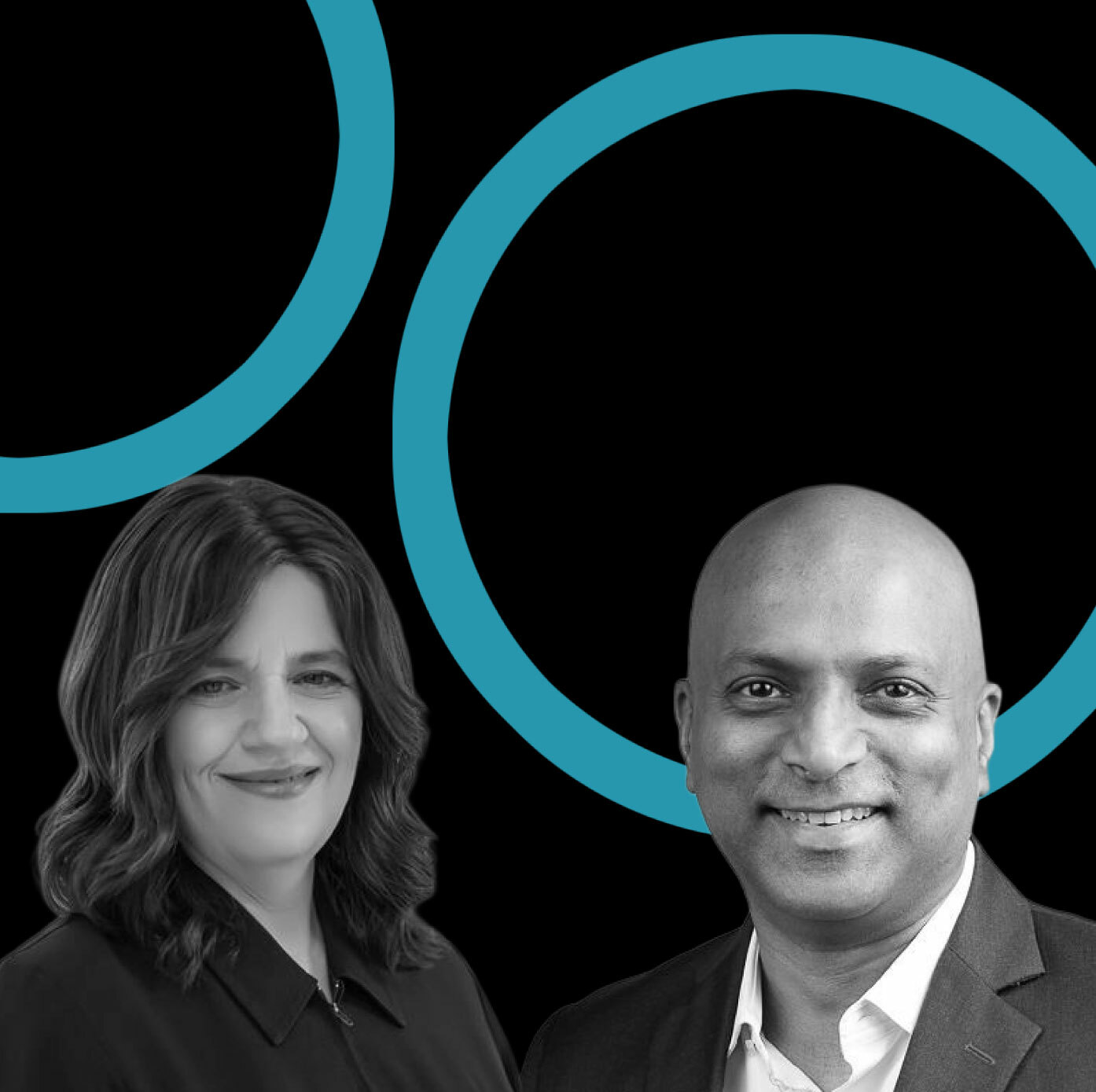
L’Oréal has spent more than a century defining beauty, and today, it continues that evolution through technology. In this episode, Susannah Greenberg, Chief Information Officer, Americas, L’Oréal, joins Pari Natarajan, CEO of Zinnov, to discuss how AI, data, and digital platforms are deepening L’Oréal’s connection with consumers and reshaping how beauty is experienced.
From precise diagnostics and predictive skincare to AI-enhanced devices and digital try-ons, she breaks down how technology is personalizing beauty at an entirely new level. But the story goes far beyond products. Susannah shares how tools like L’Oréal GPT are transforming the way teams work, reducing repetitive tasks, accelerating problem-solving, and creating space for real creativity. She talks about talent, culture, and the energy inside L’Oréal: a place where new ideas constantly emerge and where creativity and technology meet every day.
This episode offers a clear, thoughtful look at how a global brand integrates human insight with intelligent technology not to replace people, but to amplify what they do best. Tune in now.
PODCAST TRANSCRIPT
Pari Natarajan: Hello everyone. Welcome to the Zinnov podcast. I’m Pari Natarajan, CEO of Zinnov. I’ll be your host today. I have with me Susannah Greenberg, the Chief Information Officer of L’Oréal Americas. Susannah is an accomplished technology leader with experience across industries in consumer products, financial services and telecommunications. Prior to joining L’Oréal, she was at Citi for over a decade, actually focused on large-scale digital and IT transformation projects. To improve overall business performance at L’Oréal, Susannah is playing an important role in helping the evolution of the company to your beauty-tech company using AI, data, and digital platforms to imagine what beauty means to consumers. Susannah has a great track record of delivering complex initiatives on time and on budget, as well as inspiring a technology team to innovate and deliver on meaningful business outcomes. Welcome to the podcast, Susannah.
Susannah Greenberg: Thank you, Pari, and thank you for having me.
Pari Natarajan: Let me dive into the questions. L’Oréal has been around for the last hundred-plus years. Beauty as a category was invented by L’Oréal on some level, and in my family, my wife, my son, my daughter, they use your products as a daily habit. What I’ve found is that the product doesn’t just enhance a person’s appearance; it makes them feel happier and more confident. You have a product set across customer segments for different areas. Now with technology, how are you customizing that experience for individuals, and how is it translating to the role of the technology team you lead at L’Oréal?
Susannah Greenberg: First, Pari, I want to thank you and your family for using our products. I agree with your sentiment: we do have some of the best products in the world, and beauty really does make the world move. That’s actually our motto as a company: create the beauty that moves the world. We live in a world with a lot of diversity and many different definitions of beauty. We’ve studied what beauty means to different types of people, and it’s only with the benefit of tech that we’re able to keep all those definitions in mind and then cater our messages to every type of segment. We started collecting data years ago to understand who our customers are and what excites them about our products.
Susannah Greenberg: Now we’re able to take advantage of that data and maintain personalized journeys for each customer who has expressed interest, either by telling us directly or by buying a product, to ensure their journey to find the right product is well-suited for them. In the future, technology can reduce the size of those segments. So instead of a cohort like women aged 50 who reside in urban areas, you might have women aged 50 to 51 who reside in major cities in New Jersey. We may be able to go much, much deeper into how we segment.
Pari Natarajan: Great. You talked about customizing to much smaller sets of customer segments. Now the whole industry is talking about AI and what AI will mean for the products you’re building. We work with customers across industries, financial services, tech, consumer products, and so on. One thing we hear from customers is that a POC shows AI works really well, but many times it might not scale because of cost or other reasons. From your experience, what AI use cases are working well for you and what challenges have you seen?
Susannah Greenberg: I’ll first lay out the types of use cases we’re seeing for AI, but I want to advance the point that in many cases, the word AI is used generically. Often, we’re bringing together some existing technologies we’ve had for quite some time with newer algorithmic and generative capabilities. Fundamentally, L’Oréal is focusing on three areas for AI, each intended to advance the business. Technology is at the service of the business. We don’t need an AI strategy separate from our business strategy; AI is an enabler to grow the business. We think about AI for R&I cases, research, and innovation, to formulate better and create the best products possible.
Susannah Greenberg: We think about augmented employees, giving our teams the best tools and most productive opportunities, providing information when and where they need it. And then, of course, augmented marketing, marketing in support of the consumer to ensure we serve consumers well. When you think about devices, we’ve been public about examples like AirLight Pro and other devices using AI to enable people to experience products. AirLight Pro is an amazing hair dryer that’s good for the environment, great for hair, and faster than traditional dryers. HTA is a device that allows people to put on lipstick even if they have reduced fine motor skills. AI in devices lets us marry products, shampoo, lipstick etc., with devices, which becomes very interesting. On consumer experiences, we think about diagnosing and understanding in detail whether it’s skin or hair, the best possible product, trying on the product before you buy it, and making sure the person is really happy with the shade they get. We also think about prediction — we have a tool that can tell you if you follow a skincare routine, this is what you’ll look like in six months, which incentivizes diligence with routines and supports beauty advisors. A fascinating concept that came out during the pandemic is filters, say you wake up and have a call early and don’t have time to put on lipstick or blush. Filters let people virtually put it on. L’Oréal is advancing this together with Microsoft. On the consumer journey, we’ve moved from print advertising to a fully digital world. AI is coming next, and it changes how people find, discover, and learn about our products. Shopping is increasingly coming from engines like Perplexity, which changes discovery and is an area we are thinking about.
Pari Natarajan: It’s interesting that you’re using AI in product experiences. For my wife’s birthday, I described her persona to ChatGPT and asked for suggestions for shops on Madison Street; it gave me two, I went to one, and it had exactly what she likes. The shopkeeper was fascinated; they had never realized that AI is a discovery platform. So you’re using AI for products, customer experience, and marketing campaigns. What about your own team? How are they using AI? Many ask for ROI from employee productivity, but there are other uses to enable employees to innovate. How are you using AI from an employee perspective?
Susannah Greenberg: We’ve been wildly successful with a tool we call L’Oréal GPT, and it started with a cybersecurity and data privacy premise. Because we commit to keeping customer information secure, and our marketing plans must be secure, we needed a four-walled garden to put our information into so algorithms and LLMs can learn safely. We’ve created a platform that brings in some of the world’s most innovative, fast, and accurate models into our environment to process our information. Two-thirds of the company, over 60,000 people worldwide, have access; we get about 15,000 daily users. It’s wildly successful, enabled by training and internal advocacy. We explain to people what they can achieve with L’Oréal GBT. Fundamentally, it’s similar to ChatGPT but trained specifically on L’Oréal data. We started with general queries, “I’m doing a presentation, give me info on X, Y, Z” — and now we’re building purpose-specific companions: queryable training material for specific functions. You might have an HR companion, an accounting companion, a cyber companion. Our next step is personal companions: a Susannah companion, a Pari companion. The goal is for AI to augment people; the more individualized those companions, the more effective they’ll be. On innovation, companions help people get started, compare materials, and generate internal images. But algorithms aren’t truly creative; they synthesize what they know and predict the best answer. They won’t produce something entirely new to the world, not yet. I believe the marriage of people with AI will be most effective. AI takes away low-value work, freeing our creatives to spend more time being creative. The best ideas are intersectional, coming from different minds collaborating. AI should create more time for in-person or on-screen collaboration to bring those ideas together. I believe innovations will come from people, and tools will augment them, like lipstick on a person: it makes people more polished, but ownership of creativity remains human.
Pari Natarajan: Very interesting. AI captures the present; people create on top of it. Human plus AI is how this will progress. I also like your point about collaboration and how creativity emerges when teams work together, and AI enables that. To do all this, you need high-quality talent. A few months ago, a tech CEO talked about paying millions to hire talent from OpenAI and others. You’re hiring from the same talent pool. How do you attract the best talent and excite them about L’Oréal?
Susannah Greenberg: Our culture is a big draw. I’ve stayed here longer than anywhere else and never had a boring day. Every day, there’s something dynamic, a great new idea, creativity in the hallways. Our corporate culture is a key to success. Our mission, creating beauty that moves the world, is ennobling and speaks to people emotionally in a way pure tech companies may not. We’re getting a slightly different type of person attracted to the brand. Being in New York, the epicenter of creativity, helps, too. On top of that, we’re focusing on AI enablement for IT people. AI augmentation of IT is one of the most exciting developments this year. Models are very powerful at generating code, test scripts, and validating business cases to avoid conflicting requests. We’re ensuring our IT teams have the best tooling so people can do high-value creative work and adapt tools to business needs. Code generators can create basic code, which raises the question: Who are the experts in five years? We’re working to balance maintaining expertise with the productivity AI brings, giving the right tools to the right people without hindering skill development.
Pari Natarajan: So purpose, making people feel beautiful, attracts talent, and AI tooling is the icing on the cake. You mentioned a strong creative team in New York, but how are you tapping into talent globally, with partners and startups? What’s the approach in New York versus leveraging the L’Oréal ecosystem?
Susannah Greenberg: We did work with Zeno to think through the Americas and what belongs where. We realized Mexico is a place of tremendous opportunity — a location where we could build out significantly. Mexico offers tech talent, proximity to business because L’Oréal is strong there, the same time zone, and Spanish language and culture, which is important for Latin America. Spanish is now the second most popular language in the U.S., so it makes sense. We’re still defining how to position teams, but we consider it one large team while bringing technical skills into Mexico, which increases agility. We work with amazing partners: platform companies like Google, big integrators like Accenture, and we also value the agility of in-house prototyping without contracting every time a new idea comes up. I’m excited about bringing more tech talent into Mexico and growing that area.
Pari Natarajan: Great. It was good to work with your team to explore what’s possible in Mexico. Final question: if you had no constraints, what do you see in the next five to ten years at the intersection of beauty and technology? What are the hot possibilities?
Susannah Greenberg: Great question. One big area is formulation: not just personalizing the marketing journey but formulating the right product exactly geared to an individual, your wife, your daughter, or you. That would enable very small-batch manufacturing, greater automation, and perhaps real-time formulation, which is exciting. We’re studying the relationship between beauty and longevity, ingredients and health, and being able to have exactly the right formula for each individual is compelling. On AI, people asked whether AI can have emotions. I don’t believe AI will have emotions, but tools will get better at recognizing and coding emotions. That could be interesting: reading faces to see how makeup or skincare makes someone feel, which could motivate productivity and positivity. Those are exciting opportunities.
Pari Natarajan: Fascinating, customized formulas per person. Robotics and automation will need to advance to make that practical. I enjoyed this conversation; I learned a lot about L’Oréal’s technology approach, how you leverage AI for customers and teams, how you attract talent and expand into Mexico, and your future predictions. Hopefully, some of those come true.
Susannah Greenberg: Thank you, Pari, for a great and thought-provoking conversation.
Pari Natarajan: Thank you. Thank you, everyone, for joining us on the podcast. Till the next one, goodbye.

Jason Day and David Neely, StarRez, on why culture is what makes Global Capability Centers (GCCs) grow and stay relevant in an AI-driven world.
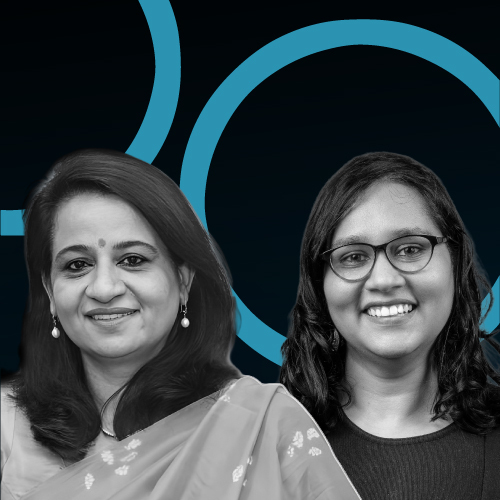
Dr. Ekroop Caur, IAS, speaks with Nitika Goel on Woman in the Mirror about ambition, balance, and the quiet resilience behind a life in public service.
Don’t miss any of our future episodes!
Also subscribe to the Zinnov Podcast on these platforms






Jason Day and David Neely, StarRez, on why culture is what makes Global Capability Centers (GCCs) grow and stay relevant in an AI-driven world.
Dr. Ekroop Caur, IAS, speaks with Nitika Goel on Woman in the Mirror about ambition, balance, and the quiet resilience behind a life in public service.
 THANK YOU
FOR YOUR RESPONSE
THANK YOU
FOR YOUR RESPONSE