



BACK TO Business Resilience
ZINNOV PODCAST | Business Resilience


|
|
Most organizations today are grappling with the same reality: the systems and structures that made them successful weren’t built for what’s coming next. Legacy systems, monoliths, distributed teams, and AI moving faster than anyone planned – all while leaders try to move forward without breaking what already works.
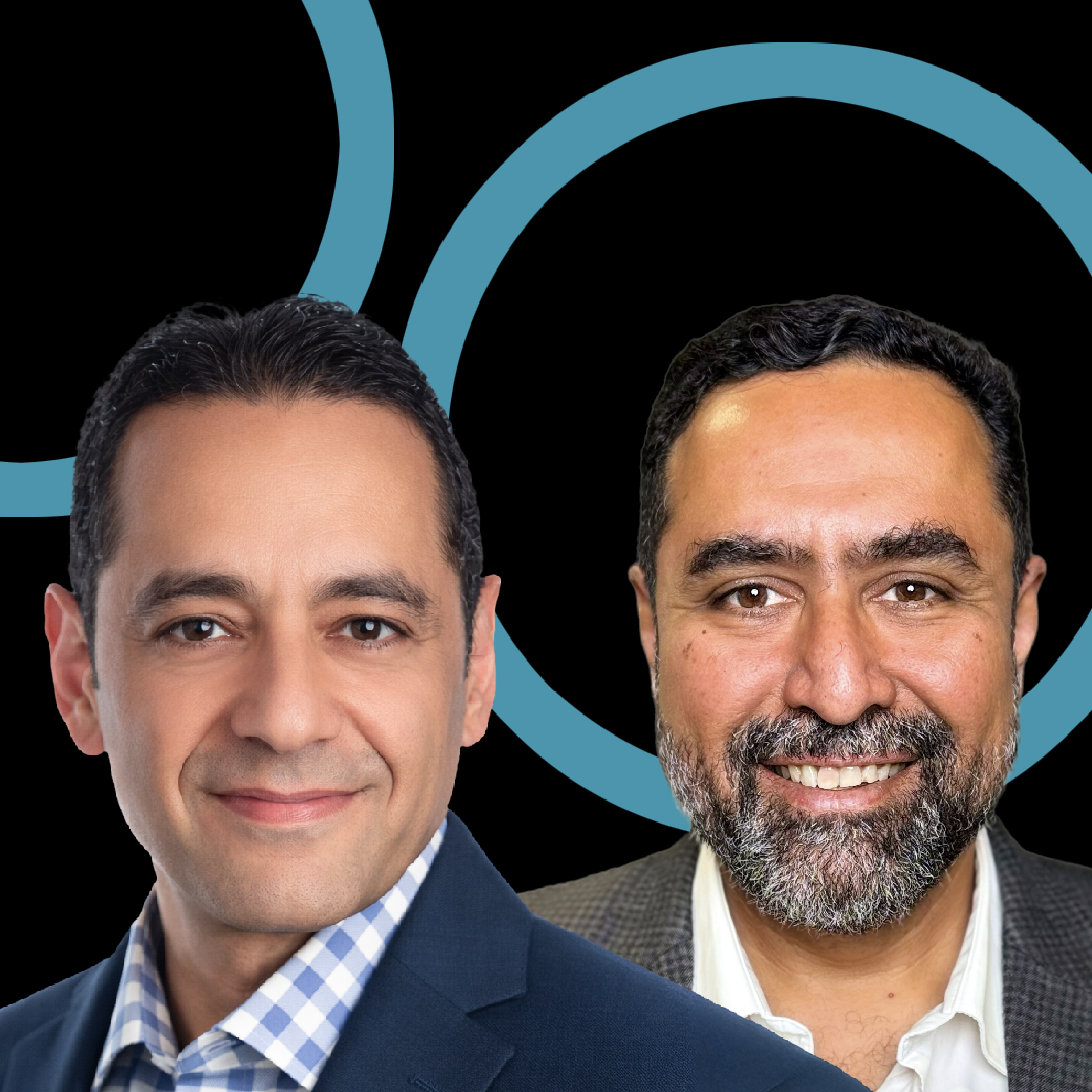
In this episode, Paiman Nodoushani, Chief Technology Officer, TRG Screen, joins Karthik Padmanabhan, Managing Partner, Zinnov for a grounded conversation on what real technology transformation looks like after multiple cycles of change. Paiman shares how companies modernize legacy systems, move to cloud-native architectures, and introduce AI in practical stages – while reshaping how teams work, prioritizing experimentation over early efficiency, and keeping the focus on what customers actually care about: simplicity. Tune in now.
PODCAST TRANSCRIPT
Karthik Padmanabhan:
Hello everyone. Welcome to yet another episode of the Zinnov Podcast. My name is Karthik Padmanabhan, Managing Partner at Zinnov. Today we are exploring a very interesting topic, which is to build future-ready organizations. And towards that, I have with me the CTO of TRG Screen, Paiman Nodoushani. Welcome to our podcast.
Paiman Nodoushani: Thank you.
Karthik Padmanabhan:
Paiman has seen it all. He’s actually worked in start-up organizations, enterprises, technology firms, built teams who are future-ready. And so we are going to ask him some of the most challenging questions that you would love to hear from us. Paiman, thank you again. Thanks for being here and talking to us.
Paiman Nodoushani:
Thank you for inviting me. Beautiful place that you guys have here. And I think, as I mentioned to you, it’s been a while since I’ve been in Bangalore. Last time I was here was 2004, so a lot has changed.
Karthik Padmanabhan:
Wonderful. And thank you for being here once again. I want to start off straight away, Paiman, and tell us about your journey, but tell us about TRG Screen first. What does the organization do, and how are you helping the organization? And while you’re at it, tell us through your journey, your experiences, and how you got here.
Paiman Nodoushani:
Let me just tell you a little bit about TRG. TRG is in market data spend management, which is a big word. But if you think about the customers that we have, the customers that we have are the banks, or the investment companies, or the hedge funds – these are the companies that need market data.
And what is market data? Anything that has stock quote is market data. Anything that has S&P data is market data. Think about people that have Bloomberg terminals – that’s market data. We help those organizations figure out the spending that they have on market data and optimize it from a high-level perspective.
These big banks spend somewhere between 10 million to 90 million a year on market data because they have subscriptions that are duplicated. They don’t have a good idea of who’s using what, what are they using, and optimizing – so on and on and on. And our solution allows them not only to be compliant with what they have purchased, but also optimize the subscription that they have.
Karthik Padmanabhan:
That’s awesome. In a way, we subscribe to so many different things, we can so relate to what that is. And so if we have software that can optimize all of that, that would be great.
Paiman Nodoushani:
And TRG’s company has been about 20 years old, probably a little bit more than that. It started with a couple of brothers who started it. Since then, there’s been organic growth through technologies that have been built, as well as a whole bunch of acquisitions. And these acquisitions over time have come together and extended the reach that we have, but the core of the technology and the core of the market that we are targeting is still the same.
We’re about 300, 330 people, growing our headquarters in New York. We have offices in Belfast, London, and we opened this office in Bangalore about a year ago. I think we have gone from almost no employees to about 60 employees here, and we’re going to continue to grow here as well.
Karthik Padmanabhan:
Yep. Love that. Love that. Your journey has been fascinating. You’ve had a storied career working across multiple firms. You worked in large enterprise organizations, you’ve worked through startup organizations. You’ve worked in portfolio companies or private equity firms. You’ve seen different aspects of how technology organizations have evolved. Tell us a little bit about your journey. Tell us where you started from, how did you start, and where did you get to as a CTO of TRG Screen. Now working with the private equity firm, how has that journey been and some good learnings out of that.
Paiman Nodoushani:
Sure. So I started my career a long time ago at startups. I started a career, had a company called Excel Switching. Came out of school with my master’s, a true start-up. The doors went up. The doors didn’t necessarily open. There were 10 of us, and we were building telecom equipment for that communication sector. The company eventually was sold to Lucent.
I left and joined another startup called NewNet. And we were again in a telecom space. The company was a little bit bigger when I joined – we were about maybe 50 people. Eventually it was sold to ADC, and that’s when I left.
I went to a third company called Macom Technologies, and we were building the next generation Voice over IP, to be able to use the DSLAMs at a time that figuring out how you have voice and the data coming out of a home and combine them was taking off. Very lucky working with really talented people. Cisco bought us – and there were not a small number of us, 19 of us, and Cisco bought us.
In 1998, Cisco was the first big company that I’ve ever been to. When I joined Cisco, Cisco was about 5,500 people. When I left Cisco, the company was 65,000 people. I didn’t think I was going to stay at Cisco for that long. I thought, you know, six months I’m going to go and find another start-up. But I really grew up at Cisco.
Really learned the value of customer, what it is to build enterprise-class customers. Putting customer first – customer is always important. And the most important thing is listening to them and solving their issues. After that, I decided to kind of go small again. I went to another couple of startups.
Then the last three companies that I have been with have been with private equity-based companies. Really enjoy working with private equity-based companies. To me, they are there to help guide many of these organizations that are trying to grow, put a layer of structure, and make sure that you have a goal, and within three to four years if you’re going to reach those goals or not.
And that’s why I ended up at TRG. TRG kind of fits the same profile. It’s been a company that’s been around for a while, great set of customers, and we’re trying to figure out what TRG 2.0 means. What does scale mean? What does it mean to get to the next hundred million, the next thousand customers, and that’s the reason that I have been brought in here.
Karthik Padmanabhan:
Wonderful. Private equity firms do beat to a different rhythm altogether. The pace and the acceleration and the value generation is a fascinating topic to discuss another day. Today, however, we’ll dive into future-proofing, technology-proofing, if you will.
Technology is evolving faster than it has ever been, right? And we are seeing technologies coming in, emerging, and becoming legacy at a pace which has been unprecedented. In that sort of an environment, what is your advice for organizations who are rearchitecting the technology stack? What is your advice to other CTOs out there who are looking at rearchitecting technology stacks, replatforming them, and how should they go about it?
Paiman Nodoushani:
I think if you take a look at the last two, three years, this technology transformation has been going on across all the companies. If you look at most of the companies, everybody has some sort of a monolith that has been developed over time, and every company is trying to figure out how do I transform that monolith and move to a cloud-native approach?
Most of the companies have single-tenant databases – databases that haven’t necessarily been maintained – or they’re running on-premise, and they’ve been going through a journey as: how do I take these single-tenant databases that I have? How do I run them in a cloud-native solution such that I can build the data warehouse over time?
If you take a look at the geographies that they have, most of the companies are trying to figure out how do I grow such that I can serve my community and my customers on a 24×7 basis. So if I’m only U.S., how do I build Europe? How do I build India and be able to get the talent that I’m looking for?
So I don’t think this technology transformation is something new to any of the companies. They’ve been going through that journey. But what’s happening is AI has happened and has really hit us pretty hard. So I think 2025, everybody’s trying to figure out what does the architecture – what is it that I have to do for my architecture, such that it can be AI-ready, right?
And that in itself is a big word, but my belief is everybody has been looking to see what do I have to do such that I am ready for the AI, such that I can take advantage of it in 2026.
Karthik Padmanabhan:
Absolutely. So we should talk about AI in the lens of how are you helping your organization adopt AI within your workforce, within your products, and for your customers. What’s the AI strategy look like for you, and how are you crafting that?
Paiman Nodoushani:
I think if you take a look at AI, the very first immediate actions that any company has taken, including ours, is how do I adopt AI and put it in the hands of my developers, product managers, salespeople, so they can actually go and use it.
I’ll bring it back into development. And we started six, seven months ago saying everybody’s going to have Cursor, everybody’s going to have Claude, and that’s what you can use to help you better develop the code that you need to develop. The automation engineers should be able to use that to figure out how do I better develop automated test cases right off the bat.
If you are new to the company and you’re working on a legacy code and you don’t understand it, AI and those tools can help you figure out: document the code for me. So the very first AI journey for everybody has been: let me just adopt the tool and let it loose, and let the developers and automation engineers, product managers try to figure out how they’re going to be able to take advantage of it.
The next stage of AI, which a lot of companies embarked on already, is: how do I use AI and build the most, the simplest AI agentic workflow, which is nothing more than building a chatbot, right? Customers interact with us, customers interact with our solution and our products, and the easiest way of embedding AI is to really use the large language models, which are readily available in any public cloud, and attach it to your product such that, using a natural language process, customers can actually interact with your product and get the results and the solutions that they’re looking for.
The next wave of AI, which a lot of companies including ours is embarking on, is really agent AI – we have gone past these simple chatbots and easy way of responding and so on and so forth. How do we put a number of these autonomous bots together – agents, I should say – together such that they can accomplish something overall? A whole feature is built on that.
I’ll give you an example because that’s something that we’re doing at TRG. One of the things that we are building is called document digitization. So if you think about TRG and if you think about our product, our product goes to market data analysts at some of these banks and hedge funds, and they have to enter a lot of information into it. They have to go and say, here’s the subscription that we have, here’s the invoice that came from this customer or from that vendor, and so on and so forth, and all of that is done on a manual basis. Somebody has to go and read some of that information, enter into the system.
Now imagine if you have agent AI that automatically goes and finds those invoices, reads them automatically, maybe shows them with a 95% confidence to a human and says, “Hey, is this the correct information?” You click yes, and it automatically goes and uploads that information into the system, but also compares it with other solutions that are already in there and says, “Hey, wait a minute. You have too many instances of this solution that you are using.” So that’s the agent AI that everybody’s sort of driving towards. You’re going to see some of it this year, but I think that’s going to get accelerated.
Karthik Padmanabhan:
That’s wonderful. I love the way that you actually phased that out, right? In terms of initially it is to your developers and enabling them, giving them tools like Claude and Cursor, and that helps them really up their productivity. And in a minute, I’ll talk to you about what sort of results are you seeing around those. So that’s your step one. Your step two is to take your low-hanging fruit of all of your AI. So look at anything to do with the chatbot, for example – easy automation that you could run. That’s probably your initial immediate step. And your step three is almost to look at agent workflows, and when you said, “Wait a minute,” that “wait a minute” is actually the agent telling your customer: this is the advice that they would give based on their usage, which is fascinating in its own way.
So that’s a terrific step-by-step approach towards how organizations can look at adopting AI within their organizations. Now, in your initial steps that you are in, where you have given tools like Cursor and Claude and everything else to your workforce, to your development workforce, what sort of results are you seeing? Last night at dinner, you spoke about an architect developing code using these. Tell us those stories and seeing how the development is happening.
Paiman Nodoushani:
I think there are different reactions when you provide these tools to the developers, right? I think the very first one is that we’re all human and we all have emotions. People automatically think: is that there because they’re going to replace me, right? If I use this thing, what does that mean? So you have to listen to some of those concerns. And those concerns are just – everybody has it – it’s not going to go away. And the answer to many of those is no.
The AI is there because it’s going to give you more productivity, right? It’s the same thing that the calculator does, right? You can use a calculator if you want to. You can do your addition by hand. Over time, you’ve gotten used to doing things by a calculator. But you have to listen to those fears that individuals have and get them over that fear. So that’s the very first question that they get.
The second thing is: I’m very specific that I don’t want to measure productivity yet, because the moment that you tell developers, “Here’s the tools that we’re measuring productivity,” they automatically assume, “Well, here we go again,” right? Because I’ve been given a tool, now I have to go work faster.
All I want in this innovation phase is to give ample room for people to experiment. And some of these experiments are going to fail. Some are going to say, “I can’t fully understand how I can use it.” And some of it’s going to be successful. Getting lunch-and-learns and having other developers and other architects showing them, “Hey, here’s how you can use it,” is always helpful.
Two weeks ago, Shmuel, who’s my chief architect, actually did a demo and showed he had spent about six hours writing a document saying, “Here’s the product, here’s the feature that I’m looking for, here’s what I want it to look like, here’s what I want the front end to be, here’s what I want the back end to be,” all in a document.
And he showed in this lunch-and-learn that he didn’t write a single line of code. He basically gave this to AI, and the AI asked a bunch of questions, and it turned, in about two hours, a working code was actually there. Now, is the working code good code that’s going to go into production? No, it’s not, but it’s a starter, right?
Imagine if you don’t know where to start as a developer. It gives you a little bit of those guardrails at the beginning, forms that you can go and take it and figure out how you’re going to go and make use of it. So I think there is a lot that we can still do in AI, but first we have to get over the fear that many people have – AI is here to replace me.
Karthik Padmanabhan:
That’s a great insight, Paiman. You spoke about how developers have to get over that and the fact that you said, “Let’s not measure productivity right now. Go ahead and use it and let’s see what comes out.” And then you have these lunch-and-learn sessions that tells the developers that here is something that can actually make them do better. And that’s a great way of encouraging them to start using it. Thank you for that – great insight as well.
A little bit on the customers, because ultimately customers mean everything. How are they reacting to it if they were to talk to an agent as opposed to talking to a human, for example? If the agents are going to be talking a lot more to them, do you feel customers are receptive to that? Is that what they’re asking for? And how much of that is actually flowing through into your product?
Paiman Nodoushani:
First of all, customers want simplicity. Customers say, “This is cumbersome for me. Can you actually do it in a simpler fashion?” The way that we’re going to do simpler is using AI.
What customers are worried about a little bit is: is my data being used within the AI and is it going to leak? So I think most of the conversation that we’re having with customers is making sure that they understand that the LLM and the infrastructure that we have is really within our infrastructure. There’s no leakage of information that’s going to go out there, and that contamination is not going to go out there. And other models are not being trained based on the data. That’s really what some of the customers’ first questions and worries are.
But what customers want is: they don’t necessarily care if it’s AI or if it’s anything else or automation. “Is there something that you can give me that makes my life simpler such that I can do it faster, I can do it better? Or I can do it in a more predictive fashion?” And I don’t think it makes a difference how we give it to them, as long as that’s the goal. I think they’re open to that.
And the other way of looking at it is: this is something that’s happening, right? It’s the next evolution in technology. And if you don’t do it, your competition will. So the customer is going to adopt it from you, or the customer is going to adopt it from one of your competitors.
Karthik Padmanabhan:
A hundred percent agree. So modernization, innovation are not options. You’ve got to do that because if you don’t, you are out of business, in a way. So I think that’s probably an exciting challenge, isn’t it, in terms of making sure that you’re always moving ahead with technology, fueling your products, balancing that with the technology integrity that needs to happen as well. Because you can’t keep continuously changing everything, so you need to balance that out somehow.
Paiman Nodoushani:
A hundred percent. And I have a very specific example. When I left Cisco, I joined Avaya – big company, voice communication, contact center, network, and so on and so forth. And I was brought in there to figure out what does cloud mean to them.
Probably a lot of people know about Avaya – voice systems, telephones, and so on and so forth. So I was working to build subscription-based services, which is nothing more than cloud-based services for them. And I remember distinctly that the internal teams didn’t necessarily like it because they were saying, “Hey, what is this subscription? It’s cannibalizing my business.” Whereas they weren’t realizing: if you don’t cannibalize your own business, your competition does.
And I think that’s the same thing with AI – if you don’t enable the products that you have to use AI, your competition is going to do it faster and better than you.
Karthik Padmanabhan:
Is there a strategy? How long is your long-term strategy? Is it five years? Because five-year strategies are pretty much gone right now, but I still ask the question. How long is your long-term strategy from a technology standpoint? Are you looking at it at a one-year horizon but continuously calibrating it? How do you go about doing it?
Paiman Nodoushani:
I think the company must have a three- to five-year strategy. But when I bring it down to technology, my technology strategy is really about 18 months. And the reason for that is transformations really take about 12 to 18 months to put in place and see the results of it.
So if you put something that’s longer than that, something’s going to happen behind the way. But also because we have to be able to measure and show our shareholders that yes – for this dollar spend that you’ve given me to modernize the technology – this is what you’re going to get out of it, and this is how it’s going to get represented for the way that the customers are using the technology.
Karthik Padmanabhan:
Wonderful. On that same note, last question on this part of how we want technology to take shape and how organizations are modernizing technology. If you had to look into your crystal ball and say, how is it going to look a year from now – 18 months from now – how do you see technology taking shape? How do you see organizations like the TRG team, for example, adopting AI or anything else that might come out? And what would you tell CTOs of such organizations?
Paiman Nodoushani:
First of all, I would tell the CTOs: this is experimentation. So you have to experiment. There are going to be failures. It’s okay to fail.
We have to spend money to get some of these tools. We can’t be very stingy about how much money we’re going to spend. If you don’t experiment and if you don’t enable anybody to have these things, they’re not going to be able to have it.
But my advice to everybody is: figure out how you become a better prompt engineer, because that’s where everything is going. The way that you’re going to use AI is basically being able to put the right prompt that gives it the right context, asks the right questions, and says, “This is what I’m specifically looking for you to come back to me with as a part of a task.”
Don’t assume that’s going to be a hundred percent accurate, but it gives you the starting point that you can get going.
Karthik Padmanabhan:
Wonderful. So that’s one skill for everyone to learn – prompt engineering, to me.
Paiman Nodoushani:
Yes.
Karthik Padmanabhan:
Absolutely. Lovely. Thank you so much for that. We are now going to a segment where we are going to ask you a whole bunch of very quick, rapid-fire questions. It is just to get to know you better. It’s been a fun segment and I’m sure it’s going to be the same one right now as well.
One thing I’m going to start off with: if you had to start your journey all over again right from the beginning, if there’s one thing that you might do differently, what would that be?
Paiman Nodoushani:
If there was something that I would do differently, when I take a look at my technical journey, I stayed at Cisco too long. Cisco was a great, great company, but I ended up staying there for 12 years. I would’ve probably stayed there no longer than nine years.
Karthik Padmanabhan:
Alright. Good. That’s a good one. Similarly, if there was going to be a young technologist today coming out of an engineering school, or any other school for that matter – because I don’t think engineering matters as much as it used before, now business matters quite a bit more – what would be your advice to that young person out there?
Paiman Nodoushani:
My advice to them would be: work hard. The compensation is going to come a little bit later. What I’m seeing, including my own boys – twin boys are 25, my daughter’s 28 – what I’m seeing in them is the same as everybody else that I see in young engineers.
Everybody is looking for: “Why am I working more than eight hours, and when am I going to get the next raise?” I think people have to put it in perspective. Hard work will pay off. Maybe that pay doesn’t come in 12 months, maybe that will come in 18 months, but be patient. It’s a long journey.
Karthik Padmanabhan:
And it’s a virtue that not too many people have today. Yes. So it’s good advice to everyone.
Another one – this question actually fascinated me as well. What’s the boldest decision that you have taken, which might have terrified you at that point of time, but you were so glad that you actually took it when looking back?
Paiman Nodoushani:
When I was at Cisco, we had bought a company in Israel to kind of take us to WAN optimization. We had a content caching business that wasn’t necessarily going anywhere. The revenue for that was flat. The next adjacent space that we needed to get to was WAN optimization.
So we bought this company in Israel and there was a culture clash – a huge culture clash between the teams – because people didn’t necessarily trust each other. And a decision that I made was I relocated three people from Israel to the U.S., two of them to California and one of them to Massachusetts.
I was very worried about it because you’re basically uprooting people and their families and bringing them over and hoping that things are going to work. But it showed me, at the end of the day, it’s all about human nature. If you bring people together, they start trusting each other. Those cultural barriers will go away.
Karthik Padmanabhan:
Wonderful. That’s a great lesson there – trust in the humans, trust in the talent that you’ve got out there, enable them with the right environment, and you can see magic happen, which is wonderful.
Here’s another one. If you had to future-proof one human skill in this age of AI, what would that be?
Paiman Nodoushani:
I would say it is authenticity.
Karthik Padmanabhan:
Oh, lovely. That’s a great answer. I’ll go for that any day. Thank you, Paiman.
Now looking back, you’ve accomplished quite a bit. If you were to think about your legacy, what would you want to be remembered for?
Paiman Nodoushani:
I would hope that people say: he was tough, he was fair, he cared, and what he left was better than how he found it.
Karthik Padmanabhan:
Amazing. Exactly how it is, right, in terms of what your legacy is – left behind in so many different organizations. I’m sure people will remember you for that.
One last question. What powers your energy? Is there any ritual? Is there a habit? Is there something that you do that brings this authenticity, these values, and this energy to every single day that you walk into your office for?
Paiman Nodoushani:
One of my bosses gave me this advice: when you go to an organization, everything is always going to be broken. And your job is not to go and fix every single one of them, but get up every day and figure out what is that one thing that you can make better – not necessarily fix – and then try to figure out what is the next thing that you’re going to do the next day.
So that’s what I think about every day. But what gives me energy every day is actually exercising. I love running, I love lifting weights. I try to do that every morning to just get the body going, because I truly feel that I need to have an open mind in the morning. And doing some of these exercises at least gets you going.
Karthik Padmanabhan:
Wonderful. A fit body leading to a fit mind, which is great to see. Thank you so much for this conversation. Really enjoyed this chat with you. Thank you so much for passing your advice to everyone. So everyone out there, and that brings us to an end to this podcast.
We learned so much today. We learned about how organizations are moving their legacy technology and modernizing them in this age of AI, and having a technology strategy, but being able to change through that is very important. We also learned that empowering your workforce and then taking out chunks of AI one bit at a time was equally important as well.
There were aspects of prompt engineering, for example – that’s a very important skill to learn – but more importantly, we loved this conversation with Paiman as a person. Thank you, Paiman. Thank you so much for spending this time with us.
A candid conversation with Pratik Nath, Managing Director at Epsilon India, on leadership trade-offs, AI fluency, and building GCCs that create real impact.
Ajay Singh, CPO at Pure Storage, shares how AI is reshaping product management, trust, and leadership, without replacing human judgment.
Don’t miss any of our future episodes!
Also subscribe to the Zinnov Podcast on these platforms






A candid conversation with Pratik Nath, Managing Director at Epsilon India, on leadership trade-offs, AI fluency, and building GCCs that create real impact.
Ajay Singh, CPO at Pure Storage, shares how AI is reshaping product management, trust, and leadership, without replacing human judgment.
 THANK YOU
FOR YOUR RESPONSE
THANK YOU
FOR YOUR RESPONSE